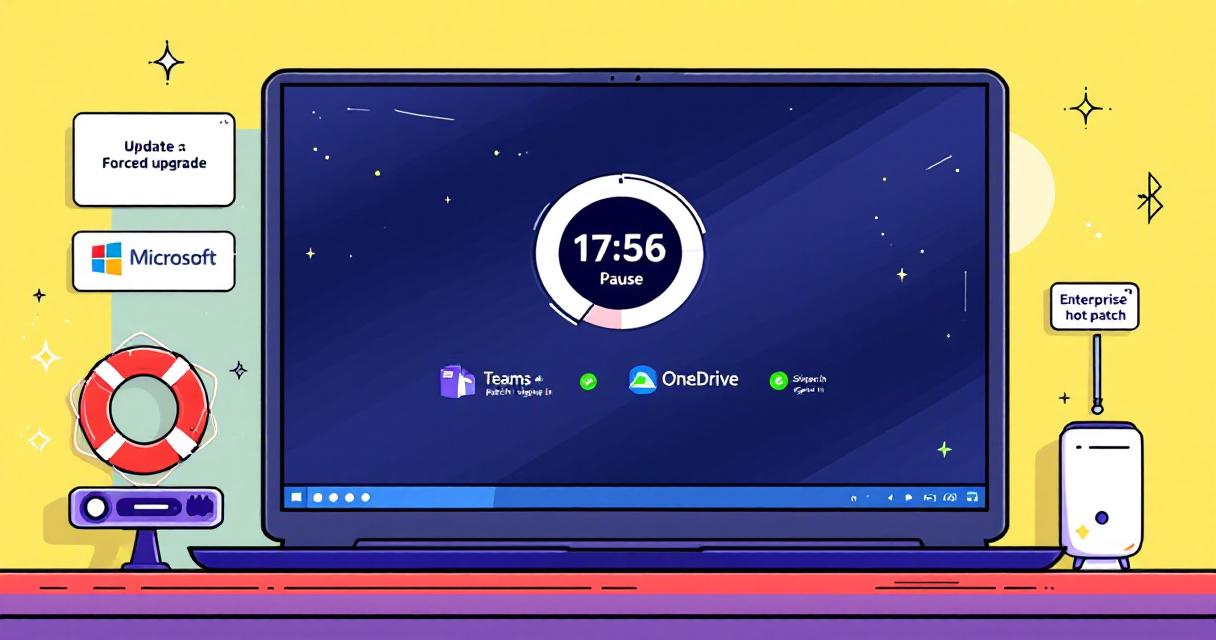
Microsoft has begun rolling out forced upgrades for unmanaged Windows 11 devices running the 24H2 build, a move aimed at keeping consumer and unmanaged enterprise machines on supported and secure versions of the OS. The company is giving users a short grace period to pause the automatic update, but administrators and everyday users should be prepared to install the latest
Microsoft strips EXIF metadata from Teams images to protect employee privacy

On March 2026’s feature rollout, Microsoft updated Teams to automatically remove EXIF metadata from images shared in chats and channels. The change aims to prevent accidental leaks of GPS coordinates, device details, and time stamps—data that can be exploited for targeted attacks or unwanted location disclosure. The move is part of a broader push to bake privacy and security into
Iran Strikes Bahrain’s Batelco, Damaging Amazon Web Services Infrastructure

On April 1, Iranian forces launched missiles and drones that struck the Batelco headquarters in Hamala, Bahrain — a site that hosts cloud infrastructure tied to Amazon Web Services (AWS). The attack, one of the most direct hits on a US-linked technology asset in the region, elevated already high tensions and prompted warnings for businesses operating in nearby facilities. What
Anthropic’s Claude Leak: 8,000 Takedown Requests After an Accidental Source-Code Exposure

Anthropic has scrambled to contain the fallout after an accidental exposure of the complete source code for its Claude family of AI tools. The company issued roughly 8,000 copyright takedown requests to remove copies and adaptations circulating on code-hosting sites and mirrors, responding to a wave of reposts and forks that appeared within hours of the initial disclosure. Although Anthropic
PNG parsing flaws in libpng let attackers crash processes, leak data, and risk code execution

Two high-severity vulnerabilities discovered in libpng—the widely used reference library for reading and writing PNG images—create a sweeping risk for any software that parses images. The flaws can trigger process crashes, leak sensitive heap contents, and, on some platforms, enable arbitrary code execution. Because image handling is baked into web applications, server-side processing pipelines, mobile and embedded systems, and desktop
Supply-chain alert: axios NPM package poisoned to deliver WAVESHAPER.V2 backdoor

A high-risk software supply chain attack has poisoned widely used axios npm releases, turning routine installs into a cross-platform compromise. Developers, CI/CD systems, and production pipelines that pulled the tainted axios versions (1.14.1 and 0.30.4) risked silently receiving a multi-stage backdoor that targeted Windows, macOS, and Linux hosts. Because axios sits deep in many dependency trees, a single malicious release