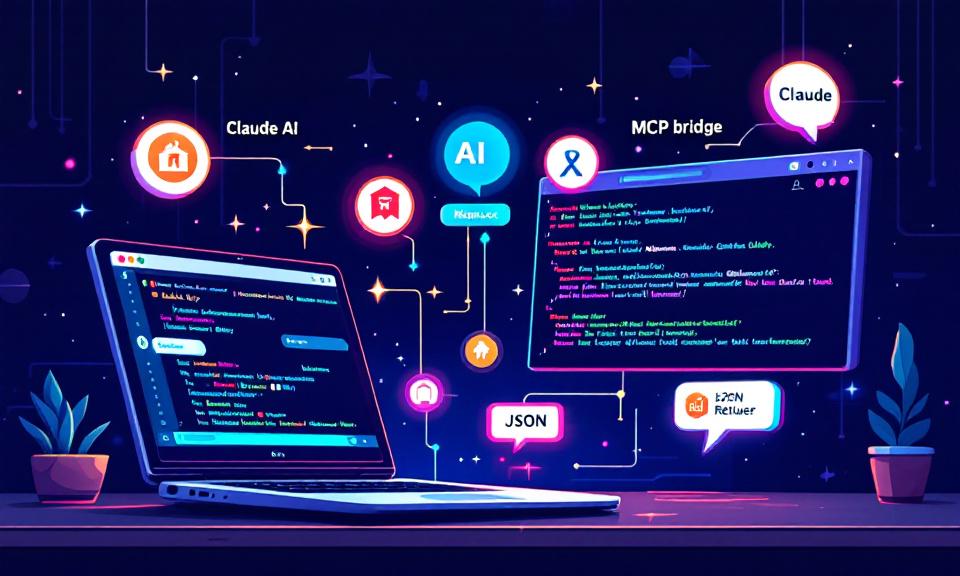
The tools and workflows of penetration testing have evolved steadily over the past decade, but a recent shift feels more like a paradigm change than an incremental upgrade. Kali Linux — the distribution many security professionals rely on for reconnaissance, scanning, and exploitation — has been connected to a large language model via the open Model Context Protocol (MCP). The result is a conversational, AI-assisted penetration testing workflow that translates plain-language prompts into real tool invocations, interprets results, and can iterate autonomously. For defenders and testers alike, this marriage of contextual AI and traditional tooling raises opportunities and risks worth unpacking.
How the integration works at a glance
At its core the integration stitches three layers together:
- User interface: A desktop client that accepts natural-language prompts and serves as the conversational front end.
- Execution bridge: A lightweight server on the Kali side that exposes common security tools through MCP, acting as an API layer that executes commands and returns structured output.
- Intelligence layer: A cloud-hosted LLM that interprets prompts, plans which tools to call, orchestrates executions, and synthesizes results back to the user.
The workflow becomes: you describe the task in plain English, the model chooses the appropriate tools and parameters, sends requests to the Kali bridge, receives structured outputs, and reports findings — often with follow-up actions and reasoning explained in human-friendly terms.
Why MCP matters
Before MCP, integrating an LLM with external systems often meant building bespoke connectors for each tool or wrapping APIs with brittle glue code. The Model Context Protocol provides a standardized mechanism to expose functions, tool outputs, and controls into the model’s working context. That continuity of context matters in pen testing, where multi-step processes — discovery, enumeration, exploitation — depend on intermediate results. MCP lets the model maintain state across those steps without losing track of the conversation or forcing repeated manual translation between natural language and command syntax.
Practical capabilities and supported tools
The execution bridge exposes many of Kali’s staple tools so the model can call them programmatically. Examples include port and service discovery (Nmap), directory enumeration (Gobuster, Dirb), web scanning (Nikto), vulnerability exploitation frameworks (Metasploit), credential tools (Hydra, John), SQL injection tooling (sqlmap), WordPress auditing (WPScan), and SMB/Windows enumerators. In practice this means a single prompt like “scan this host for open web services and check for common WordPress vulnerabilities” can trigger a sequence of targeted scans and automatically summarize the findings.
Security and operational risks
AI-assisted workflows create convenience — and new attack surfaces. Key areas of concern include:
- Prompt injection: If untrusted input is fed into the conversational layer, an attacker could manipulate the model to run unintended commands.
- Over-permissioned execution: The bridge must be carefully scoped. Granting broad execution rights to an LLM increases the risk of destructive or otherwise dangerous actions.
- Auditability: Traditional pen tests rely on immutable logs for accountability. Ensuring that each model-driven action is logged in a tamper-evident manner is essential for compliance and post-engagement review.
- Data privacy: Routing operational data through a cloud-hosted model may expose sensitive client information. Teams must evaluate whether cloud processing aligns with contractual or regulatory restrictions.
Operational best practices
To mitigate the above risks while leveraging AI productivity gains, teams should adopt guardrails:
- Principle of least privilege: Limit the bridge to only the tools and command parameters necessary for the engagement.
- Human-in-the-loop for high-risk steps: Require manual approval for potentially destructive or escalation actions (exploits, credential stuffing, privilege escalation).
- Robust logging: Maintain immutable, auditable execution logs that record prompts, tool invocations, and outputs.
- Input validation and sanitization: Treat all conversational input as untrusted and enforce strict validation before execution.
- Isolation: Run the execution bridge in controlled environments (ephemeral VMs, sandboxes) to reduce blast radius.
- Clear client consent: Disclose the use of cloud-based AI orchestration to clients and obtain approvals where required.
Developer and team considerations
For security teams and vendors building MCP integrations, attention to secure design is vital. SSH-based transport with key-based authentication, configuration templating, and careful service hardening are fundamental. Additionally, exposing rich, structured outputs back to the LLM (rather than raw terminal text) improves the model’s ability to reason and reduces ambiguity in follow-up actions.
What this means for penetration testing skillsets
The arrival of conversational AI in pen testing doesn’t replace domain expertise; it changes what expertise looks like. Junior testers can be more effective faster because the model helps translate intents into correct tool usage. Senior testers shift toward oversight, architecture, and validation: crafting safe prompts, reviewing model plans, and interpreting nuanced results. Organizations should see this as an amplification tool rather than a shortcut that obviates human judgment.
Broader implications and the road ahead
As MCP adoption grows, expect more tools to be exposed to model-driven orchestration. This will accelerate automation across red-team playbooks and could standardize best practices through repeatable, explainable AI-driven runs. At the same time, defenders will need to contend with the potential for faster, more automated adversary workflows. The security community’s response — focusing on hardening, monitoring, and governance — will determine whether AI becomes a net positive for resilience or an accelerator of risk.
Conclusion
Connecting Kali Linux to a conversational AI via MCP is a disruptive development that rethinks how penetration testing workflows are authored and executed. It offers measurable productivity gains and an approachable interface for complex tasks, but also requires disciplined operational controls to manage new attack surfaces. For teams willing to invest in secure integration patterns and governance, AI-augmented testing promises to raise the bar for both offense and defense — provided we keep human judgment at the center of the loop.
 Licensed under CC BY-ND 4.0 International

Attackers Exploit SharePoint Authentication Bypass After Public PoC Release
Microsoft’s SharePoint platform is facing active exploitation following the public release of…
Cisco Issues Emergency Fix for Firewall Zero-Day Under Active Attack
Cisco has issued an urgent warning to organizations worldwide following the discovery…

Critical Adobe Commerce Flaws Put Online Stores at Risk — Patch Now
Adobe has rolled out an urgent August 2026 security update for Adobe…

Breaking the code: how a multi-stage “code of conduct” phishing campaign led to AiTM token compromise
Phishing has evolved from crude scams to carefully engineered deceptions that mimic…