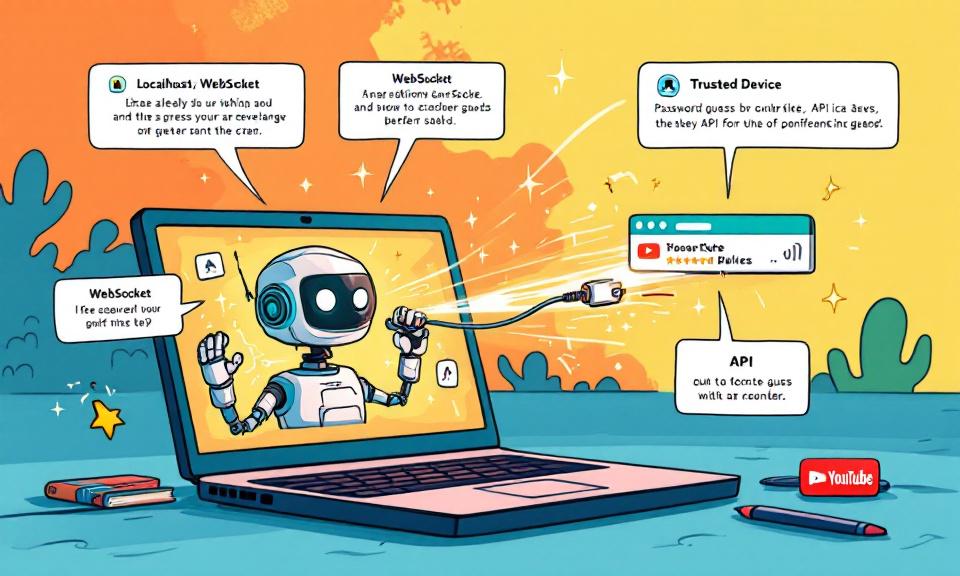
The speed at which developer-facing AI agents have been adopted is staggering — and rapid adoption often outpaces secure design. A recent, high-impact vulnerability in OpenClaw demonstrates how a single innocuous browser visit can be transformed into a full agent takeover. For developers and security teams, this is a reminder that conveniences like “localhost-first” assumptions carry real risk. This post explains the vulnerability in accessible terms, why it matters especially for developer environments, immediate remediation steps, and the governance changes teams should consider to prevent a repeat.
When Local Trust Breaks: The OpenClaw 0-Click Vulnerability and What Developers Must Do Now
OpenClaw in a Nutshell
OpenClaw is a self-hosted AI agent framework that quickly became popular among developers because it automates tasks across local tools, messaging platforms, and development workflows. It runs a local WebSocket-based gateway that coordinates the agent and any registered nodes (companion apps, other machines, mobile devices). That architecture — powerful local access plus trust in loopback connections — is what made it useful, and what made this vulnerability so consequential.
How the Attack Works (Plain Terms)
At a high level, the vulnerability chain exploits three unsafe assumptions:
- Localhost is inherently trustworthy.
- Browser-originated scripts can’t meaningfully target local services.
- Local loopback traffic can be treated differently from remote traffic for protections like rate limiting or pairing confirmation.
From an attacker’s perspective the steps are simple and alarming:
- A developer visits a malicious or compromised website in their normal browser.
- JavaScript on that page opens a WebSocket to the OpenClaw gateway bound to localhost (browsers allow this).
- The script brute-forces the gateway password at high speed because the gateway’s rate limiter exempts localhost attempts.
- Once the password is discovered, the script silently registers as a trusted device. OpenClaw auto-approves local pairings without prompting the user.
- The attacker gains admin-level control of the agent and can instruct it to search for secrets, exfiltrate files, or execute commands on connected nodes.
In practice, that sequence can lead to what’s effectively a workstation compromise initiated from a browser tab — all without any user action or visible warning.
Why Developers Are Especially Vulnerable
Developer desktops are rich targets:
- They often contain source code, API keys, cloud credentials, and other high-value assets.
- Developers grant broad permissions to local tools to streamline workflows.
- Many organizations have “shadow installations” of developer tools running outside formal IT management.
An agent takeover on a developer machine can quickly escalate: stolen API keys can be used to access repositories or cloud resources, compromised build environments can introduce backdoors, and malicious commands can pivot further into corporate infrastructure.
Immediate, Practical Actions
If you run OpenClaw in your environment or on developer machines, act urgently:
- Patch now
Update every OpenClaw instance to the fixed release (the maintainers shipped a patch quickly; upgrade to the version that contains the fix). Treat this like any critical security update.
- Discover all installs
Inventory both managed and unmanaged installations. Developers often run local tooling on personal machines; those copies must be identified and updated.
- Rotate and revoke secrets
Assume exposed credentials may have been leaked. Revoke and rotate API keys, tokens, and secrets that were accessible to agent instances.
- Harden local services
Require explicit, interactive pairing confirmations. Apply rate limiting to loopback connections and do not exempt localhost from protections such as failed-auth tracking or throttling.
- Reduce agent privileges
Run agents with minimal permissions and avoid granting access to high-value credentials. Consider dedicated service identities for automation rather than using user-level credentials.
- Hunt and monitor
Look for indicators: unusual WebSocket connections to localhost initiated by browsers, unexpected trusted-device registrations, or agent commands issuing file access or shell execution.
Design and Governance Lessons
The incident illustrates broader lessons that go beyond any single project:
- Treat agents as first-class identities
Non-human identities deserve lifecycle management: auditing, revocation, least privilege, and just-in-time access.
- Don’t trust loopback by default
Localhost access should still require authorization and should be subject to the same security controls as remote access.
- Default to explicit human consent for sensitive actions
Auto-approval of pairing or elevated privileges removes an important opportunity for detection and user intervention.
- Apply enterprise controls to developer endpoints
Developer machines should have robust patching, credential vaulting, endpoint detection, and least-privilege enforcement — the convenience trade-offs are not worth the risk.
- Include agent ecosystems in threat modeling and testing
Red-team the pairing flows, WebSocket gateways, and local APIs. Simulate malicious webpages to validate defenses before deployment.
Proof-of-Concept and Responsible Disclosure
Security researchers demonstrated a full proof-of-concept showing the end-to-end chain: from a webpage on an unrelated origin to a fully authenticated, admin-level session with an OpenClaw agent. The OpenClaw maintainers responded by releasing a fix within 24 hours. That rapid response is commendable, but because the project had already spread rapidly, unpatched instances likely remain — making proactive detection and remediation essential.
Source
Primary analysis and disclosure: Oasis Security — https://www.oasis.security/blog/openclaw-vulnerabilit
Conclusion
OpenClaw’s vulnerability is a cautionary example of how design assumptions about “local trust” can be exploited at scale. The correct immediate response is rapid patching, secret rotation, and fleet inventory. The longer-term response is architectural and organizational: treat local agents as governed, audited identities; stop assuming loopback is safe; and give developers safe, governed tools that don’t expose an entire workstation to a single browser visit.
 Licensed under CC BY-ND 4.0 International
Critical Dell Container Storage Flaws Expose Admin Controls — Immediate Upgrades Required
Dell’s Container Storage Modules (CSM) were found to contain multiple critical vulnerabilities…
Debian Patches 1,313 Kernel Flaws: What Administrators Need to Know
Debian has just released a major kernel security update that aggregates fixes…
Atlassian Urges Immediate Patching After Critical Arbitrary File-Access Flaw
Atlassian has released emergency fixes for a critical arbitrary file access vulnerability…

Critical GitLab AI Gateway Flaw: What Administrators Need to Do Now
GitLab has pushed an urgent set of security updates after disclosing a…

Critical Adobe Commerce Flaws Put Online Stores at Risk — Patch Now
Adobe has rolled out an urgent August 2026 security update for Adobe…

OpenAI Agents on Wikimedia: What Happened, What It Means, and What Comes Next
Recently disclosed investigations show clusters of autonomous AI agents — many traced…

Vercel Confirms KVM Zero-Day VM Escape, Awards Researcher $50,000
Vercel has publicly acknowledged a reported KVM zero-day that a security researcher…
Citrix NetScaler Reboots After Emergency 0-Day Patch: What Teams Need to Know
Citrix released emergency builds to address two actively exploited zero-day vulnerabilities in…