Category

Cybersecurity

Zero-Day, APT, Exfiltration, Lateral-Movement, Privilege-Escalation, Botnet, Rootkit, Backdoor, Keylogger, Smishing, Vishing, Spear-Phishing, Social-Engineering, MITM, SQL-Injection, XSS, CSRF, Path-Traversal, Buffer-Overflow, Honeypot, CVE, CVSS, Red-Team, Blue-Team, Threat-Hunting, Malware-Analysis, MITRE-ATT&CK, Insider-Threat, Jailbreak, Shellcode, Exploit-Kit, LFI, RFI, Obfuscation, Payload, security advisory, vulnerability disclosure, CWE, OWASP, cybersecurity news, threat intelligence, SOC, SIEM, crypto theft, evasion, CVE Security, breach notification, BlackLotus, bootkit, Protection

Page 19
CrackArmor: Nine AppArmor Flaws Let Local Users Escalate to Root — What Organizations Need to Know

CrackArmor: Nine AppArmor Flaws Let Local Users Escalate to Root — What Organizations Need to Know

AppArmor, a widely deployed Linux Mandatory Access Control (MAC) framework, is at the center of a set of serious vulnerabilities that researchers have dubbed “CrackArmor.” Disclosed on March 12, 2026 by the Qualys Threat Research Unit (TRU), the collection of flaws affects AppArmor’s implementation as a Linux Security Module (LSM) and has been present in the upstream kernel since around version 4.11 (2017). Because AppArmor ships enabled by default on…

Saugata Datta4 min read936
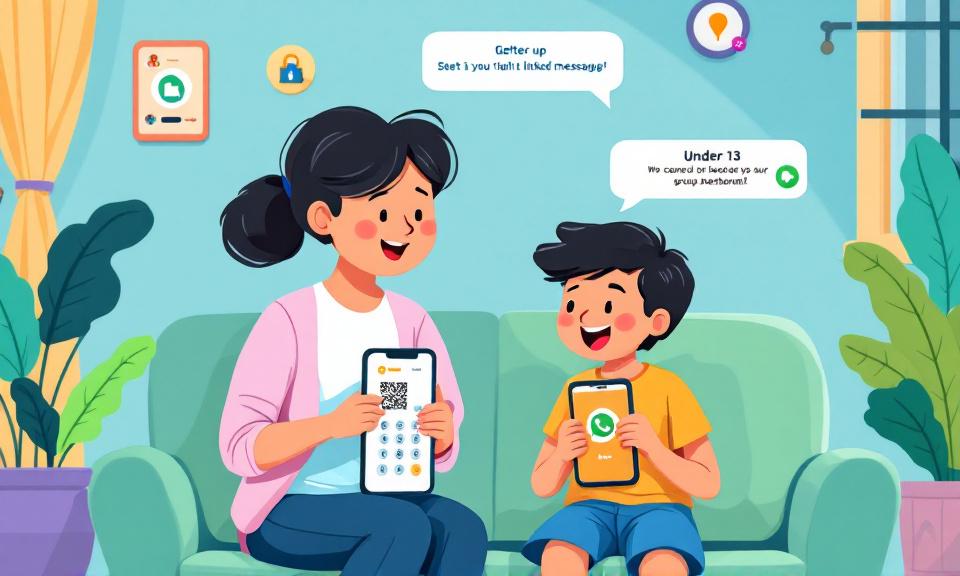
WhatsApp Introduces Parent‑Managed Accounts for Pre‑Teens — What You Need to Know

WhatsApp Introduces Parent‑Managed Accounts for Pre‑Teens — What You Need to Know

WhatsApp has begun rolling out parent‑managed accounts for pre‑teens, a new account type that gives parents and guardians control over who can contact their child and which groups the child can join. The feature is limited to messaging and calling and intentionally excludes access to Meta AI, Channels, Status, and location sharing. What the accounts do Parents control contact and group membership: managed accounts can exchange messages only with people…

Saugata Datta2 min read765
Microsoft Active Directory Domain Services Vulnerability (CVE-2026-25177) — What Administrators Need to Know

Microsoft Active Directory Domain Services Vulnerability (CVE-2026-25177) — What Administrators Need to Know

In early March 2026, Microsoft released an important security update addressing a high-severity vulnerability in Active Directory Domain Services (AD DS) tracked as CVE-2026-25177. The flaw received a CVSS score of 8.8 and can allow an authenticated network actor with limited permissions to escalate privileges to full SYSTEM on a targeted domain controller. Microsoft and third-party researchers coordinated fixes and guidance; administrators should prioritize applying the supplied updates and monitoring…

Saugata Datta4 min read835
Google Completes $32 Billion Acquisition of Wiz

Google Completes $32 Billion Acquisition of Wiz

Google has finalized its acquisition of Wiz, the Israeli cloud and AI security company, in an all-cash transaction valued at $32 billion. The deal, announced as closed in March 2026, is the largest acquisition in Google’s history and represents a major move by Google Cloud to deepen its capabilities in cloud-native and AI security. Deal overview The acquisition brings the Wiz team into Google Cloud while keeping the Wiz brand…

Saugata Datta3 min read910
Zombie ZIP: How Malformed Archives Can Hide Malware from Security Scanners

Zombie ZIP: How Malformed Archives Can Hide Malware from Security Scanners

A new archive-manipulation technique called “Zombie ZIP” lets attackers conceal payloads inside ZIP files in a way that can evade many antivirus and endpoint detection solutions. The method was described by security researcher Chris Aziz of Bombadil Systems and has drawn warnings from CERT/CC and the wider security community. This post explains how Zombie ZIP works, what research and evidence exist today, which tools are affected, and pragmatic steps defenders…

Saugata Datta4 min read756
Microsoft .NET Out-of-Bounds Read (CVE-2026-26127) Causes Remote Denial-of-Service Risk

Microsoft .NET Out-of-Bounds Read (CVE-2026-26127) Causes Remote Denial-of-Service Risk

Microsoft has issued an emergency security update to address a newly disclosed vulnerability in the .NET ecosystem that can be triggered remotely and results in denial-of-service (DoS) conditions. The flaw, tracked as CVE-2026-26127, affects multiple .NET runtime and package versions across Windows, macOS, and Linux. Administrators and developers should prioritize applying the available patches to prevent service disruption. What the vulnerability is CVE-2026-26127 is an out-of-bounds read vulnerability (CWE-125). An…

Saugata Datta3 min read805
Zero-Day on the Market: $220K Exploit Targets Windows Remote Desktop Services (CVE-2026-21533)

Zero-Day on the Market: $220K Exploit Targets Windows Remote Desktop Services (CVE-2026-21533)

Remote Desktop Services (RDS) has come under renewed scrutiny after reports that a working exploit for CVE-2026-21533 — an elevation-of-privilege vulnerability in Windows Remote Desktop Services — was listed for sale on a dark web forum for $220,000. The listing and surrounding reporting are factual and straightforward: a recently created account advertised a claimed zero-day exploit, observers recorded the posting, and vendor and government advisories identify the underlying vulnerability and…

Saugata Datta4 min read784
Cognizant’s TriZetto Subsidiary Reports Data Breach Affecting 3.4 Million Patients

Cognizant’s TriZetto Subsidiary Reports Data Breach Affecting 3.4 Million Patients

TriZetto Provider Solutions, a healthcare-technology subsidiary of Cognizant, has disclosed a large data breach that exposed the protected health information of 3,433,965 patients. The company classified the incident as an external system hacking event after threat actors gained unauthorized access to TriZetto’s external infrastructure. Timeline and discovery Initial unauthorized access occurred on November 19, 2024. TriZetto did not detect the intrusion until November 28, 2025, meaning the intrusion persisted undetected…

Saugata Datta2 min read990
Clipboard Trap: ClickFix Now Abuses Windows Terminal to Deliver Lumma Stealer

Clipboard Trap: ClickFix Now Abuses Windows Terminal to Deliver Lumma Stealer

A newly observed wave of ClickFix social-engineering attacks has shifted tactics, hijacking Windows Terminal as its execution environment to deliver credential-stealing malware. Security researchers from Microsoft and other vendors tracked this campaign in early 2026 and reported a reliable pattern: victims are manipulated into pasting an obfuscated command from their clipboard into a legitimate-looking terminal window, which then decodes and executes a multi-stage payload that ultimately harvests browser-saved credentials. Why…

Saugata Datta4 min read1K
When Claude Became a Bug Hunter: How an AI Found 22 Firefox Vulnerabilities in Two Weeks

When Claude Became a Bug Hunter: How an AI Found 22 Firefox Vulnerabilities in Two Weeks

In February 2026, a focused collaboration between Anthropic and Mozilla demonstrated a new phase in vulnerability research: large language models (LLMs) moving beyond assistance into active, high-throughput discovery. Over a two-week engagement, Claude Opus 4.6 performed deep analysis of the Firefox codebase and surfaced 22 distinct security flaws. The scope and speed of these findings — especially the 14 issues classified as high severity — illustrate how AI is reshaping…

Saugata Datta4 min read787
Admin Account Backdoor: Critical Privilege-Flaw in WordPress User Registration Plugin (CVE-2026-1492)

Admin Account Backdoor: Critical Privilege-Flaw in WordPress User Registration Plugin (CVE-2026-1492)

A critical security flaw in a widely used WordPress membership plugin has made it trivially simple for unauthenticated attackers to create administrator accounts and seize control of affected sites. The vulnerability, tracked as CVE-2026-1492, exposes a systemic weakness in how the plugin handled role assignment during user registration. This post summarizes what happened, who discovered it, the immediate risks, and the concrete steps site owners should take now. What the…

Saugata Datta3 min read1K
90 Zero‑Days in 2025: Google’s Snapshot of an Evolving Exploit Economy

90 Zero‑Days in 2025: Google’s Snapshot of an Evolving Exploit Economy

Google’s Threat Intelligence Group reported 90 zero‑day vulnerabilities actively exploited in the wild across 2025. That total sits above 2024’s 78 but below the record 100 observed in 2023. Beyond the raw count, the GTIG data reveals a notable shift in where and how these flaws were used, who is using them, and which technical weaknesses continue to drive high‑impact attacks. The raw picture GTIG split the 90 exploited zero‑days…

Saugata Datta3 min read1K
🧰

Free Tools: IP, DNS, SSL

40+ free network and other tools in one place. No signup. Click explore or visit https://technochat.in/tools

Explore