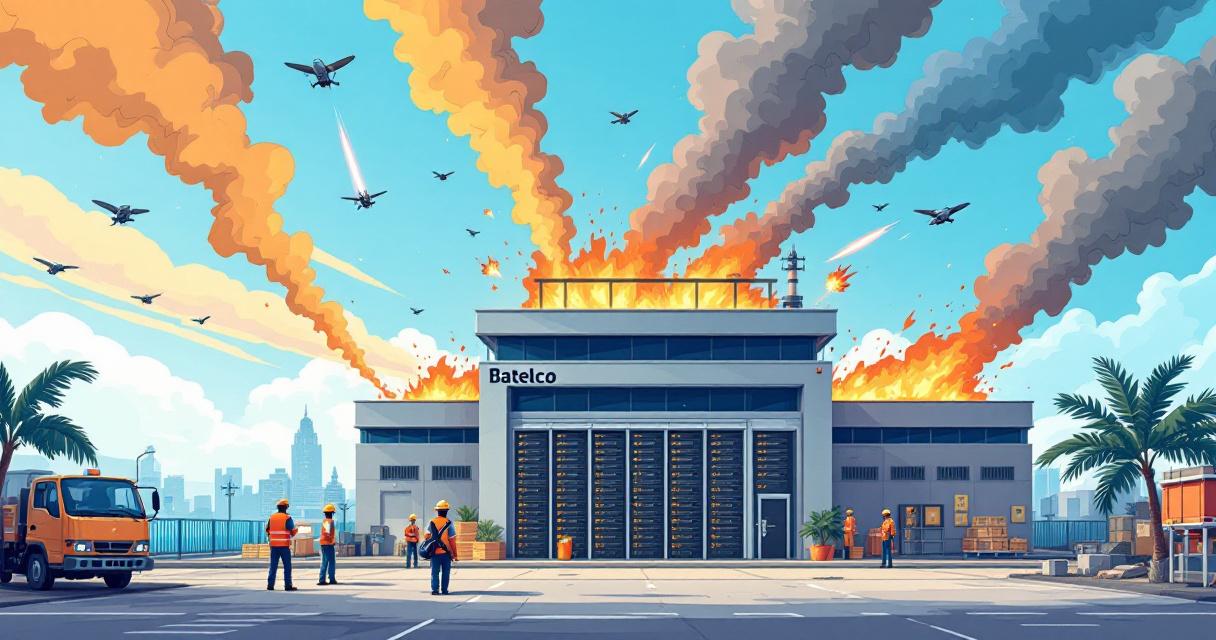
On April 1, Iranian forces launched missiles and drones that struck the Batelco headquarters in Hamala, Bahrain — a site that hosts cloud infrastructure tied to Amazon Web Services (AWS). The attack, one of the most direct hits on a US-linked technology asset in the region, elevated already high tensions and prompted warnings for businesses operating in nearby facilities.
What happened
Iran’s Revolutionary Guard had recently singled out several US-linked firms as potential targets in retaliation for strikes that killed Iranian officials. The assault on Batelco caused a significant fire and structural damage at the telecom company’s facility in Hamala. Regional reporting and statements from local authorities linked the damage to infrastructure used by AWS, though Bahrain did not publicly name all affected tenants.
Impact on cloud services and networks
Reports say the strikes resulted in power outages and structural harm at multiple data centres across the area. AWS acknowledged disruptions earlier in the week tied to drone activity in the region and advised customers with workloads in affected locations to migrate to other regions as a precaution. The incident reportedly forced some operators to reroute traffic and assess damage to hosted systems, heightening concerns about service continuity for businesses relying on single-region deployments.
Why this matters
This appears to be Tehran’s first direct physical strike that targeted facilities hosting a major US cloud provider, representing a shift from cyberattacks and diplomatic posturing to kinetic strikes on commercial infrastructure. The Revolutionary Guard had previously published a list of companies it said could be considered legitimate targets — including big tech, cloud providers, and defence-adjacent firms. Hitting a telco that hosts cloud infrastructure raises broader questions about the vulnerability of critical commercial networks during regional conflicts and the downstream effects on global customers.
Context and wider fallout
The attack came amid a wider escalation in the region, with other reported strikes and drone incidents affecting ports, fuel depots and shipping lanes. Governments and private operators are now scrambling to confirm the extent of damage, restore services where possible, and evaluate whether further incidents could follow. For multinational companies, the event underscores the importance of multi-region redundancy, crisis response plans, and close coordination with local carriers and cloud providers.
What to watch next
- Official statements from Batelco, Amazon, and Bahraini authorities clarifying the scope of damage and which services are affected.
- Any confirmations from AWS about outages, restoration timelines, and recommendations for customers.
- Potential retaliatory actions or further targeting of commercial infrastructure by state or non-state actors.
- Movement by enterprises to relocate critical workloads or accelerate multi-region deployments.
Conclusion
The strike on Batelco that affected AWS-hosted infrastructure is a stark reminder that geopolitical conflict can swiftly spill into commercial technology spaces. For businesses and cloud users, the incident reinforces the need for contingency planning and resilient architecture to weather disruptions originating far beyond the data centre.
 Licensed under CC BY-ND 4.0 International

Two Words, One Deal: How “Stateful” vs “Stateless” Could Decide a $50 Billion Cloud Dispute
Last week’s reporting brought into sharp relief a narrowly technical — but…
When Drones Hit the Cloud: AWS Middle East Outage Disrupts 109 Services
A series of drone strikes against Amazon Web Services facilities in the…

Face-Off: Windows PowerShell vs PowerShell Core — The Real-World Transition
PowerShell has come a long way since its inception, becoming an essential…

Do not trust any public VPN service, Create your own Secure SOCKS5 Proxy for just $5 – Be Free 🙂
If someone ask me to recommend one good proxy service, I would…