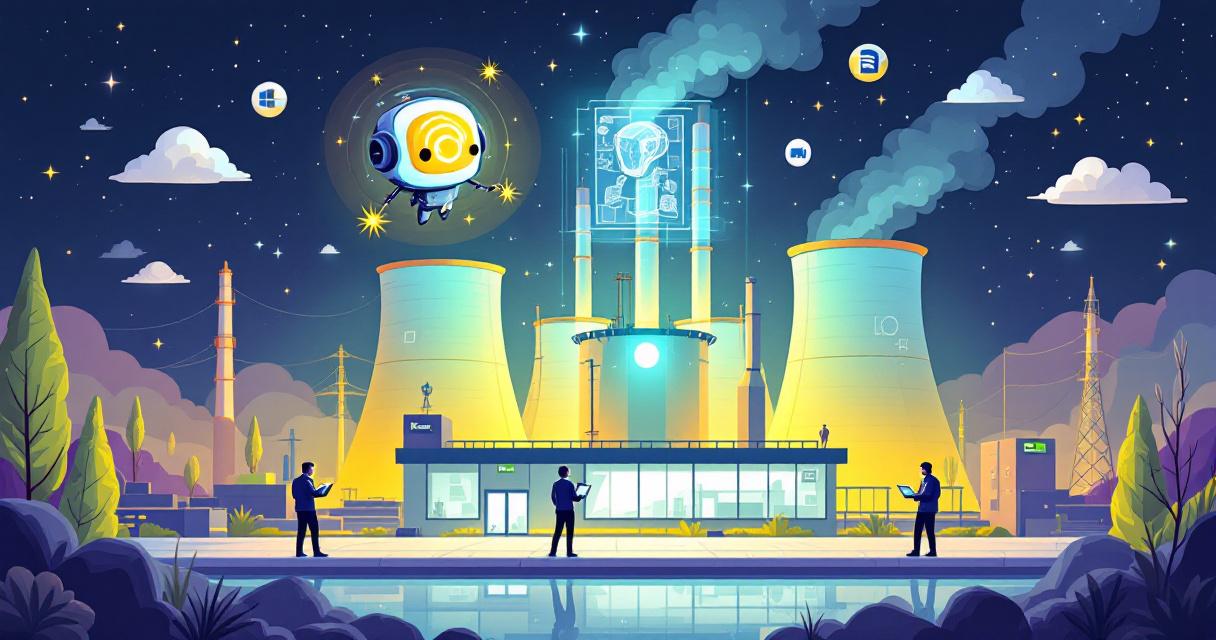
The world’s surge in power demand is colliding with an energy infrastructure that was largely designed for an analog age. Meeting that demand with clean, reliable power requires more than ambition; it requires faster, repeatable delivery of complex projects. Nuclear energy is central to that future, but development timelines, fragmented data, and heavy regulatory processes create persistent bottlenecks. Artificial intelligence, applied thoughtfully across the project lifecycle, offers a path to make nuclear development faster, more predictable, and more auditable—without compromising safety.
Why nuclear needs a digital foundation
Designing and licensing a nuclear plant is among the most complex engineering endeavors on the planet. Regulatory reviews and permitting can stretch for years and demand immense document preparation, cross-referencing, and rework. Engineers routinely spend thousands of hours reconciling inconsistencies across tens of thousands of pages. Those inefficiencies are a major driver of cost overruns and schedule slips. The problem isn’t a lack of expertise; it’s the inability to move consistently and reliably through repeatable, traceable processes at scale.
A connected AI foundation changes the calculus. By unifying data, models, and evidence in a governed environment, teams can make engineering decisions that are traceable, audit-ready, secure, and predictable. In practice that means smaller issues are caught earlier, simulations expose schedule or cost risks before they materialize, and regulators can verify safety with greater confidence and less manual reconciliation.
How AI and digital twins speed each phase
AI isn’t a single silver-bullet tool; its power comes when it’s woven into the lifecycle from concept to operations.
- Design and engineering: High-fidelity digital twins and simulations let engineers iterate rapidly. Small design changes can be evaluated across the whole system, reducing the need for costly rework in the field by validating plans virtually first.
- Licensing and permitting: Generative AI can draft documents, perform gap analyses, and unify disparate project information. That reduces the manual burden on both applicants and reviewers and helps regulators focus on substantive safety questions rather than reconciling paperwork.
- Construction and delivery: Extending 3D models into 4D (time) and 5D (cost) simulations allows teams to virtually build a plant before ground is broken. Tracking physical progress against the digital plan in real time helps identify schedule collisions and cost drivers early.
- Operations and maintenance: Operational digital twins, augmented with AI-driven anomaly detection and predictive maintenance, increase uptime and reliability while keeping human operators firmly in control.
These capabilities together create a continuous feedback loop: design assumptions are connected to operational performance, and operational data feeds back into better, more informed new designs.
Real-world deployments demonstrating impact
Partnerships between cloud providers, chipset and simulation vendors, and domain specialists are already showing measurable benefits.
- Aalo Atomics reduced permitting effort dramatically by using a generative AI‑assisted permitting solution, cutting the time required and realizing large cost savings. For them, scale and mission-critical reliability were primary concerns, and AI helped deliver both.
- Southern Nuclear has used AI agents to distribute knowledge and improve consistency across engineering and licensing teams, helping them reuse proven work and support better decision-making.
- Idaho National Laboratory applied AI to automate assembly of complex engineering and safety analysis reports, streamlining reviews and creating approaches that regulators can adopt with greater confidence.
These examples highlight a common thread: AI’s value is not simply speed, but the ability to deliver repeatable, auditable outputs that regulators and engineers can trust.
Building a secure, governed ecosystem
Scaling AI across the nuclear industry requires more than models and simulations. It requires secure cloud infrastructure, governed data pipelines, and vetted domain solutions. Companies and startups are surfacing domain-specific platforms in cloud marketplaces so utilities and developers can procure and deploy capabilities with consistent controls. That ecosystem model helps standardize workflows while preserving the enterprise-grade security and procurement practices that critical infrastructure demands.
Risks, governance, and the need for auditability
Automation and generative tools ease many burdens, but they don’t eliminate core concerns around data governance, permissions, and the provenance of engineering decisions. For nuclear, where safety is paramount, every engineering judgment must be traceable to evidence, and systems must keep a clear audit trail for regulators. Organizations adopting AI must invest in governance frameworks, observability, and sandboxing so that automated processes remain transparent and accountable.
What this could mean for the pace of deployment
If AI-driven workflows, digital twins, and governed data pipelines become standard practice, nuclear projects could move from bespoke engineering efforts to reference-based, repeatable programs. That would reduce variability, lower the risk of late-stage redesign, and compress timetables without lowering safety standards. The effect could be transformative: faster permitting, fewer costly construction surprises, and more resilient operations that integrate seamlessly with modern electricity systems.
Getting started practically
For energy developers and operators exploring these tools, the most pragmatic approach is to start with proven, domain-aligned solutions that address the biggest pain points—permitting, design validation, and operational monitoring. Pilots that connect simulation outputs to permitting documents or that embed digital twins in construction workflows can deliver quick, defensible wins while building the governance practices needed for wider adoption.
Final thoughts
AI won’t replace the deep engineering expertise and regulatory rigor that nuclear power demands. Instead, when applied as part of a secure, auditable digital foundation, it can make that expertise more scalable and more repeatable. The result—faster, more predictable deployment of low-carbon firm power—could be a key enabler in meeting the world’s urgent power needs while maintaining the highest standards of safety and accountability.
 Licensed under CC BY-ND 4.0 International

Two Words, One Deal: How “Stateful” vs “Stateless” Could Decide a $50 Billion Cloud Dispute
Last week’s reporting brought into sharp relief a narrowly technical — but…
Introducing the Azure Skills Plugin: Practical Azure Workflows for Coding Agents
The Azure Skills Plugin brings curated Azure expertise and an execution layer…
What’s New in Microsoft Defender: AI Triage, Predictive Hardening, and Call Monitoring — What IT Teams Should Know
Microsoft used RSA 2026 to roll out a wave of Defender enhancements…

OpenAI Brings Plugins to Codex, Narrowing the Gap with Claude Code
OpenAI has quietly expanded Codex’s capabilities by adding a plugins system —…