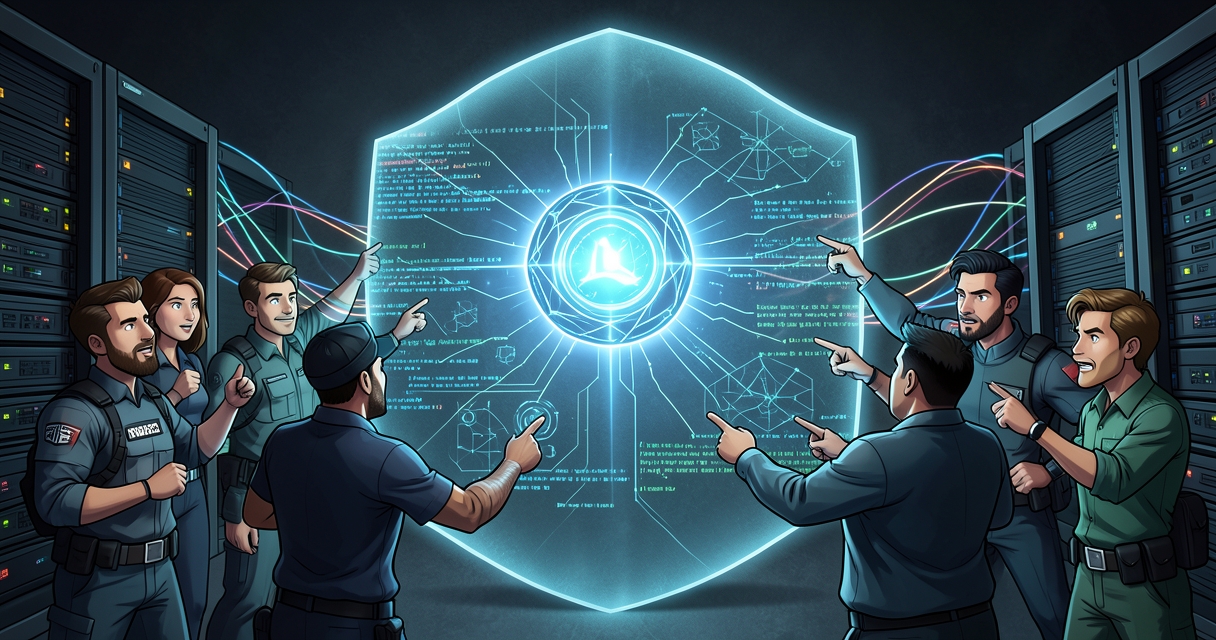
When Anthropic announced Project Glasswing, it felt like a turning point in how we think about cybersecurity. Rather than another incremental tool, Glasswing pools one of the most capable frontier language models—Claude Mythos Preview—with an unusual, urgent mission: give the organizations that run the internet and financial systems a head start against AI-enabled attackers. The initiative reads like a playbook for defensive collaboration at scale: deep industry partnerships, substantial resource commitments, and a clear focus on getting powerful capabilities into the hands of those who maintain critical software.
Why this matters now
The rules of the cybersecurity game have changed. Where vulnerabilities could once linger for months before being weaponized, advanced AI has compressed that window down to minutes. That reality raises a stark choice for defenders: either get similar AI capabilities to find and fix issues faster, or watch attackers exploit automated discovery and exploit pipelines. Project Glasswing opts for the former, treating AI not merely as a tool but as a force multiplier for defenders across both proprietary and open-source software ecosystems.
What Project Glasswing is
Project Glasswing is an Anthropic-led initiative that pairs Claude Mythos Preview—a frontier model optimized for coding and agentic tasks—with organizations responsible for critical infrastructure. The project’s launch partners include Amazon Web Services, Apple, Broadcom, Cisco, CrowdStrike, Google, JPMorgan Chase, the Linux Foundation, Microsoft, NVIDIA, and Palo Alto Networks, with access extended to more than 40 additional organizations that build or maintain essential software. Anthropic has committed up to $100 million in model usage credits and $4 million in donations to open-source security organizations to help scale this work.
How Claude Mythos Preview contributes
Claude Mythos Preview is described as Anthropic’s most capable model to date for understanding and modifying complex code—skills that translate directly to security work. In early testing, the model reportedly identified thousands of zero-day vulnerabilities across critical infrastructure that earlier models missed. Anthropic is making Mythos Preview available to Glasswing participants through multiple platforms—including the Claude API, Amazon Bedrock, Google Cloud’s Vertex AI, and Microsoft Foundry—at tiered pricing designed for research preview access.
Real partnerships, real expertise
What separates Glasswing from a simple vendor pitch is the depth of collaboration. Launch partners are not just pilot customers; they’re actively using Mythos Preview in defensive operations, red-teaming, and code hardening. AWS emphasizes integrating AI into continuous defenses across their stack, while Cisco and Microsoft highlight the urgency of collective action. CrowdStrike and the Linux Foundation underscore why open-source maintainers must be included: modern systems depend overwhelmingly on open-source components, and maintainers historically lack the resources to defend their code at scale. JPMorgan Chase and other financial players point to systemic risk: the security of the financial system depends on preemptive, rigorous defenses and cross-industry cooperation.
The defender-attacker arms race
Project Glasswing acknowledges an uncomfortable truth: the same AI capabilities that make defenders exponentially more effective can also empower attackers. Anthropic and its partners frame this as a reason to accelerate defensive adoption rather than slow down. The goal is to push powerful detection and patching capabilities into defenders’ hands quickly enough to outpace malicious actors who would weaponize the same technologies.
Supporting the open-source ecosystem
A central ethical and practical component of Glasswing is its nod to open-source maintainers. Open-source libraries comprise the bulk of modern software stacks, and their security gaps ripple across the entire ecosystem. Anthropic’s donation commitments and access grants aim to give maintainers the tools to proactively find and fix vulnerabilities, democratizing advanced security assistance beyond large teams and enterprise budgets.
Evaluation and transparency
Anthropic’s Frontier Red Team has published methodology and evaluations detailing how Claude Mythos Preview discovers, reproduces, and patches real vulnerabilities. The initiative emphasizes transparency: system cards, evaluation data, and red-team findings are part of the public conversation, allowing the broader security community to scrutinize strengths and limits. That kind of openness matters when a technology shifts threat dynamics so fundamentally.
Practical implications for defenders
For security teams, Glasswing suggests several immediate opportunities:
- Integrate AI-assisted vulnerability discovery into CI/CD pipelines to catch issues earlier.
- Use models like Mythos Preview for complex codebase analysis and automated patch suggestions, accelerating remediation cycles.
- Partner with cloud and tooling providers to ensure model outputs are vetted, reproducible, and incorporated into existing security workflows.
- Extend AI-driven support to open-source maintainers through grants and shared tooling, reducing systemic risk across the software supply chain.
Risks and guardrails
The project also raises operational questions every organization must answer: How should teams validate AI-suggested fixes? What guardrails prevent over-reliance on automated recommendations? How do we responsibly disclose findings that could be weaponized? Anthropic’s staged access, gated research preview, and collaborative partner model suggest a cautious rollout, but each participant still needs robust validation and governance around AI-driven security workflows.
Looking ahead
Project Glasswing is not a silver bullet, but it is a meaningful, pragmatic step toward reshaping defense posture for an era of AI-accelerated threats. By combining Anthropic’s frontier model with deep industry partnerships, funding for open-source defenders, and a commitment to transparent evaluation, Glasswing aims to make it possible to find and fix vulnerabilities at a pace previously thought impossible. The broader industry will now be watching whether this cooperative approach can keep pace with malicious actors and whether the lessons learned can be widely and safely adopted.
Conclusion
Project Glasswing reframes cybersecurity around collective responsibility and AI-augmented defense. It recognizes both the power and danger of frontier models and chooses to put advanced capabilities into the hands of those who maintain the infrastructure billions rely on. For security teams, open-source maintainers, and policy thinkers, Glasswing is a case study in pragmatic urgency: act fast, coordinate broadly, and build the processes and governance needed to make AI a trusted partner in defending the digital world.
 Licensed under CC BY-ND 4.0 International
Anthropic Withholds Mythos Preview: Too Potent a Cyber Threat to Release
Anthropic’s decision to withhold the Claude Mythos Preview has punctured the usual…
Anthropic’s Claude Leak: 8,000 Takedown Requests After an Accidental Source-Code Exposure
Anthropic has scrambled to contain the fallout after an accidental exposure of…
Inside the Claude Code Leak: What Anthropic’s Accidental Release Reveals
Anthropic, the AI company behind the Claude family of agents, suffered an…

Anthropic’s Claude Mythos Leak: When Pre-Release Secrets Meet Cybersecurity Risk
Anthropic recently found itself at the center of an avoidable but consequential…