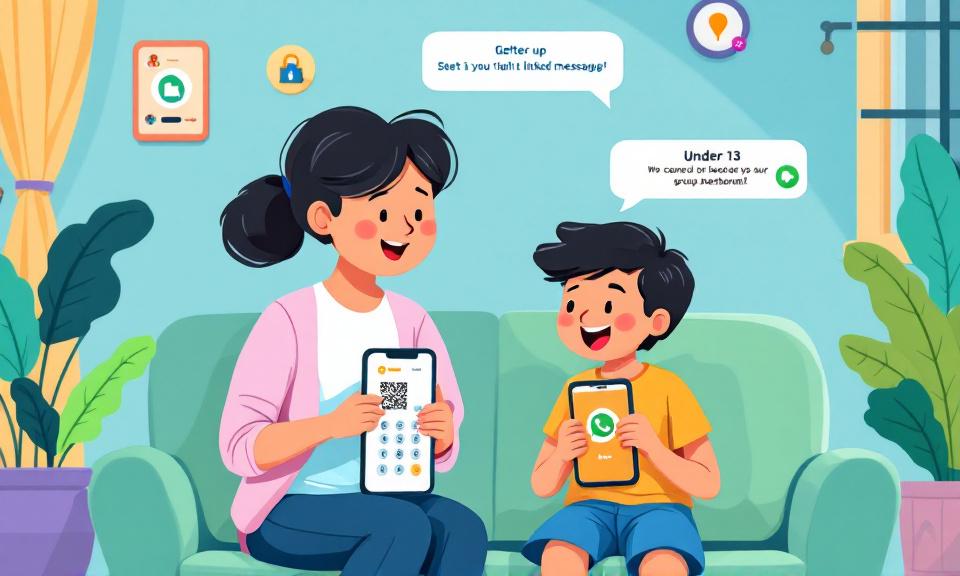
WhatsApp has begun rolling out parent‑managed accounts for pre‑teens, a new account type that gives parents and guardians control over who can contact their child and which groups the child can join. The feature is limited to messaging and calling and intentionally excludes access to Meta AI, Channels, Status, and location sharing.
What the accounts do
- Parents control contact and group membership: managed accounts can exchange messages only with people already in the child’s contacts by default, and only parents can add the child’s account to groups.
- Activity alerts: parents receive notifications for important events such as new chat requests from unknown contacts, when the child adds a new contact, or when groups add new members.
- Context for unknown contacts: when an unknown person attempts to contact the child, WhatsApp shows a context card indicating whether the unknown contact shares groups with the child and which country the contact is from.
How setup and controls work
- Co‑presence required: both the parent’s and the child’s devices must be present during setup.
- Verification and linking: the parent registers and verifies the child’s phone number, confirms the child’s age, and scans a QR code on the child’s device to link the accounts.
- Parent PIN: the parent can set a six‑digit PIN on the managed device; this PIN gates access to message requests, privacy settings, and activity alerts so only the parent can change those controls.
Privacy and encryption
End‑to‑end encryption remains in place: personal conversations remain end‑to‑end encrypted and cannot be read by third parties, including WhatsApp. Parents cannot read their child’s messages or listen to their calls via the managed account feature.
Account lifecycle
Transition at age 13: when a child turns 13, they can convert the managed account to a standard WhatsApp profile, at which point they gain full access to WhatsApp features without the parental controls applied to managed accounts.
Related updates
Meta also announced anti‑scam protections for WhatsApp that warn users when device‑linking requests appear suspicious. Meta previously introduced dedicated teen accounts for Facebook and Messenger in September 2025 and similar protections for Instagram earlier.
 Licensed under CC BY-ND 4.0 International

OpenAI Codex Command-Injection Flaw: How GitHub Tokens Were Exposed and What Teams Must Do Now
The rise of AI coding assistants has simplified developer workflows, but a…
Critical RCE in Ninja Forms File Upload Exposes ~50,000 WordPress Sites
A recently disclosed vulnerability in the popular Ninja Forms “File Upload” addon…
Researcher Publishes Windows Defender 0-Day ‘BlueHammer’ LPE Proof‑of‑Concept
A security researcher using the handle Chaotic Eclipse has publicly released a…
Microsoft Links Medusa Ransomware Affiliate to Zero-Day Exploitation Campaign
Microsoft’s recent analysis tying a Medusa ransomware affiliate to a campaign that…