
Anthropic has quietly broadened access to one of Claude’s most practical integrations: the Microsoft 365 connector. Once reserved for Team and Enterprise subscribers, the connector is now available across every Claude plan — including the free tier — enabling Claude to read and search content stored in Outlook, OneDrive, SharePoint, Teams and Calendar for users tied to an organization’s Microsoft Entra tenant. This change removes a friction point for many users who previously had to upload files manually, but it also raises important questions about setup, admin consent and privacy that every user and IT team should understand.
What the update delivers
The Microsoft 365 connector gives Claude read-only access to a user’s Microsoft 365 workspace after authentication. Practical capabilities include:
- Searching Outlook mailboxes by sender, date or thread and reading email metadata or entire conversations.
- Searching and reading files, pages and folders in SharePoint and OneDrive.
- Searching Teams chat messages, channel conversations and meeting transcripts.
- Viewing calendar events and finding available meeting times.
Because access is currently read-only, Claude cannot send emails, create or edit documents, schedule meetings, or post messages on your behalf. That limitation makes the integration useful for research, summarization, context-aware drafting and analysis without directly automating actions inside Microsoft apps.
How to enable and who can use it
A few administrative steps are required before individual users can connect Claude to their Microsoft 365 data:
- The Microsoft account must be associated with a Microsoft Entra tenant; personal outlook.com, hotmail.com or live.com accounts are not supported.
- A Microsoft Entra Global Administrator must complete a one-time consent process to enable the connector for an organization.
- For organizational deployments, Workspace Owners in Claude must enable the Microsoft 365 connector under Organisation settings → Connectors → Add Microsoft 365. After admin consent, individual users can activate the connector from their personal Claude settings (Settings → Connectors → Browse → Microsoft 365).
In short: technically any Claude plan can use the connector, but organizations must authorize it first. This preserves administrative control while unlocking the feature for a much larger population, including students and users on the free tier whose workplaces have granted consent.
Why this matters to users and teams
Lowering the plan barrier makes enterprise-grade convenience available to more people. Key benefits include:
- Faster research and summarization: Instead of downloading and uploading documents or copying email threads, you can ask Claude to surface relevant emails, meeting notes or documents from across Microsoft 365.
- Better context for AI-generated output: Claude can draw on recent threads, calendar events and files to give answers that reflect your current work context.
- Time savings for repetitive tasks: Pulling meeting transcripts or searching long chat threads becomes a quick query rather than manual search.
Potential concerns and limitations
While the connector is powerful, teams should weigh trade-offs:
- Read-only access reduces risk, but it still permits Claude to read potentially sensitive content. Organizations should review data governance policies before enabling connectors.
- No support for personal Microsoft accounts narrows who can benefit immediately; many individual users will need workplace or educational accounts.
- Admin consent is required for broad enablement, which can delay adoption in tightly controlled IT environments.
- The integration’s efficacy depends on data quality and organization: poorly named files or unmanaged mailboxes will still yield noisy results.
Best practices for admins and users
To adopt the connector responsibly:
- Admins: Evaluate compliance and privacy implications, perform a one-time tenant consent only after legal and security reviews, and document which user groups should have access.
- Users: Verify that your Microsoft account is the correct organizational account (not a personal outlook.com address) and follow your organization’s instructions for requesting connector access.
- Teams: Establish a short onboarding note explaining the connector’s read-only scope and provide examples of safe queries (e.g., searching meeting transcripts or locating specific documents) to reduce accidental exposure.
How this compares to other AI assistants
Anthropic’s move is both strategic and practical. By widening access to Microsoft 365 data, Claude positions itself as a flexible assistant for users who want AI that can reason over their workplace content. Microsoft’s own Copilot and other AI tools have similar ambitions, but differences in model behavior, privacy controls, and admin workflows will shape which assistant organizations prefer. For now, Claude’s read-only connector lowers a practical barrier: users can get contextual help without giving the assistant action privileges inside Microsoft 365.
Real-world scenarios
- A project manager asks Claude to summarize the last three weeks of project-related Teams chats and pending action items.
- A student uses Claude to find a lecture recording or assignment feedback stored in OneDrive without manually navigating folders.
- A support agent searches past Outlook threads to quickly assemble the history of a customer issue before drafting a response.
Conclusion
Making Microsoft 365 connectors available across all Claude plans is a meaningful step toward broader, context-aware AI assistance. It reduces the manual work of uploading documents, surfaces relevant workplace content quickly, and extends useful capabilities to free-tier users—provided their organization grants consent. As organizations adopt the connector, careful admin oversight and clear user guidance will be essential to balance productivity gains with data governance and privacy protections.
 Licensed under CC BY-ND 4.0 International

OpenAI Agents on Wikimedia: What Happened, What It Means, and What Comes Next
Recently disclosed investigations show clusters of autonomous AI agents — many traced…

When Speed Breaks Safety: OpenAI Safety Lead Says Company Culture Is ‘Broken’
David Robinson’s resignation has sent another shock through the AI community: a…

Attackers Exploit SharePoint Authentication Bypass After Public PoC Release
Microsoft’s SharePoint platform is facing active exploitation following the public release of…

OpenAI’s ‘Trusted Contact’ for ChatGPT: A New Safeguard for Users at Risk
On May 7, 2026, OpenAI unveiled a feature called Trusted Contact for…
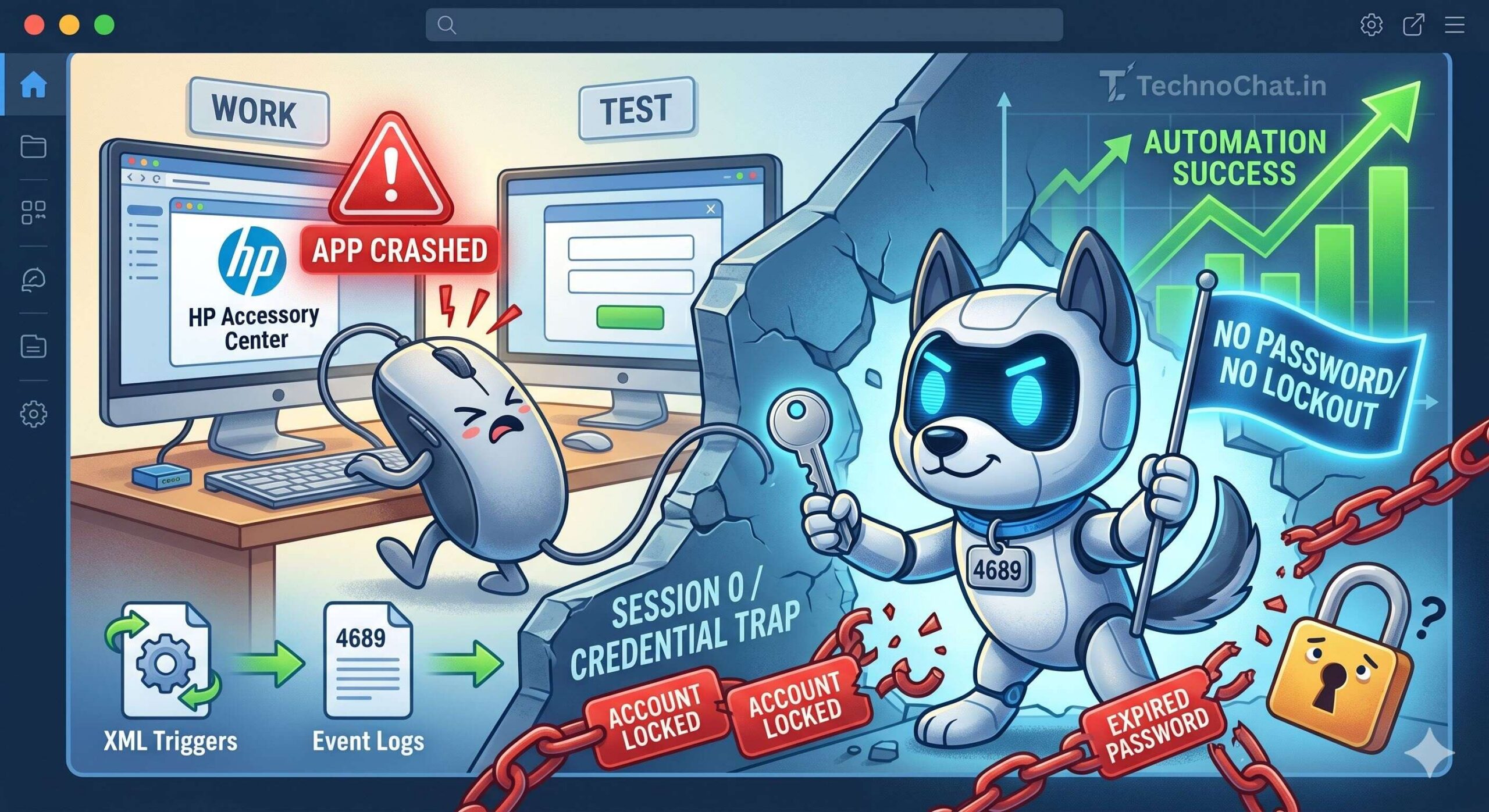
The Credential-Free Watchdog: Mastering Event-Driven App Automation
We have all been there. You are an automation lover. You have…

Microsoft’s New Group Policy to Remove Windows 11 Copilot from Managed Devices
Microsoft has quietly given IT teams a precise tool to remove the…

Microsoft Outlook.com Hits Service Degradation: What Happened and How to Prepare
On April 27, 2026, Microsoft acknowledged a service degradation affecting Outlook.com after…

OpenAI Debuts Shared Workspace Agents to Automate Team Handoffs
OpenAI has introduced a new class of ChatGPT tools called shared workspace…