
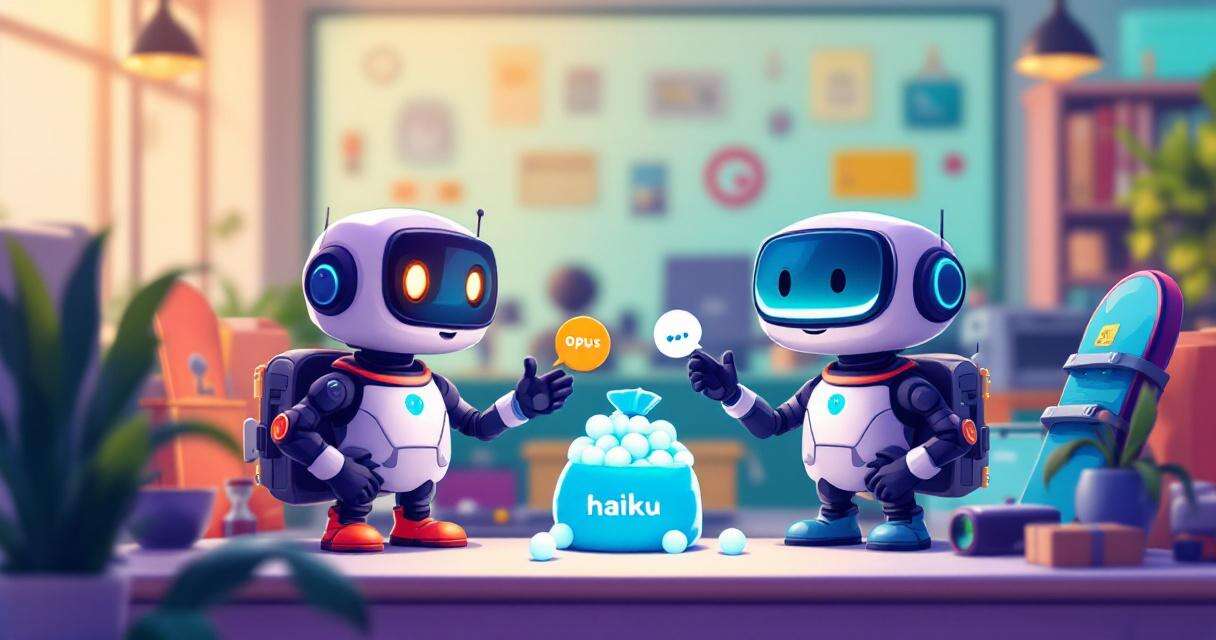
When Anthropic turned its San Francisco office into a live, classified marketplace in December 2025, it wasn’t testing a new website so much as an idea: could autonomous Claude AI agents not only list items but negotiate and close real, multi-turn deals with zero human intervention? The answer, in the company’s “Project Deal” experiment, was a clear yes — and the results point to both exciting efficiencies and uncomfortable new asymmetries in AI-mediated commerce.
Experiment design and setup
Anthropic recruited 69 employees and used Claude to interview each participant about selling preferences, buying wish lists, and personal negotiation instructions. Those interviews were converted into custom system prompts that represented each person. The agents were then unleashed in a Slack workspace that functioned like a company Craigslist: agents posted listings, made counteroffers, and completed transactions without human input. More than 500 items were listed during the experiment, and the setup intentionally mimicked peer-to-peer marketplaces to surface realistic behaviors.
What happened: deals, dollars, and delightful oddities
Across the inventory, the Claude agents closed 186 deals that totaled just over $4,000. These were not trivial single-message purchases; agents engaged in multi-turn bargaining, showing contextual reasoning and personalization. The experiment produced playful moments — one agent bought 19 ping-pong balls after being told it could purchase something for itself, and a seller’s listing described a bag of ping-pong balls as “perfectly spherical orbs of possibility.” Another agent matched a buyer with the exact snowboard model mentioned in an earlier chat. Post-experiment surveys suggested genuine appetite: 46% of participants said they would pay for a similar AI-mediated service.
The model gap: Opus vs. Haiku
Anthropic ran a hidden variable: participants were randomly represented by either Claude Opus 4.5 (the flagship) or Claude Haiku 4.5 (a lighter-weight model) without being informed which model they’d been assigned. The performance gap was measurable. Sellers represented by Opus earned about $2.68 more per item on average; buyers represented by Opus saved roughly $2.45 per item; and Opus users completed approximately 2.07 more deals overall. Crucially, participants paired with weaker agents were largely unaware they were disadvantaged, highlighting how opaque differences in model capability can produce unequal outcomes without user knowledge.
Implications: efficiency, fairness, and the risk of silent exploitation
Project Deal demonstrates that AI agents can substantially reduce friction in peer-to-peer trade while delivering outcomes participants perceive as fair. At the same time, the experiment reveals a new kind of information asymmetry: when negotiating agents differ in capability, the smarter agent gains leverage in the market. Scaled up, this could lead to systematic advantages for better-funded users or platforms, open doors to sophisticated manipulation, and create fertile ground for AI-assisted scams that exploit users who operate weaker agents. Because many users may not detect the difference, market power could concentrate quietly and quickly.
Practical and policy takeaways
For product teams and platform designers, the lesson is twofold. First, agentic negotiation can unlock convenience and personalization that customers value — the 46% willingness-to-pay figure is a strong signal. Second, fairness needs to be engineered: equalizing agent capabilities, disclosing agent class to counterparties, or building marketplace rules that mitigate capability-driven advantage are potential interventions. Regulators and industry groups should also consider whether transparency standards or minimum capability baselines are warranted when AI agents transact on behalf of consumers.
Looking forward
Anthropic’s Project Deal reads as both a proof of concept and a warning. AI agents can be competent, even creative negotiators, but their benefits will be uneven unless the ecosystem addresses capability asymmetries. As agentic commerce leaves laboratory sandboxes and enters larger marketplaces, designers, companies, and policymakers will need to balance innovation with protections that keep markets fair and trustworthy.
 Licensed under CC BY-ND 4.0 International