
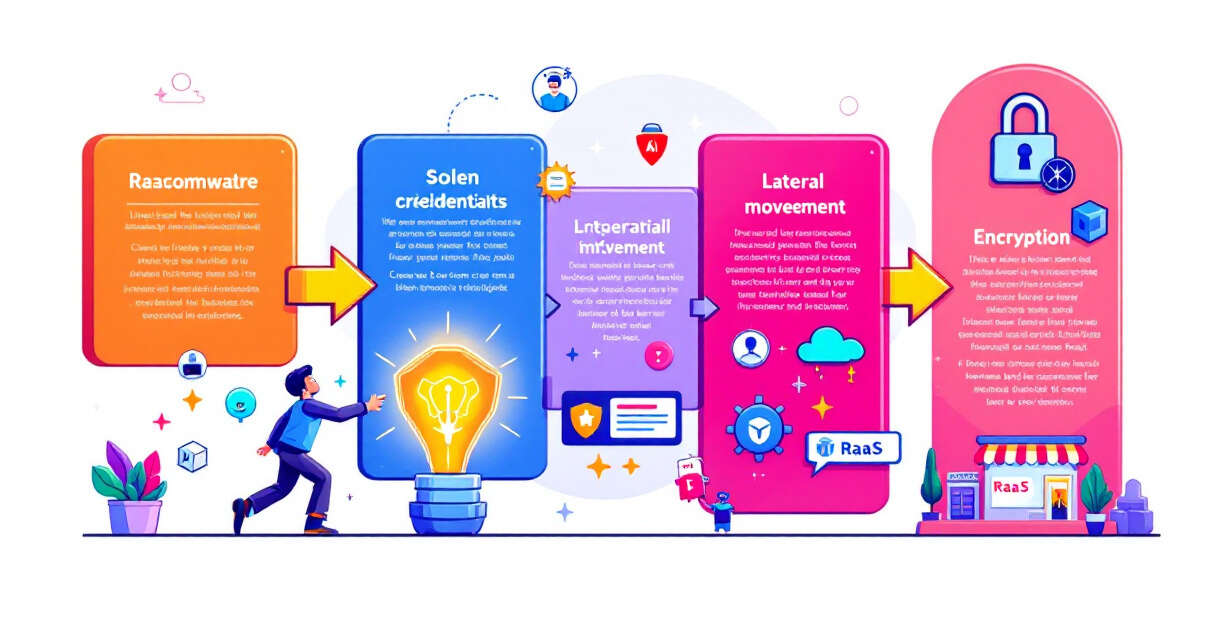
Ransomware is scaling faster than many organizations anticipated. In the first half of 2026, Flashpoint tracked 6,256 ransomware incidents — a 45% jump from 2025 — driven by expanding Ransomware-as-a-Service (RaaS) ecosystems, commoditized tooling, and growing use of AI. For security leaders, threat hunters, and intelligence teams, understanding how these operations form and where they can be interrupted has become a business-critical priority.
Why ransomware is surging
Flashpoint’s analysis points to several structural shifts fueling the increase. RaaS operations like Qilin and Akira are operating at greater scale, lowering the barriers for entry and enabling many actors to mount sophisticated campaigns. Alongside this, Flashpoint observed a 27% rise in infostealer activity in H1 2026 versus H1 2025 — making stolen credentials and session data an increasingly common route into environments. The combined effect: faster, cheaper access for attackers and greater exposure for high-value sectors.
The modern attack lifecycle
Ransomware rarely begins at encryption. According to Flashpoint, the attack lifecycle increasingly starts with primary reconnaissance: monitoring exposed services, buying or harvesting stolen credentials, and probing for unpatched vulnerabilities. From these early footholds, attackers move through initial access, lateral movement, and eventual encryption or data theft. AI-enabled tools and commoditized services accelerate many of these stages, allowing operators to automate reconnaissance, refine targeting, and scale exploitation across multiple victims.
Where defenders can intervene
The guide highlights concrete intervention points across the lifecycle. Early detection of compromised credentials, continuous vulnerability intelligence, and visibility into underground marketplaces and actor behavior give defenders the chance to act before operations escalate. Monitoring for exposed credentials and session data, prioritizing remediation for exploited vulnerabilities, and tracking emergent exploitation trends from threat intelligence sources each shorten the window of attacker opportunity.
Strengthening response and recovery
When intrusions occur, the difference between containment and catastrophic downtime often comes down to coordination and preparedness. Flashpoint emphasizes grounding incident response in primary-source intelligence so teams can prioritize containment actions, restore operations faster, and reduce the risk of repeat compromise. Practical focus areas include cross-team coordination during active incidents, clear playbooks for containment and restoration, and post-incident intelligence sharing to prevent future intrusions.
What organizations should take away
Ransomware in 2026 is an intelligence problem as much as it is a technical one. With manufacturing (18% of observed attacks), business services and consulting (13%), and healthcare (9%) among the hardest hit sectors, defenders must combine threat intelligence with operational security controls to stay ahead. By mapping defenses to the attack lifecycle — from credential monitoring and vulnerability management to coordinated incident response — organizations can identify opportunities to disrupt attacks earlier and reduce overall impact.
 Licensed under CC BY-ND 4.0 International