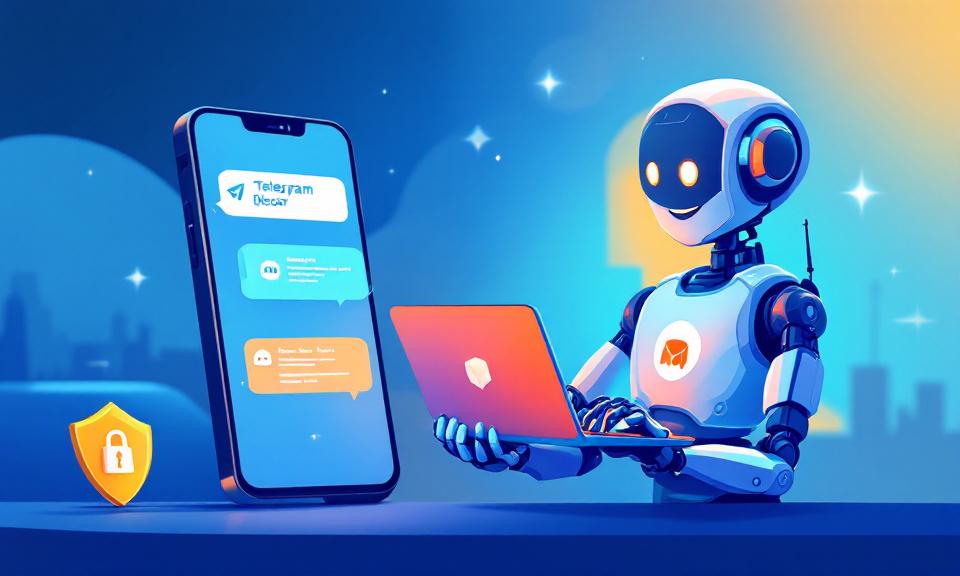
When a developer wants a quick fix while away from their desk, the options have traditionally been limited: SSH into a server, fire up a remote IDE, or wait until you’re back at your workstation. Anthropic’s new Claude Code Channels changes that pattern by letting Claude Code behave like a persistent, message-driven collaborator you can reach from apps you already use—Telegram and Discord. It’s more than a UI change; it reframes how developers think about AI assistance, moving from synchronous question-and-response to asynchronous, always-on workflows. For many, that shift will feel like the moment the convenience of OpenClaw met the safety and polish of a major AI vendor—which is why some are calling Claude Code Channels the “OpenClaw killer.”
Why this matters now
Open-source projects like OpenClaw earned a following because they offered persistence and the ability to message an agent over common chat platforms to trigger tasks and get results back. That capability unlocked new workflows: triaging CI failures from a phone, triggering tests while commuting, or having an agent complete longer-running tasks and notify you when it finishes. But local-first agent setups came with trade-offs—hardware costs, brittle remote-control mechanisms, and security worries when agents are granted broad access to local files or systems.
Claude Code Channels delivers similar functionality natively inside Anthropic’s Claude Code environment, removing much of that friction. Crucially, Anthropic brings a brand promise of safety and an official, batteries‑included flow for pairing and provisioning, which reduces the setup and risk for less-technical users. The result is a pragmatic compromise: persistent, mobile-friendly agent capabilities backed by a managed provider.
How Channels works at a glance
At the center of Channels is the Model Context Protocol (MCP), an open standard that Anthropic introduced to serve as a safe and consistent way for models to access external tools and data. In the Channels model, an MCP server acts as a two-way bridge: incoming messages from a chat platform are injected into a running Claude Code session as channel events; Claude can then run code, execute tests, or perform other actions and reply through specialized connector tools.
Two technical features make this powerful:
- Persistence: Claude Code sessions launched with the –channels flag can live in the background—on a laptop, VPS, or other server—waiting for messages rather than timing out like a typical web chat.
- Plugin-based connectors: Official plugins for Telegram and Discord (and the ability to build more via MCP) let Claude monitor and respond to messages, turning chat apps into remote control surfaces for your coding environment.
Setting up the connectors (overview)
- Create a bot on the messaging platform (e.g., Telegram’s BotFather or the Discord Developer Portal) and get a token.
- Install the corresponding plugin in Claude Code and configure the token.
- Restart Claude Code with the channels option to enable event polling.
- Pair your account using an in-chat pairing code to link a chat identity with your Claude session.
There’s also a local Fakechat demo that lets you exercise the pairing and push logic on your machine before you expose a session to external networks—an intentional safety step that reflects Anthropic’s cautious rollout philosophy.
Product and licensing implications
Claude Code Channels demonstrates a now-common product strategy: combine proprietary model capabilities with open standards. Claude Code remains a commercial product inside Anthropic’s Pro, Max, and Enterprise tiers, but it’s built on MCP—an open protocol—so third parties can author connectors and ecosystem integrations. Official connector code hosted in Anthropic repositories suggests the company welcomes community contributions while retaining centralized control over the model itself.
This hybrid approach has practical advantages: Anthropic keeps the core model and its safety guarantees within its commercial offering, while developers and integrators can extend functionality via open connector code. For many teams, that trade-off—less tinkering in exchange for easier setup and vendor support—will be attractive.
Community reaction and competitive dynamics
The response was immediate. Observers noted that Anthropic incorporated OpenClaw’s most prized features—persistence and chat-driven access—into an official, productized experience in a matter of weeks. For developers who were buying dedicated hardware or maintaining fragile home-hosted setups simply to keep an agent always-on, Channels lowers the barriers significantly.
But the dynamics aren’t one-sided. Open-source agent frameworks will retain a strong appeal for users who need full control, offline capabilities, or extreme customization. Anthropic’s Channels simplifies the mainstream use case; it doesn’t erase the need for local-first options in specialized contexts.
Security, governance, and practical cautions
Anthropic’s official connectors, pairing flows, and local test modes help address many of the hard practical questions around always-on agents. Still, teams should treat Channels like any powerful automation capability: define who can create and pair bots, limit agent privileges, manage secrets prudently, and keep audit logs of agent actions. Controlled rollouts and governance are essential, especially in organizations that expose critical infrastructure to agent-driven automation.
What this change enables for developers and teams
For individuals, Channels makes it practical to handle short development tasks from a phone: request a quick patch, monitor a CI run, or ask for a small refactor and receive a notification when it’s done. For teams, integrating agent workflows into chat platforms can make agent-driven automation more collaborative and discoverable—if the governance and access controls are right.
More broadly, Channels signals a shift in interface design for AI: as models become powerful and workflows more complex, event-driven and persistent models of interaction will become increasingly common. Open standards like MCP could enable a vibrant ecosystem of connectors, while vendor-managed services will compete on convenience, safety, and support.
Conclusion
Claude Code Channels packages always-on agent capabilities into a managed, safety-conscious product and wires them into the chat platforms developers already use. For many users, that combination will make local-first alternatives less attractive for everyday automation and mobile workflows—hence the “OpenClaw killer” label you’ll see in the community. But the choice between managed convenience and open customizability will remain, with each approach serving different needs and risk tolerances. Either way, Channels is an important step in making AI agents feel like persistent teammates rather than intermittent tools.
 Licensed under CC BY-ND 4.0 International
Inside the Claude Code Leak: What Anthropic’s Accidental Release Reveals
Anthropic, the AI company behind the Claude family of agents, suffered an…
When a Jailbreak Became a Campaign: How Claude AI Was Abused to Build Exploits and Steal Data
In late 2025 a persistent attacker turned a conversational AI into a…
When AI Agents Overload the Cloud: What Happened with Google’s Antigravity and Third-Party Wrappers
Google recently moved to suspend a number of customer accounts after heavy…
AI as Tradecraft: How Threat Actors Operationalize Artificial Intelligence
Organizations are facing a subtle but powerful shift: adversaries are not inventing…