Hackers briefly hijacked a CPUID distribution channel and altered download links on the vendor’s official website so that users seeking the popular CPU‑Z and HWMonitor utilities would instead receive a trojanized installer. The modification redirected downloads to Cloudflare R2 storage and delivered a malicious file masquerading as HWiNFO, exposing millions of users who rely on these tools for hardware diagnostics and monitoring to a potentially stealthy infostealer and multi‑stage loader.
What happened
During a short window in early April, attackers gained access to a secondary CPUID API and swapped legitimate download links with pointers to malicious payloads. The bogus package, named HWiNFO_Monitor_Setup, unzipped into an Inno Setup–wrapped Russian installer rather than the expected binaries. Multiple independent researchers and communities — including Reddit users, Igor’s Labs, vxunderground, and others — confirmed that the distribution chain had been externalized and poisoned, even while the original signed CPUID binaries remained intact on CPUID’s servers.
Technical behavior and sophistication
Researchers describe the malware as far from a trivial commodity sample. Analysis indicates a fairly advanced, multi‑staged loader that:
- Performs file masquerading and drops a trojanized build disguised as a legitimate monitoring tool.
- Executes mostly in memory to minimize disk artifacts and evade simple static detection.
- Uses living‑off‑the‑land or proxying techniques (including proxying NTDLL functionality from a .NET assembly) to hinder EDRs and antivirus engines.
- Implements covert communications and persistence mechanisms that aim to remain stealthy on infected systems.
VirusTotal results show multiple detections (around 20 engines flagged the ZIP), with various signatures referencing “Tedy” or “Artemis” families; others and some researchers characterize the payload as an infostealer. Observers also noted behavioral similarities to a recent compromise that targeted FileZilla users, suggesting the threat actor favors attacking widely used utilities to maximize reach.
Scope, timeline, and vendor response
CPUID told researchers that the side API was compromised for roughly six hours between April 9 and April 10. The company emphasized that its signed original files were not altered and that the breach was discovered and fixed. CPUID also noted the timing was unfortunate, occurring while a core developer was on holiday. At the time of reporting, CPUID had reverted the distribution links to serve clean installers for CPU‑Z and HWMonitor.
Who was affected
Anyone who downloaded CPU‑Z, HWMonitor, or followed links on the affected CPUID pages during the compromise window is potentially impacted. The audience ranges from individual enthusiasts and IT professionals to system builders and enterprise machines that use these lightweight tools for diagnostics.
Detection, indicators, and what to look for
– Filenames and installers that contain unfamiliar strings such as HWiNFO_Monitor_Setup or a Russian Inno Setup wrapper.
– Unexpected installers arriving from Cloudflare R2 or third‑party object storage URLs instead of CPUID’s normal signed download locations.
– Memory‑only processes that exhibit suspicious network activity or attempt to proxy native DLL calls through .NET assemblies.
– VirusTotal flags and community IOCs published by researchers and threat‑intel outlets.
Immediate steps for users
– If you downloaded one of the affected installers, disconnect the system from untrusted networks and limit use for sensitive tasks until you validate the machine.
– Run thorough scans with current endpoint protection and EDR tools. Use multiple engines if available, and consult community IOCs from trusted researchers.
– Compare installer hashes: download fresh installers only from CPUID’s official site and verify checksums or signatures once CPUID confirms clean builds.
– Inspect autoruns (services, scheduled tasks, registry Run keys) for unfamiliar entries and investigate any anomalies before removal.
– For high‑value or suspected compromised systems, consider full reimaging from a verified backup or clean media.
– Rotate credentials that may have been used on the device and monitor accounts for suspicious activity.
Organizational mitigations
– Treat commonly used utilities as potential supply‑chain risk vectors and apply least privilege and application allowlisting wherever practical.
– Use EDR and network monitoring to hunt for lateral movement or data exfiltration related to the compromise window and related IOCs.
– Require vendors to publish signed installers and hashes; enforce validation of signatures for downloads used on managed systems.
– Harden vendor relationships and supply‑chain oversight: require security hygiene, MFA for build and release systems, and regular audits of vendor distribution pipelines.
Lessons learned
This incident underscores how attackers maximize impact by compromising trusted distribution channels rather than attacking individual endpoints directly. Even small, legitimate utilities can become potent distribution vectors when their download flows are tampered with. The quick detection and remediation by researchers and CPUID likely limited exposure, but the episode highlights the importance of verifying installer integrity, applying defense‑in‑depth, and maintaining strong vendor security practices.
Conclusion
Supply‑chain compromises remain one of the most effective and difficult threats to mitigate because they exploit trust at scale. The CPUID incident — a short but consequential manipulation of download links — is a reminder for users and organizations to validate software sources, monitor unusual distribution changes, and demand stronger protections around build and release pipelines from vendors. Immediate, pragmatic steps (disconnecting affected systems, scanning, validating hashes, and reimaging when needed) combined with longer‑term supplier controls will reduce the risk of repeat incidents.
 Licensed under CC BY-ND 4.0 International

Nokia Lumia 800 can capture good picture in low light
Yes, with Lumia 800 you can capture good picture on low light…
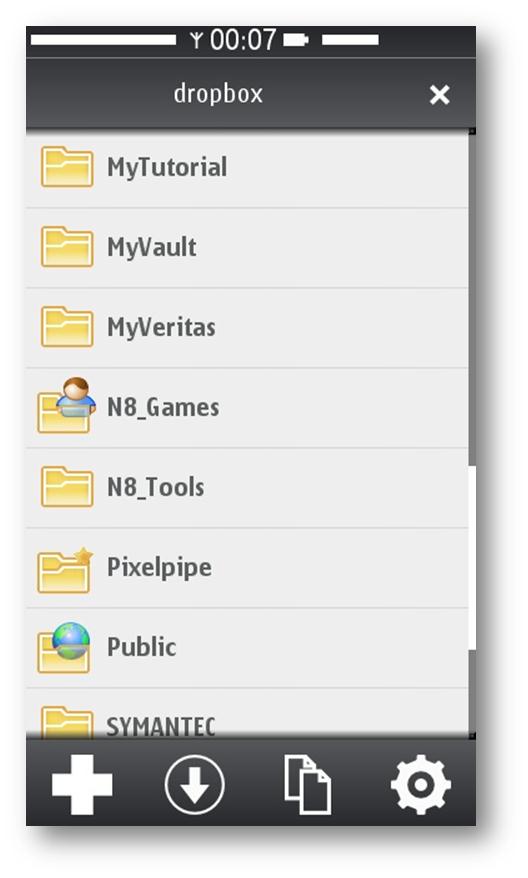
Three DropBox client for Symbian^3 (N8, C7, C6-01, E7, X7)
Currently Symbian^3 having three different native DorpBox client, and all of them…
LiteLLM Supply Chain Breach — 95M Downloads, Import-Time Backdoor, and What Teams Must Do Now
The Python package ecosystem suffered another high-impact supply chain compromise: LiteLLM —…
Chrome Security Update Fixes 26 Vulnerabilities That Could Allow Remote Code Execution
Google’s latest Chrome security update is a reminder that even the world’s…