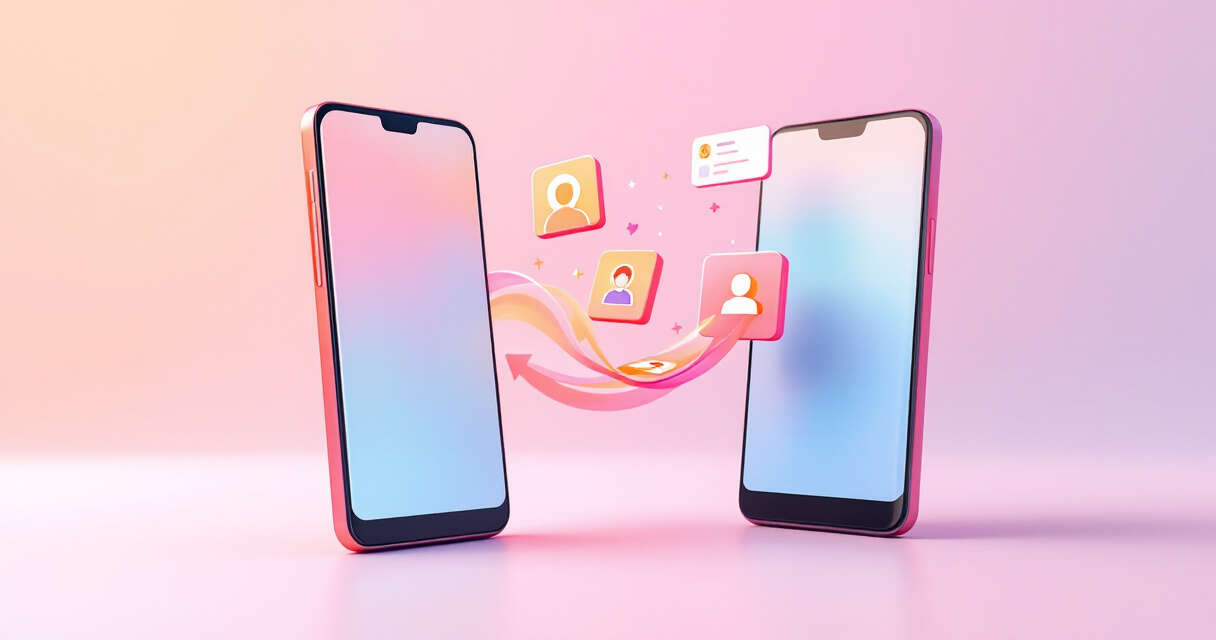
Alongside the Pixel 11 announcement, Google has upgraded Quick Share with a tap-to-share mode that makes transferring contacts, photos, videos and other items between Android devices near-instant. The company describes the feature as an “instant, two-way exchange”: bring two compatible Android phones close together and the devices complete the transfer with a simple tap. The update is rolling out now to many Pixel models and will expand to select Samsung foldables and other devices by the end of the year.
What the new tap-to-share mode does
Quick Share’s new mode simplifies common sharing tasks. Users can open the phone’s Share Sheet, choose photos, videos, contacts or other shareable content, then bring their device close to another compatible Android device and tap to complete the exchange. The feature supports bi-directional transfers—both devices can participate in the exchange—and is designed to reduce friction for casual, in-person sharing.
How it works (in practice)
Google hasn’t published exhaustive technical details in this announcement, but the user experience centers on proximity and a deliberate tap gesture to confirm the transfer. That mirrors the recent trend toward NFC-assisted exchanges used by other platforms: Quick Share combines the convenience of a tap with the Share Sheet workflow Android users already know. The result is meant to feel fast and intuitive for handing off photos or contact details when you’re next to someone.
Device support and rollout
Google says the rollout begins immediately for Pixel devices dating back to the Pixel 6 and will be available on the new Pixel 11 lineup at launch. Samsung’s Galaxy Z Fold8 Ultra, Fold8 and Flip8 are slated to receive the feature soon, and Google expects more device partners to add support before the end of the year. If you don’t see the option yet, it should arrive as part of a staged update.
How this compares to Apple’s approach
The move puts Google closer to Apple’s NameDrop and AirDrop-style conveniences. Apple introduced NFC-powered NameDrop in iOS 17 to let iPhone users share contacts and media by touching phones; Quick Share’s tap-to-share follows a similar design philosophy for Android. While the two ecosystems implement these features differently, both aim to make quick, peer-to-peer sharing effortless without relying on messages or cloud links.
Why it matters
Frictionless local sharing is a small but meaningful quality-of-life improvement for everyday smartphone use. For anyone who regularly exchanges photos at events, trades contact details in person, or passes media between family members, a reliable tap-to-share workflow saves time. For Google, improving Quick Share helps close a gap with Apple and strengthens the Pixel lineup’s selling points around seamless device interactions.
What to watch next
Look for broader device support and any clarifications from Google about privacy controls and transfer limits as the rollout continues. Compatibility with more Android phones—and how reliably the feature performs across devices—will determine whether tap-to-share becomes a default sharing habit or remains a niche convenience.
 Licensed under CC BY-ND 4.0 International
Google’s Big Bet: Up to $40 Billion Headed to Anthropic
Google is preparing to invest a headline-grabbing sum in Anthropic — at…
Google brings “Skills” to Chrome so Gemini prompts are instantly reusable
Chrome is getting another nudge toward becoming the home for Google’s AI…
Google Says Q-Day Could Arrive by 2029 — Why the Race to Post‑Quantum Cryptography Just Got Real
Google has set a new, sharper deadline for what the industry calls…
Google Completes $32 Billion Acquisition of Wiz
Google has finalized its acquisition of Wiz, the Israeli cloud and AI…
Critical Dell Container Storage Flaws Expose Admin Controls — Immediate Upgrades Required
Dell’s Container Storage Modules (CSM) were found to contain multiple critical vulnerabilities…
Ransomware Strikes Colombian Justice Ministry Ahead of Presidential Transition
Colombia's Ministry of Justice was hit by a ransomware attack on August…
Microsoft Extends Windows 10 Extended Security Updates Through October 2027
Microsoft has quietly extended its consumer Extended Security Updates (ESU) program for…

How Compute Became the Real Prize: Anthropic, SpaceX, and the Musk–Altman Showdown
The story this week looked less like another round in the model…