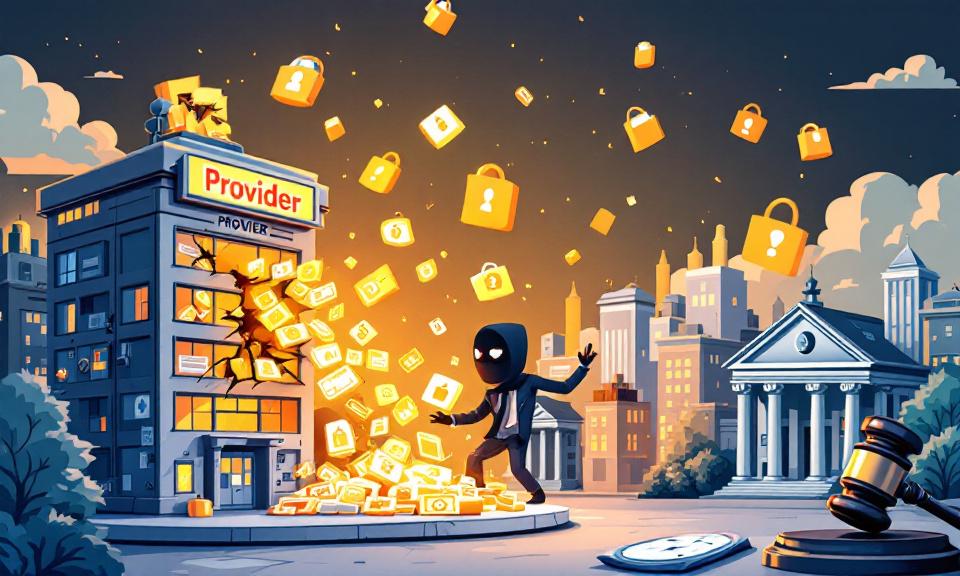
Marquis, a Texas-based provider of digital marketing, CRM and analytics services for hundreds of financial institutions, disclosed a major security incident tied to a mid‑2025 ransomware attack that ultimately exposed the personal information of more than 672,000 people. The story is less about a single failure and more about how a cascade of weaknesses—an exploited firewall, third‑party exposure, and slow discovery—can amplify harm across an industry that relies heavily on interconnected vendors.
The breach and how it unfolded
On August 14, 2025, attackers compromised Marquis’ environment after exploiting a vulnerability tied to a widely used firewall product. The breach allowed the adversary to download files containing sensitive personal and financial information. Marquis later notified affected individuals—about 672,075 people—after an internal review finished in December. The company maintained that the intrusion was limited to its systems and did not directly compromise customer networks, but the operational fallout affected many bank clients and led to litigation and regulatory scrutiny.
Scope and impact
The stolen data set was broad and sensitive: names, dates of birth, addresses, phone numbers, Social Security and Taxpayer Identification Numbers, and financial account details. The disruption extended beyond data loss: operations at dozens of banks (reporting indicated impacts across some 74 institutions) were interrupted, and Marquis faces dozens of civil suits and class actions from consumers and customers seeking damages and remediation.
Where the supply chain failed
This incident highlights how vendor dependencies can become single points of systemic risk. Marquis pointed to a breach disclosed by the firewall vendor later in September, which reportedly allowed attackers to obtain credentials and tokens used to access customer devices. Security investigators associated the firewall incident with a sophisticated threat actor, and Marquis has since taken legal action alleging gross negligence by the vendor. Whether through misconfiguration, unpatched appliances, or exposed management interfaces, the result is the same: attackers found an entry vector into a provider that held data for hundreds of institutions.
Lessons for banks, vendors, and security teams
- Treat vendor security as core security. Contracts and audits need to go beyond checkbox compliance—assess how vendors manage privileged interfaces, backups, and access tokens.
- Assume compromise of upstream services. Design vendor interactions so that a single vendor breach cannot expose bulk client data—use strong segmentation, encryption at rest, and token rotation.
- Harden and monitor edge devices. Firewalls and remote management consoles are high-value targets; enforce multifactor authentication, frequent credential rotation, and rigorous logging.
- Test incident response end-to-end. Run tabletop and live exercises that include vendor incidents, cascade scenarios, and customer notification procedures so roles and timelines are clear.
- Prepare legal and communications playbooks. Rapid, transparent communications lower reputational damage; preserving evidence and partnering with forensic firms helps both containment and potential litigation.
Practical actions organizations can take now
Start with inventory and isolation: map which vendors have direct or indirect access to sensitive data and reduce unnecessary privileges. Increase telemetry around vendor-managed systems and prioritize compensating controls where you cannot remove exposure quickly. Require vendors to share timelines, incident response plans, and independent audit reports. Finally, maintain a realistic view of insurance and legal recourse: cyber insurance can help with costs, but it does not replace robust technical controls.
A broader perspective: resilience over blame
While lawsuits and regulatory consequences will follow, the primary takeaway isn’t just to assign blame to a single vendor. The Marquis incident underscores a broader industry imperative: build systems that expect failure and limit blast radius when it occurs. For financial services—where trust and privacy are core—reducing systemic vendor risk and investing in rapid detection and containment will pay dividends when adversaries inevitably probe for another weak link.
 Licensed under CC BY-ND 4.0 International
Akira Ransomware Uses Windows Safe Mode to Shut Down EDR Before Launching Encryptor
Akira’s latest tactics expand the ransomware playbook: instead of relying solely on…
2.86 Billion Credentials Flood Criminal Markets — How Infostealers and Initial-Access Brokers Are Reshaping Risk
Stolen login data has become a commodity so abundant that it’s now…

Hackers Leverage Microsoft Teams to Breach Organizations: Inside UNC6692’s SNOW Campaign
In late 2025 and into early 2026, a sophisticated intrusion campaign used…
Ransomware Strikes Colombian Justice Ministry Ahead of Presidential Transition
Colombia's Ministry of Justice was hit by a ransomware attack on August…