A critical cPanel/WebHost Manager flaw tracked as CVE-2026-41940 is being actively exploited to deploy a cross-platform backdoor known as Filemanager. Security researchers tied the activity to a threat actor using the handle Mr_Rot13, and observed rapid, automated scanning and exploitation from thousands of attacker IPs worldwide. The attacks move quickly from an initial authentication bypass to persistent access via injected SSH keys, PHP web shells, credential theft, and eventual deployment of a Go-based infector that harvests sensitive data and installs a versatile backdoor capable of running on Windows, macOS, and Linux.
What happened
Researchers at QiAnXin XLab report that the vulnerability enables an authentication bypass in cPanel/WHM, allowing remote attackers to elevate control of the control panel. Within days of public disclosure, the flaw attracted broad automated exploitation: XLab counted more than 2,000 attacker source IPs participating in attacks, with notable activity originating from Germany, the United States, Brazil, and the Netherlands. The outcome on compromised hosts includes cryptocurrency mining, botnet activity, ransomware, and the implantation of the Filemanager backdoor.
How the attack chain works
The observed intrusion sequence is multi-stage and automated:
- Initial exploit: An attacker leverages the CVE-2026-41940 authentication bypass to interact with cPanel/WHM without valid credentials.
- Dropper script: A shell script (delivered from domains observed in the wild) uses wget or curl to download a Go-based infector binary.
- Persistence and web shell: The infector implants an SSH public key for persistent access and drops a PHP web shell that supports file upload/download and remote command execution.
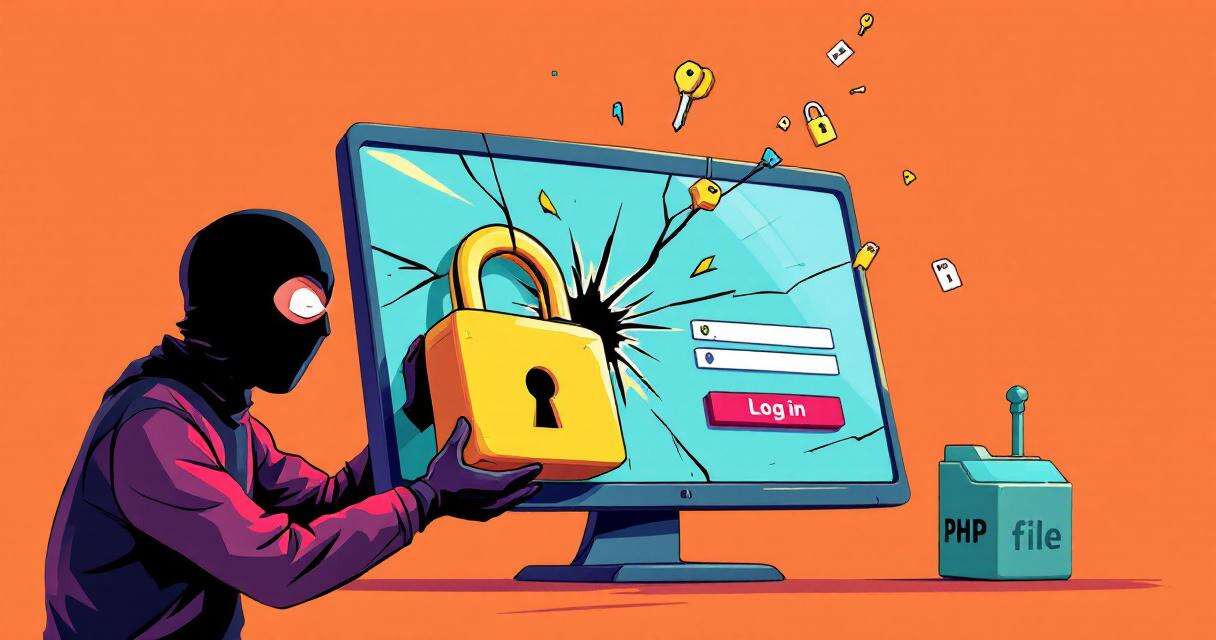
- Credential harvesting: The web shell injects JavaScript to present a customized cPanel login page, harvesting credentials submitted by legitimate users. Stolen credentials are exfiltrated—encoded using a ROT13-like obfuscation—to attacker-controlled infrastructure.
- Backdoor deployment: Filemanager, the cross-platform backdoor, is installed. It offers file management, remote command execution, and shell capabilities, and is reported to collect bash history, SSH artifacts, device details, database passwords, and cPanel virtual aliases (valiases).
- Data exfiltration and control: In some cases, telemetry indicates sensitive data is aggregated and sent to attacker-controlled channels, including a small Telegram group tied to the actor.
Notable artifacts and infrastructure
Public reporting and analysis highlight specific artifacts and infrastructure repeatedly observed in these campaigns:
- Domains used to host payloads or scripts: cp.dene[.]com, wpsock[.]com
- Credential exfiltration domain referenced via ROT13 obfuscation: wrned[.]com
- A PHP backdoor sample named helper.php previously uploaded to VirusTotal (April 2022), suggesting long-lived infrastructure
- Telegram group and actors tied to the operation (including a group linked to user “0xWR” and the actor handle Mr_Rot13)
XLab’s historical analysis found the C2 domain registration dated to October 2020 and a persistently low detection rate for related samples over several years, indicating stealthy operations predating this vulnerability exploitation.
Who is at risk
Any organization running affected versions of cPanel or WHM and exposing management interfaces to the internet is at risk—especially shared hosting providers, web hosting resellers, and customers who rely on web control panels for site management. Environments with weak network segmentation, unmonitored login pages, or unmanaged SSH keys are particularly vulnerable to escalation and lateral movement after initial compromise.
Immediate steps to take (incident response checklist)
- Patch immediately: Apply the official cPanel/WHM patches or updates that address CVE-2026-41940. Treat this as high priority.
- Isolate suspected hosts: If you detect exploitation or indicators of compromise, take affected servers offline or isolate them from production networks to prevent lateral movement and data exfiltration.
- Rotate credentials: Force password resets for cPanel accounts, SSH keys, database users, and any API keys that may have been exposed.
- Check for unauthorized SSH keys: Review authorized_keys files for unexpected public keys and remove unknown entries.
- Hunt for web shells and dropped files: Search for recently modified PHP files, especially names like helper.php or other unfamiliar web shells. Remove and analyze suspicious files.
- Review logs: Inspect cPanel, web server, SSH, and system logs for signs of the exploit, unusual login patterns, and outbound connections to suspicious domains.
- Scan for related artifacts: Use YARA, antivirus, and endpoint detection tools to hunt for the Go-based infector, Filemanager components, and other indicators provided by vendors and researchers.
- Preserve evidence: If performing a full investigation, collect images, logs, and forensic artifacts before remediation actions that could destroy evidence.
- Notify stakeholders: Inform customers, partners, or internal teams as appropriate and engage incident response or a third-party forensics firm if needed.
Long-term defenses and hardening
- Minimize exposure: Restrict access to cPanel/WHM interfaces using IP allowlists, VPNs, or bastion hosts. Avoid exposing management portals directly to the internet.
- Apply least privilege: Limit administrative accounts and separate duties; implement strong authentication (MFA) for control-plane access.
- Monitor and alert: Implement behavioral monitoring and alerting for unusual processes, outbound connections to known malicious domains, large file transfers, and unexpected creation of web shells or SSH keys.
- Regular audits: Periodically audit authorized SSH keys, installed software, webroot contents, and cron jobs for unauthorized changes.
- WAF and network controls: Deploy a web application firewall and network-level controls to detect or block exploit attempts and known malicious payload domains.
- Backups and recovery plans: Maintain immutable backups and routinely test restore procedures to ensure you can recover clean systems after compromise.
- Threat intel integration: Subscribe to reputable threat intelligence feeds and vendor advisories to receive IOCs and signatures relevant to emerging campaigns.
Conclusion
CVE-2026-41940 demonstrates how quickly a critical control-panel vulnerability can be weaponized into a wide-ranging campaign that combines credential theft, persistent SSH access, and cross-platform backdoors. The speed and scale of exploitation—thousands of IPs involved and backdoor components with low historical detection—make rapid patching and aggressive incident hunting essential. Organizations that host or manage cPanel/WHM instances should treat this as an immediate operational priority: patch, investigate, and harden to prevent further compromise.
 Licensed under CC BY-ND 4.0 International