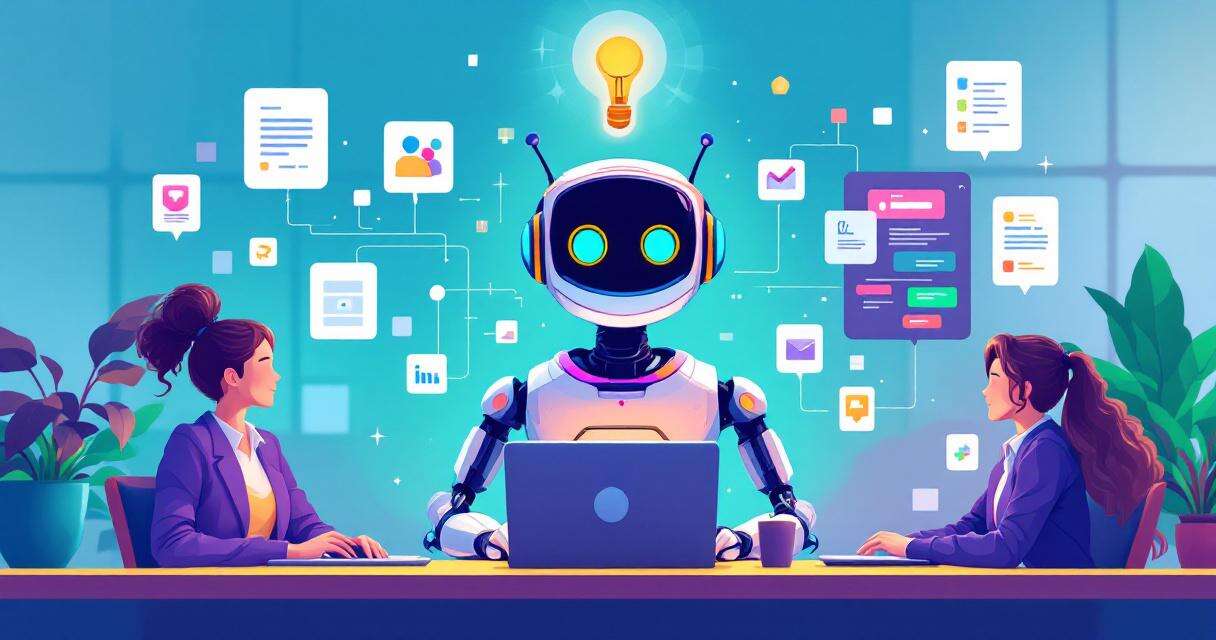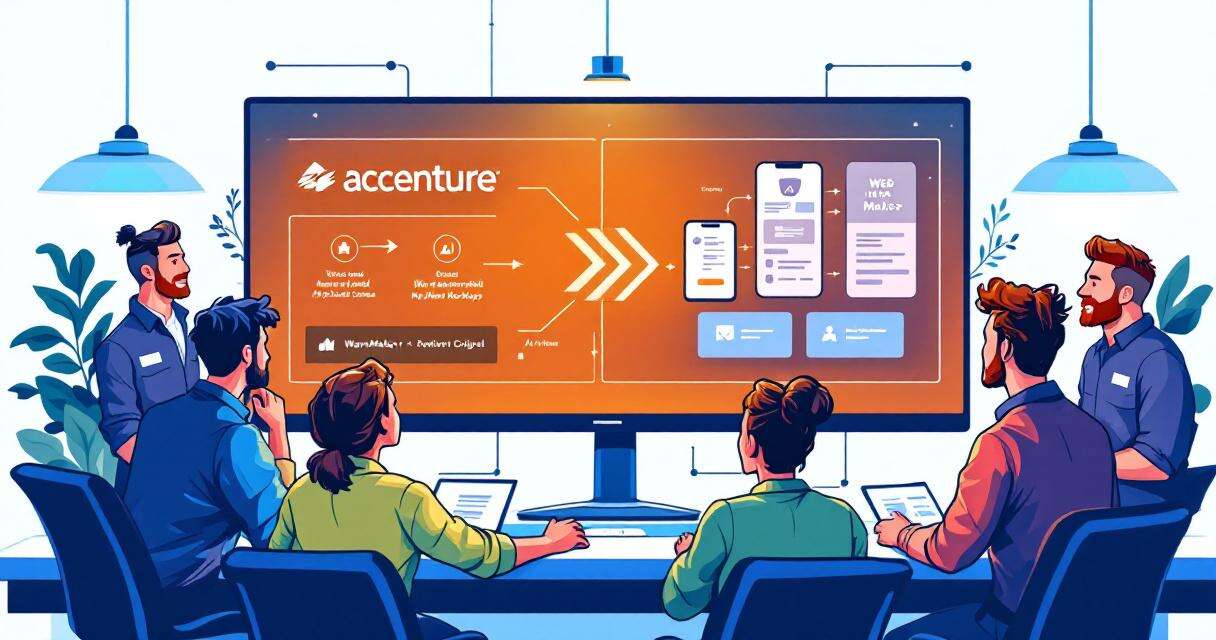
Accenture and WaveMaker have forged a strategic collaboration aimed at helping mid-market organizations modernize their applications using WaveMaker’s agentic AI platform. Rather than positioning this as a large enterprise play, the partnership focuses on companies with revenues up to about $3 billion that often lack the budgets or in-house engineering scale for full-scale digital transformation. The goal is practical: accelerate modernization and new app delivery while controlling cost, complexity, and operational risk.
Why this partnership matters
Accenture brings deep systems-integration and software engineering services; WaveMaker brings an AI-first code-generation platform designed to translate designs (for example, Figma files) and natural-language prompts into working web and mobile applications. By combining Accenture’s delivery muscle with WaveMaker’s platform, the partners aim to deliver faster, repeatable modernization for organizations that fall between small-business simplicity and large-enterprise resources. For companies juggling legacy systems, SaaS sprawl, and competitive pressure, that middle-market gap is where value can be realized quickly.
The 2-pass deterministic engine
WaveMaker’s key technical claim is a two-pass generation architecture intended to reduce AI hallucination and produce deterministic, production-ready code. The first pass creates a meta-model representation of the app (WaveMaker Markup Language), which can be inspected and corrected visually. The second pass then emits final code through a deterministic generator that enforces architecture and quality constraints. The two-stage approach is intended to keep the speed advantages of AI-driven generation while preventing nondeterministic outputs from reaching production—critical for regulated industries and team-scale applications.
Targeting the mid-market opportunity
The partnership is explicitly targeted at mid-market firms—complex enough to require substantial software capabilities but often constrained on budgets and technical staff. Accenture and WaveMaker see an underserved market here: firms that need scalable, maintainable applications but can’t afford large transformation programs. The aim is to provide an “industry-ready” platform experience that fits the staffing profiles and development patterns of these organizations, enabling rapid modernization without the overhead traditional rewrites entail.
How guardrails and compliance are enforced
A standout part of the WaveMaker approach is the focus on enforceable guardrails: design tokens and system-enforced components, accessibility defaults, built-in security and OWASP compliance, and a 12-factor architectural baseline. Those guardrails are configured in the platform so apps generated for a business automatically comply with company-wide design systems, security requirements, and operational patterns. For customers in regulated sectors—finance, healthcare, insurance—these baked-in controls are essential to reduce risk and to ensure long-lived, maintainable code rather than throwaway prototypes.
The competitive landscape and WaveMaker’s position
The agentic AI application-development space is crowded: low-code platforms, major cloud vendors, and established enterprise systems are adding AI-assisted capabilities. WaveMaker differentiates by emphasizing a hybrid agentic system geared for production-grade React/Angular web apps and React Native mobile apps, with Java/Spring backends as a common stack. The company positions the 2-pass deterministic flow and prebuilt architectural assumptions as its edge against tools that produce quick prototypes but leave teams to harden and scale them later.
What this means for customers and partners
For mid-market customers, the promise is faster modernizations with less risk and lower cost than bespoke rewrites. For Accenture, the collaboration extends its ability to serve clients that need rapid, cost-effective modernization without the full-scale transformation budgets of larger enterprises. For WaveMaker, partnering with a global systems integrator helps validate its approach and expand reach into teams that need immediate, reliable, production-ready outcomes. Together, the two are betting that the middle of the market—too complex for simple SaaS and too resource-constrained for traditional modernization—represents the most fertile ground for an AI-driven, platform-led services play.
 Licensed under CC BY-ND 4.0 International