

Microsoft’s SharePoint platform is facing active exploitation following the public release of a proof-of-concept (PoC) for a critical authentication bypass vulnerability tracked as CVE-2026-55040. Patched in July’s Patch Tuesday, the flaw allows unauthenticated actors to impersonate SharePoint users by forging JSON Web Tokens (JWTs). Since the PoC surfaced, security researchers and telemetry providers have observed real-world attempts that underscore the urgency for administrators to apply updates and audit their environments.
What happened
Microsoft disclosed CVE-2026-55040 as a high-severity authentication feature bypass with a CVSS score of 9.1. The vendor’s advisory explains that the vulnerability could enable attackers to impersonate legitimate users, disclose files, and modify data on vulnerable SharePoint instances—though it does not appear to enable attacks against system availability. Rapid7 released a Python-based PoC that chains several weaknesses in SharePoint’s JWT validation pipeline, and threat actors quickly began leveraging that PoC in opportunistic scans and targeted queries.
How the exploit works
- The outer JWT header uses “alg”: “none”, removing the requirement for a signature on the outer token.
- The actor token carries an x5t header with SharePoint’s own STS certificate thumbprint, allowing a signing key to be resolved without proper verification.
- The resolved certificate is not present in TrustedSecurityTokenServices, yet the issuer is still accepted.
- The actor token contains a non-empty signature value (for example, AAAA) that is never actually verified by the vulnerable code.
Using this forged JWT, the PoC can query domain controllers, enumerate users by SID, and identify site administrators to escalate access and perform arbitrary operations as those users.
Evidence of active exploitation
Telemetry collected by KEVIntel recorded 12 exploitation attempts starting July 19, 2026, with a spike on August 12–13 that coincides with the PoC’s publication. The attempts originated from eight unique IP addresses across five regions, including Hong Kong, Japan, the Netherlands, Taiwan, and the U.S. While attribution and the ultimate intent of the attackers remain unclear, the activity pattern indicates that public PoCs can rapidly accelerate abuse of high-impact flaws.
Implications for organizations
This vulnerability has several operational and security implications:
- Rapid weaponization: The quick turnaround from PoC release to exploitation attempts highlights the need for timely patching and risk-based prioritization.
- Impersonation risk: Because the flaw enables impersonation of site users and administrators, organizations face confidentiality and integrity risks—sensitive documents could be accessed or altered.
- Detection challenges: The exploit leverages token mechanics that may blend into legitimate authentication traffic, making detection by naive indicators difficult.
Actionable steps for defenders:
- Patch immediately: Ensure SharePoint servers are updated with Microsoft’s July 2026 fixes that address CVE-2026-55040.
- Review logs: Look for anomalous authentication flows, unexpected JWT headers (such as “alg”: “none”), and unusual queries to domain controllers from SharePoint servers.
- Restrict exposure: Limit public-facing SharePoint endpoints where possible and enforce network segmentation to reduce lateral movement opportunities.
- Rotate credentials and keys: Where feasible, rotate service account credentials and review any delegated trust relationships that could be abused by forged tokens.
- Threat hunting: Prioritize reviews for SID enumeration activities and queries that attempt to discover site administrators.
Lessons learned
The incident reinforces a few perennial lessons for enterprise security teams: public PoCs can precipitate immediate exploitation; complex authentication chains require defense-in-depth; and fast, prioritized patching combined with proactive detection and segmentation significantly reduces exposure. Organizations should also consider exercising token validation sanity checks and threat-hunting routines focused on authentication anomalies.
Conclusion
CVE-2026-55040 is a high-impact authentication bypass that can lead to impersonation and data exposure on vulnerable SharePoint installations. With Rapid7’s PoC publicly available and multiple exploitation attempts observed, administrators should prioritize patching, auditing authentication logs, and hardening access controls to mitigate the risk. Staying vigilant and responding swiftly to PoC disclosures remains essential to reducing the window of opportunity for attackers.
 Licensed under CC BY-ND 4.0 International

Antino: A Stealthy Backdoor That Hides in Outlook and OneDrive
A new espionage campaign tracked by Cisco Talos has exposed a sophisticated…

Breaking the code: how a multi-stage “code of conduct” phishing campaign led to AiTM token compromise
Phishing has evolved from crude scams to carefully engineered deceptions that mimic…

Critical Microsoft 365 Copilot Flaws: What Organizations Need to Know
Microsoft has disclosed and silently remediated three critical information-disclosure vulnerabilities in Microsoft…
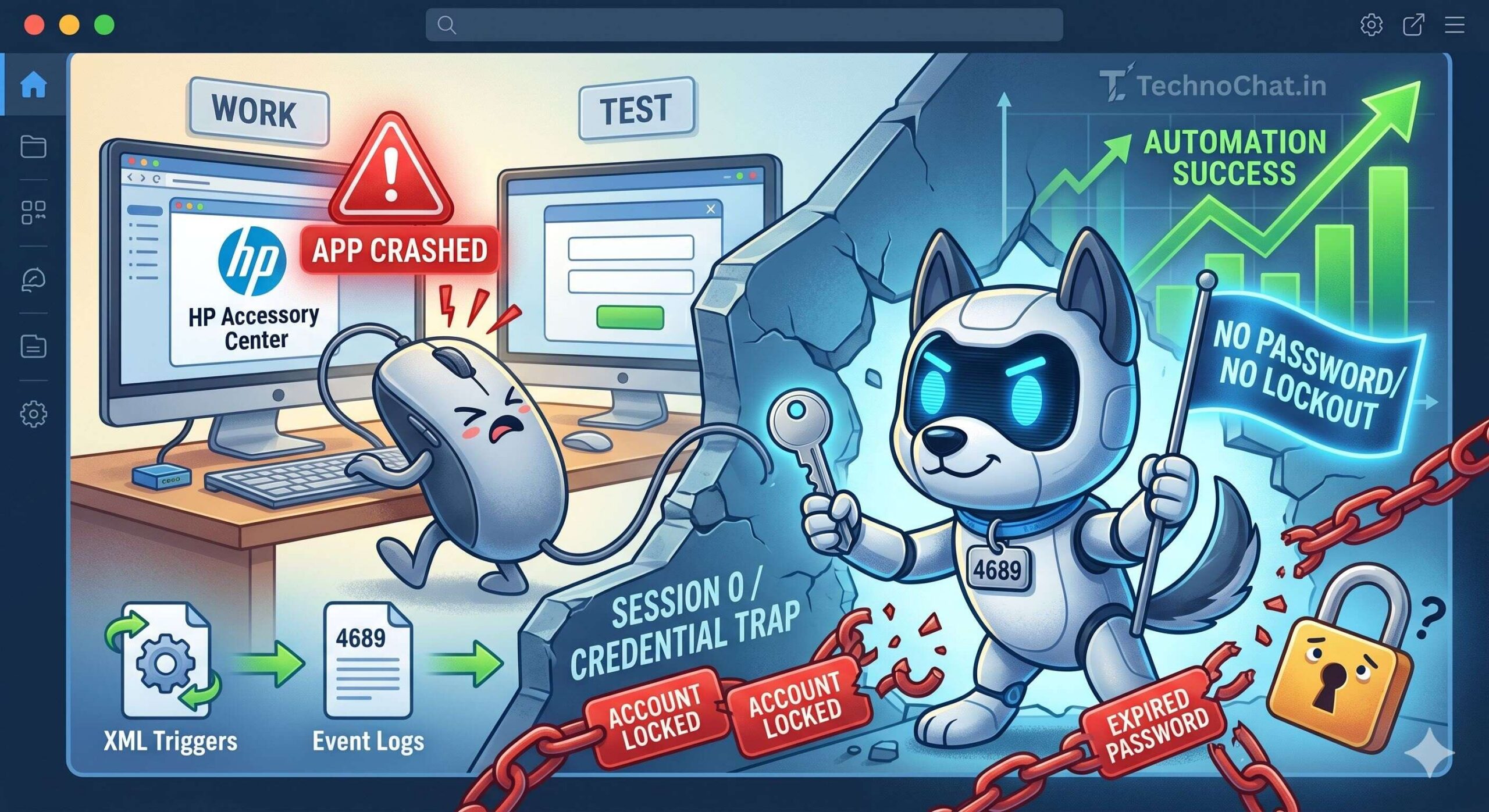
The Credential-Free Watchdog: Mastering Event-Driven App Automation
We have all been there. You are an automation lover. You have…

Hackers Leverage Microsoft Teams to Breach Organizations: Inside UNC6692’s SNOW Campaign
In late 2025 and into early 2026, a sophisticated intrusion campaign used…

cPanel compromise: CVE-2026-41940 and the Filemanager backdoor
A critical cPanel/WebHost Manager flaw tracked as CVE-2026-41940 is being actively exploited…

OpenAI Agents on Wikimedia: What Happened, What It Means, and What Comes Next
Recently disclosed investigations show clusters of autonomous AI agents — many traced…

Atlassian Urges Immediate Patching After Critical Arbitrary File-Access Flaw
Atlassian has released emergency fixes for a critical arbitrary file access vulnerability…