
When Mike McClary decided to revive a discontinued flashlight that had once been one of his best sellers, he didn’t dust off the old supplier spreadsheet or spend weeks emailing factories. Instead, he opened Accio, an AI-powered sourcing assistant on Alibaba.com, and started a conversation. Within weeks he had a redesigned product, a recommended factory in Ningbo, and a projected per-unit manufacturing cost that dropped from about $17 to roughly $2.50. What would once have been a months-long hunt for a manufacturer and price quote had been radically compressed by an algorithm trained on decades of marketplace data.
The flashlight is a useful vignette because it shows what’s changing for small e-commerce entrepreneurs. For generations, launching a physical product meant a tedious, manual grind: combing supplier listings, parsing reviews, asking for samples, negotiating minimum orders, and iterating on design through trial and error. Tools like Accio don’t eliminate that human work, but they shift the hardest early parts—product research, feasible design suggestions, and supplier shortlists—into an AI workflow. For busy founders running businesses out of living rooms and garages, the speed and accessibility of that assistance can be transformative.
What Accio does differently
Accio presents itself as a conversational agent with a user experience similar to popular chatbots, but its output is tuned for product sourcing. Users describe a product idea or an existing design and choose between quick or deeper analysis modes; the tool then responds with charts, supplier links, design tweaks, and follow-up questions that narrow the user’s needs. Rather than returning only text, it synthesizes marketplace signals and surfaces a handful of suppliers that appear capable of delivering what the buyer wants.
Under the hood, Alibaba says the assistant combines its Qwen family of large language models with 26 years of the company’s proprietary transaction and supplier data. That domain-specific training is what many sellers point to when they say Accio outperforms general-purpose chatbots for sourcing tasks: the system can weigh equipment capabilities, historical order patterns, and listing details in ways that a generic model cannot.
How small businesses use the tool
Sellers use Accio across a range of tasks. Some run it for product ideation—asking what variants might sell or how to adjust features for cost and manufacturability. Others use it to shortlist factories, gain a quick estimate of production economics, or identify alternative materials and finishes. One e-commerce consultant described feeding the AI a brand concept and getting concrete design suggestions that felt current and fit a boutique aesthetic.
But the human still matters. Users must follow up with suppliers, request samples, negotiate terms, and test the market. The AI can nudge a product in a more manufacturable direction or flag a supplier that looks capable on paper, but vetting and execution remain hands-on tasks. Sellers report that Accio is strongest in the ideation and supplier-discovery phases and less useful for marketing strategies like ad creative or social campaigns.
Effects on manufacturers and the marketplace
Manufacturers are already responding to the new discovery dynamic. Some suppliers are adding richer descriptions of their equipment, capabilities, and experience, believing these details increase their chances of being surfaced by AI tools. A packaging company representative in Wuhan said vendors can’t always tell whether an inquiry comes directly from a human or through an AI, and many are not yet using AI to negotiate pricing or manage orders.
Alibaba maintains that, at least for now, Accio is not tied into any preferential advertising system—suppliers can still pay for higher placement in standard search results, but Accio’s recommendations are not directly integrated with that paid system. The company has, however, experimented with token-based usage limits for users who want to keep chatting after their free queries run out, suggesting monetization avenues are still being explored.
Benefits, limits, and risks
The benefits are real and tangible: faster product development cycles, easier supplier discovery, and lower barriers to entry for entrepreneurs who lack sourcing experience. Sellers say tools like Accio can reduce the time from idea to store listing from months to weeks, a competitive advantage in fast-moving e-commerce niches.
But important limits and risks remain. AI suggestions can be generic and need human scrutiny. Training data and system incentives are not fully transparent, raising concerns about fairness and whether certain suppliers might be favored by hidden signals. There are also broader questions about intellectual property, quality control, and the potential for over-reliance on automated recommendations. Researchers argue that developers should disclose what data an agent collects and how it ranks suggestions to keep marketplaces fair and secure.
What this means for entrepreneurs
Access to better research and supplier signals lowers the technical bar to launching a product, but it doesn’t guarantee success. Experienced sellers still outperform newcomers by virtue of better judgment, faster decision-making, and execution skills—things AI helps with but cannot replace. For many founders, the best approach will be a hybrid: use AI to generate ideas and surface opportunities, then apply human expertise to vet suppliers, test samples, and design marketing that resonates.
Looking ahead
As AI continues to be woven into commerce platforms, we should expect both subtle changes—suppliers optimizing listings for machine readability—and bigger shifts, like more sellers bringing novel concepts to market quickly. For policymakers, platform designers, and entrepreneurs, the challenge is to preserve a level playing field while capturing the productivity gains these tools promise. For sellers like McClary, the immediate payoff is practical: a revived product, lower costs, and a faster path back to customers. For the broader ecosystem, the experiment is ongoing—how to combine powerful AI assistants with transparent incentives and robust human oversight will determine whether these tools help democratize manufacturing or simply reroute advantage to those who best game the new systems.
Source: MIT Technology Review — “AI is changing how small online sellers decide what to make,” April 6, 2026. https://www.technologyreview.com/2026/04/06/1135118/ai-online-seller-alibaba-accio/
 Licensed under CC BY-ND 4.0 International

Nokia Lumia 800 can capture good picture in low light
Yes, with Lumia 800 you can capture good picture on low light…
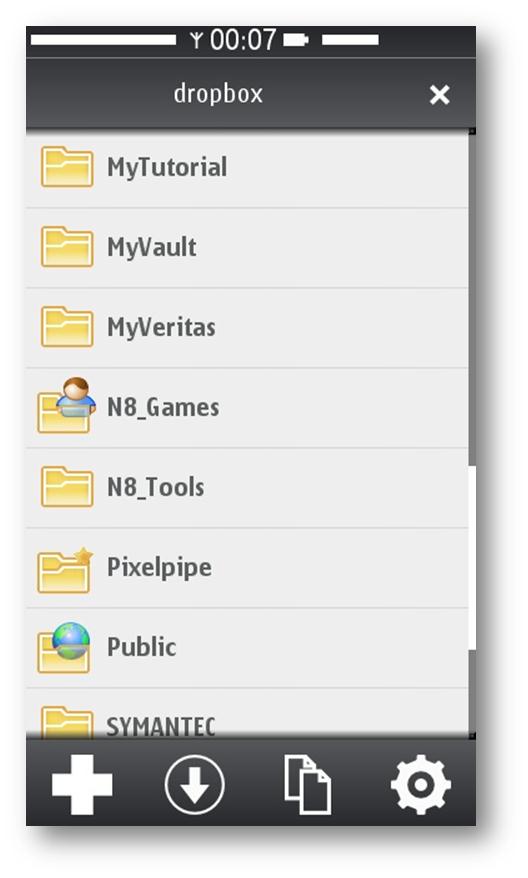
Three DropBox client for Symbian^3 (N8, C7, C6-01, E7, X7)
Currently Symbian^3 having three different native DorpBox client, and all of them…

Supply-chain alert: axios NPM package poisoned to deliver WAVESHAPER.V2 backdoor
A high-risk software supply chain attack has poisoned widely used axios npm…

AstraZeneca Allegedly Targeted by LAPSUS$ — Claims of a 3GB Internal Data Dump
A known hacking collective identifying as LAPSUS$ has posted claims that it…