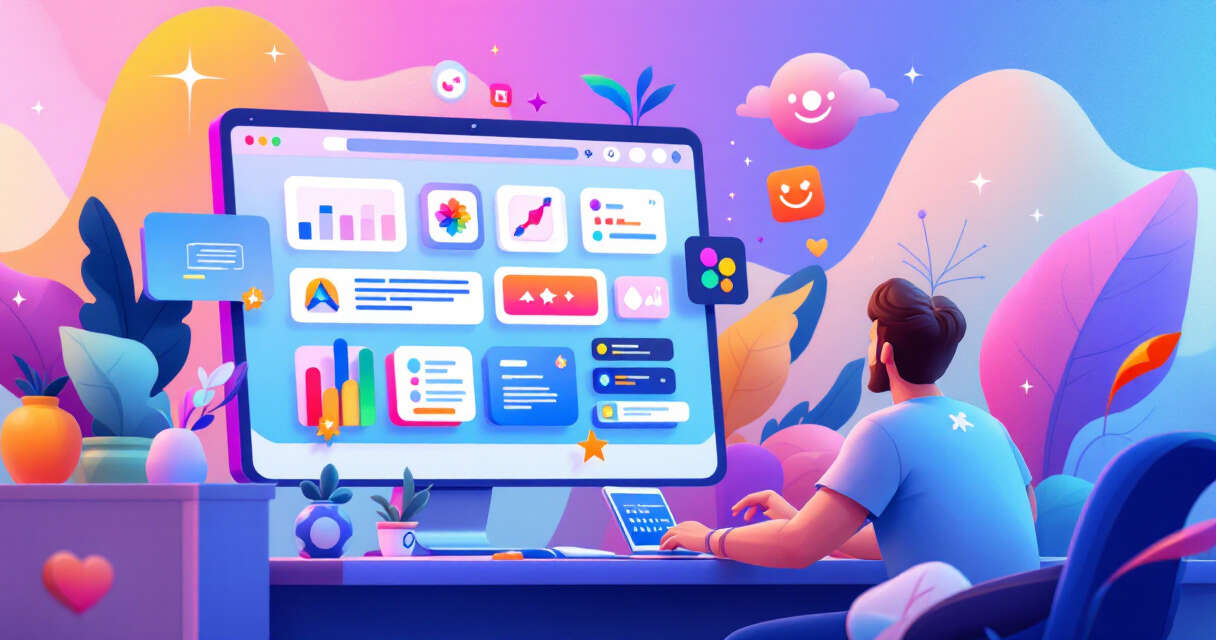
For years, creative professionals and hobbyists alike have chosen established, paid suites for design, illustration, audio, and motion work. Lately, a new class of open-source “get craft” apps — exemplified by projects like ArtCraft — has begun to shift that balance. These tools are not just affordable alternatives; they are changing workflows, challenging licensing models, and proving that community-driven software can deliver the polish and interoperability pros expect. This piece looks at what ArtCraft-style projects bring to the table, how they influence dominant commercial players, and what the future may hold for vibecoding-style free alternatives against paid incumbents.
What ArtCraft and “Get Craft” Apps Are
ArtCraft represents a family of open, community-driven creative tools focused on approachable UX, extensibility, and interoperability. Rather than one monolithic product, the “get craft” ethos emphasizes modular apps: a vector editor, a pixel editor, a collaborative canvas, and developer-friendly plugins. These projects prioritize transparent roadmaps, permissive licensing, and formats that play well with industry standards. That architecture attracts contributors across disciplines — designers, plugin authors, UX researchers, and hobbyist coders — creating a feedback loop that accelerates feature maturity.
Why the Open-Source Model Resonates with Creatives
Open-source creative tools address several pain points that paid suites often leave unresolved. First, they lower the barrier to entry; students, freelancers, and creators in emerging markets can access professional-grade features without subscription debt. Second, transparency fosters trust: users can inspect file-format handling, verify export fidelity, and ensure no hidden telemetry. Third, extensibility is baked in — creators can author plugins or scripts to automate niche workflows rather than relying on a vendor’s roadmap. Finally, community-driven projects tend to prioritize real-world usability because contributors are often active users rather than detached marketers.
How ArtCraft Influences Big Software Players
The entrance of high-quality open-source tools exerts pressure on commercial incumbents in predictable and subtle ways. Feature parity becomes a competitive baseline: when an open-source editor ships powerful collaboration or format-stable exports, paid vendors must either match those features or justify their premium through better UX, integrations, or platform services. We’ve already seen commercial players accelerate the adoption of more permissive file exchange and introduce community plugin stores to retain user ecosystems. In some cases, large companies have pivoted to hybrid models — offering free tiers, lowering educational pricing, or integrating open components — to blunt the open-source tide.
Economic and Strategic Implications
Open-source tools change value propositions. For vendors reliant on subscription revenue, user churn risk grows when free tools satisfy most needs. Conversely, commercial platforms with strong cloud services, advanced compute capabilities (e.g., AI-assisted features), or enterprise-grade collaboration can remain compelling — they’re selling convenience, scale, and support rather than basic features alone. For enterprises, the calculus includes total cost of ownership, vendor support guarantees, and compliance — areas where paid offerings still often have an edge.
Sustainability, Funding, and Community Health
A common critique of free alternatives is sustainability. Successful projects like ArtCraft are experimenting with blended funding: donations, grants, paid plugin marketplaces, training, and optional hosted services. Healthy contributor governance matters too; transparent maintainership, clear contribution guidelines, and inclusive communication keep churn low and innovation steady. The long-term winners will be projects that find realistic business models without sacrificing openness or community trust.
The Rise of Vibecoding Alternatives
“Vibecoding” — shorthand for lightweight, vibe-driven coding environments and tools favored by indie developers and creatives — is emblematic of a broader trend: users want tools that reflect their creative rhythm rather than enforcing heavyweight processes. Open-source vibecoding alternatives provide fast feedback loops, customizable themes, and concise automation tailored for creative prototypes. As AI-assisted coding and low-friction deployment tools proliferate, these alternatives will become more viable for production work, not just experimentation. The competitive advantage here isn’t raw power alone but intimate fit with creative workflows.
Interoperability: The Decisive Battleground
For many professionals, the decisive question is not whether an open tool can draw a vector or composite a layer, but whether it plays nicely with files, asset pipelines, and collaborators using other software. ArtCraft-style projects that prioritize robust import/export, standardized metadata, and open interchange formats win trust quickly. In practice, the most disruptive open-source tools are those that lower friction inside mixed-tool teams — enabling designers on free apps to hand off to studios using paid suites without rework.
Practical Advice for Creatives and Teams
- Experiment in low-risk settings: adopt open tools for personal projects, education, or ideation stages to evaluate fit.
- Audit interoperability: test round-trip exports with core partners early in any migration.
- Contribute where it matters: small bug reports, translations, or plugin ideas have outsized impact on project direction.
- Consider hybrid approaches: use open tools for creation and paid services for enterprise features like asset management or single-sign-on.
- Watch funding models: projects with thoughtful sustainability strategies are less likely to stagnate.
Looking Ahead: Complement, Compete, or Collapse
The future will likely be a mix. Some paid vendors will double down on value-add (cloud workflows, AI enhancements, enterprise SLAs). Others will embrace open components or partnerships. Leading open projects will mature into serious contenders, especially where communities and interoperability are strong. Rather than a binary “free vs. paid” battle, expect layered ecosystems: creators will choose tools by task and context, favoring combinations that maximize creativity, cost-effectiveness, and collaboration.
Closing Thought
ArtCraft and its kin demonstrate that open-source creative software is no longer an ideological niche — it is a pragmatic force reshaping product roadmaps, pricing models, and developer communities. For creators, this means greater choice and more control over how they work. For incumbents, it’s an invitation to evolve. Either way, the biggest winner is the creative process itself: lighter barriers, faster iteration, and a richer ecosystem of tools tuned to human workflows.
 Licensed under CC BY-ND 4.0 International