Author

Saugata Datta

I’m an IT/DevOps professional with many years of hands-on experience across Windows, Linux, Automation, Backup and Cloud. I love building real-world automations to make infrastructure reliable, secure, and self-healing. Through this blog, I share practical learnings from enterprise projects and my home-lab experiments on Cloudflare, Self-Hosting and everything in between. Always tinkering, always improving.
Page 40
When a Jailbreak Became a Campaign: How Claude AI Was Abused to Build Exploits and Steal Data

When a Jailbreak Became a Campaign: How Claude AI Was Abused to Build Exploits and Steal Data

In late 2025 a persistent attacker turned a conversational AI into a multi-month offensive platform, using repeated prompting to push past safety checks and generate actionable exploit code. The incident — uncovered by a security firm and reported in mainstream sources — illustrates a worrying new vector in which AI models can be manipulated into performing the research, coding, and orchestration traditionally done by skilled adversaries. The story is as…

Saugata Datta5 min read834
When Kali Meets Claude: How AI and MCP Are Changing Penetration Testing

When Kali Meets Claude: How AI and MCP Are Changing Penetration Testing

The tools and workflows of penetration testing have evolved steadily over the past decade, but a recent shift feels more like a paradigm change than an incremental upgrade. Kali Linux — the distribution many security professionals rely on for reconnaissance, scanning, and exploitation — has been connected to a large language model via the open Model Context Protocol (MCP). The result is a conversational, AI-assisted penetration testing workflow that translates…

Saugata Datta5 min read824
When AI Agents Overload the Cloud: What Happened with Google’s Antigravity and Third-Party Wrappers

When AI Agents Overload the Cloud: What Happened with Google’s Antigravity and Third-Party Wrappers

Google recently moved to suspend a number of customer accounts after heavy autonomous usage of its Antigravity agent development backend and Gemini services was observed when those services were used through third‑party agent wrappers such as OpenClaw and OpenCode. The suspensions—reported to affect customers from high‑spend AI Ultra subscribers to smaller accounts—have raised immediate concerns among developers who say they were using paid quota and received little or no warning…

Saugata Datta4 min read829
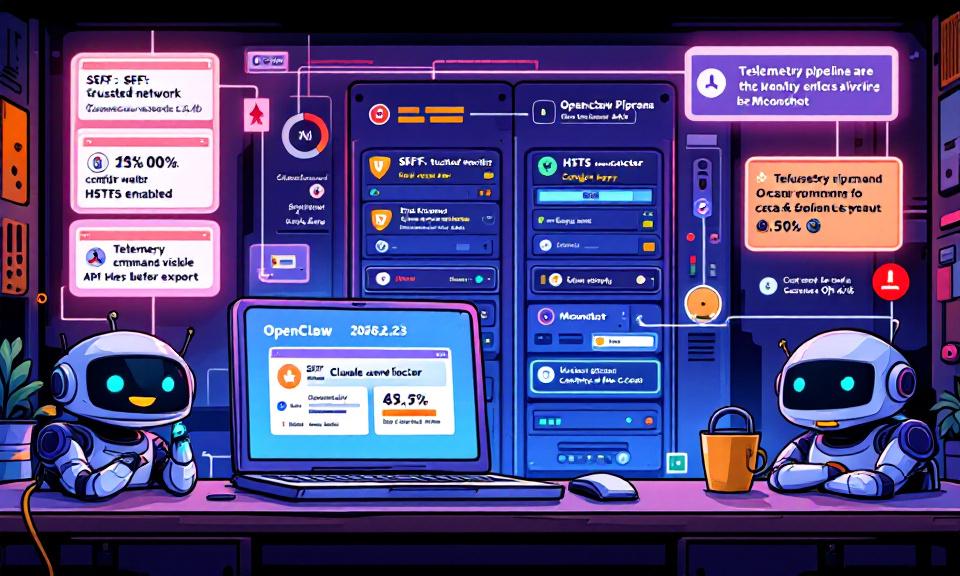
OpenClaw 2026.2.23 — Security-First Upgrade Meets Expanded Multi‑Model AI Support

OpenClaw 2026.2.23 — Security-First Upgrade Meets Expanded Multi‑Model AI Support

OpenClaw’s 2026.2.23 release is one of those updates that signals the project maturing from a fast-moving, feature-first AI assistant into a hardened platform ready for production gateways and privacy-conscious deployments. Tagged by steipete and contributed to by dozens of maintainers, this version balances pragmatic security hardening with meaningful AI improvements: support for Claude Opus 4.6 via the Kilo gateway, improved media and provider integrations, and a set of defensive changes…

Saugata Datta6 min read866
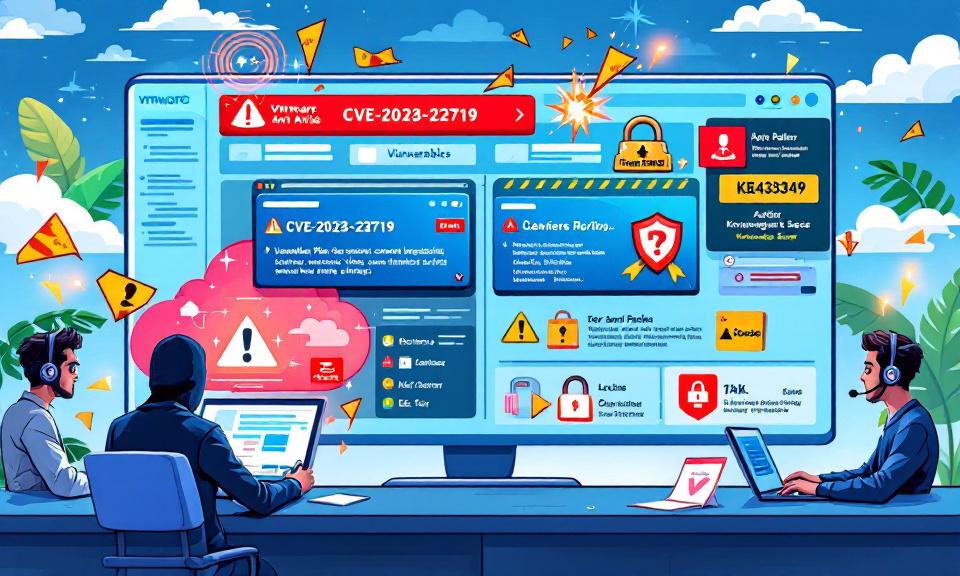
Urgent Patching Required: Multiple VMware Aria Vulnerabilities Enable Remote Code Execution and Privilege Escalation

Urgent Patching Required: Multiple VMware Aria Vulnerabilities Enable Remote Code Execution and Privilege Escalation

VMware’s Aria Operations — a cornerstone for many organizations’ cloud and infrastructure management — was thrust into the spotlight this week after Broadcom published VMSA-2026-0001, detailing three significant vulnerabilities. These flaws range from command injection that can lead to full remote code execution, to stored cross-site scripting that enables administrative actions, and a privilege escalation path from vCenter to Aria Operations. If you run Aria Operations as part of VMware…

Saugata Datta4 min read829
OpenAI’s Next Frontier: Smart Speakers, Glasses, and the Hardware Bet on Everyday AI

OpenAI’s Next Frontier: Smart Speakers, Glasses, and the Hardware Bet on Everyday AI

The idea that artificial intelligence lives only in the cloud or behind a chat window is changing. OpenAI—best known for conversational models that scale across apps and businesses—is reportedly building a family of physical devices, starting with a smart speaker and potentially expanding into smart glasses and even a smart lamp. This move represents a pivotal moment in how AI companies think about integrating their models into daily life: not…

Saugata Datta5 min read877
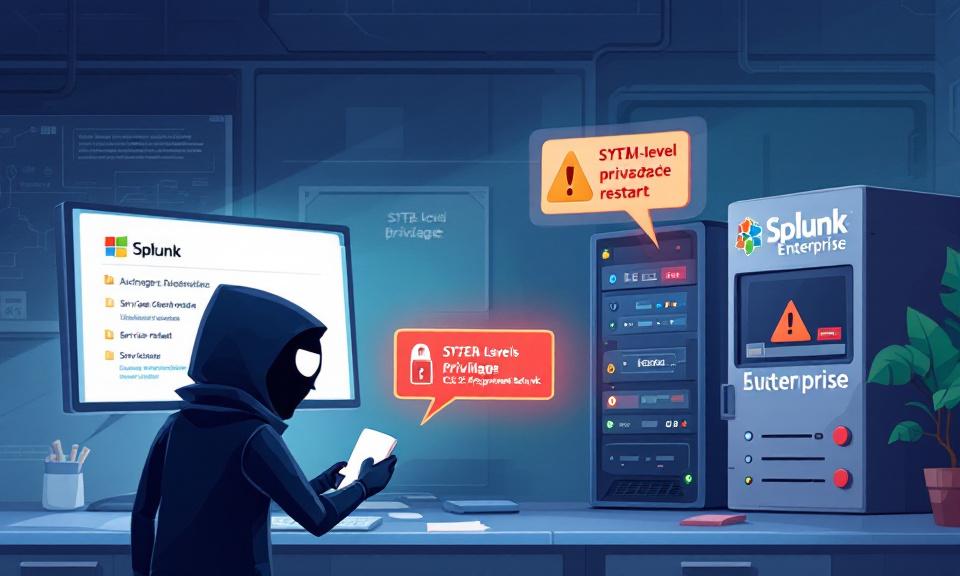
SYSTEM at Risk: How a Splunk DLL Search-Order Flaw Lets Local Users Escalate Privileges

SYSTEM at Risk: How a Splunk DLL Search-Order Flaw Lets Local Users Escalate Privileges

Splunk is a cornerstone of many security and operations teams, trusted to ingest, index, and analyze machine data across the enterprise. That trust makes any vulnerability in Splunk especially consequential. In February 2026 Splunk disclosed a high-severity Windows-specific vulnerability (CVE-2026-20140) that allows a low-privileged local user to perform a DLL search-order hijacking attack and gain SYSTEM-level privileges. The mechanics are deceptively simple, the impact profound, and the remedy—while available—demands swift…

Saugata Datta5 min read884
When AI Gets Affordable: Sam Altman’s Forecast and Jio’s ₹10 Trillion Investment

When AI Gets Affordable: Sam Altman’s Forecast and Jio’s ₹10 Trillion Investment

The India AI Impact Summit in Delhi crystallized a striking convergence: a global prediction about rapidly falling AI costs paired with one of India’s largest private investments in the technology. OpenAI’s CEO observed that the expense of obtaining difficult answers from advanced models has plunged by orders of magnitude in just over a year, and he expects further dramatic declines — a shift that could democratize access to powerful tools.…

Saugata Datta8 min read1.4K
Code, Capital, and Confidence: Why India Is Poised to Lead the Next Wave of AI

Code, Capital, and Confidence: Why India Is Poised to Lead the Next Wave of AI

At the India AI Impact Summit, a clear narrative emerged: India is no longer a passive adopter of artificial intelligence but a fast-moving force shaping how the technology will be used and governed. OpenAI’s CEO, speaking to the momentum he observed on the ground, positioned India as a major market and a hub of adoption that could exert outsized influence on global AI trajectories. This is driven by a unique…

Saugata Datta7 min read1.1K
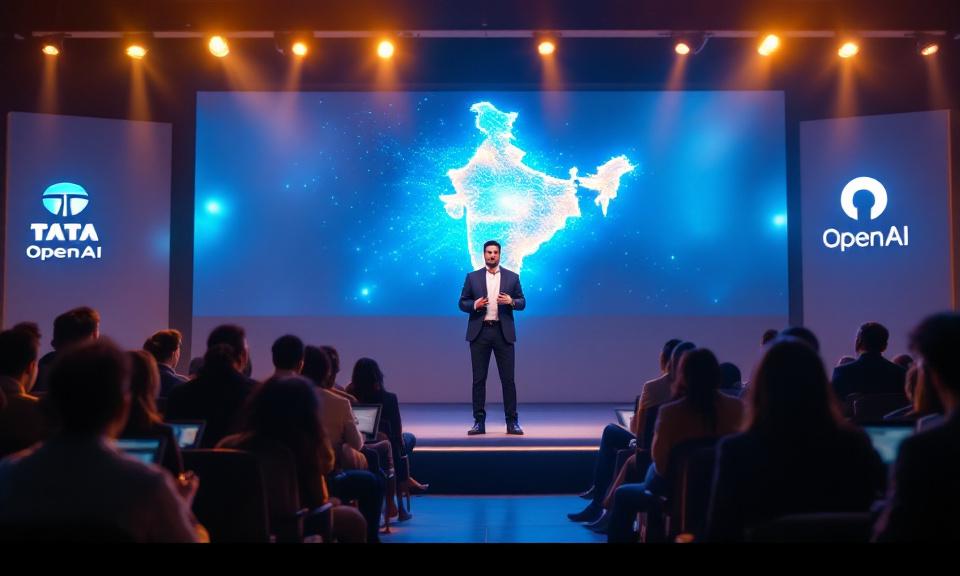
OpenAI for India: Building AI Infrastructure, Skills, and Sovereign Capability

OpenAI for India: Building AI Infrastructure, Skills, and Sovereign Capability

Today marks a pivotal moment for India’s AI journey as a major global AI organization launches a country-focused initiative to expand access, build local infrastructure, and accelerate economic and societal benefits. The program aims to pair advanced AI models with domestic partners to meet India’s unique needs: lower latency, data residency, security, and large-scale workforce adoption. A cornerstone of the initiative is a partnership with a leading Indian conglomerate to…

Saugata Datta2 min read885
Guardian of the Red Team: How Guardian Orchestrates Gemini, GPT-4 and 19 Top Security Tools for Smarter Pentesting

Guardian of the Red Team: How Guardian Orchestrates Gemini, GPT-4 and 19 Top Security Tools for Smarter Pentesting

Guardian is an open-source, AI-driven penetration testing framework that leverages multiple large language models to automate intelligent, evidence-backed security assessments. Designed for enterprise use, it combines a multi-agent architecture with a broad toolset to accelerate reconnaissance, triage, and reporting while preserving human oversight. What is Guardian? Guardian is an AI-powered penetration testing automation framework developed by Zakir Kun and available on GitHub. It orchestrates models such as OpenAI GPT-4, Anthropic…

Saugata Datta4 min read1K
Chrome 0‑Day Under Active Attack: CVE‑2026‑2441 — What You Need to Do Now

Chrome 0‑Day Under Active Attack: CVE‑2026‑2441 — What You Need to Do Now

Google has released an emergency patch for a high‑severity zero‑day in Chrome after confirming active exploitation in the wild. Tracked as CVE‑2026‑2441, the vulnerability is a use‑after‑free bug in Chrome’s CSS handling that can enable remote code execution when a user visits crafted web content. How the flaw works CVE‑2026‑2441 arises from improper lifecycle management of objects in the rendering engine’s CSS processing, leaving freed memory accessible and exploitable. An…

Saugata Datta3 min read1.1K
🧰

Free Tools: IP, DNS, SSL

40+ free network and other tools in one place. No signup. Click explore or visit https://technochat.in/tools

Explore