




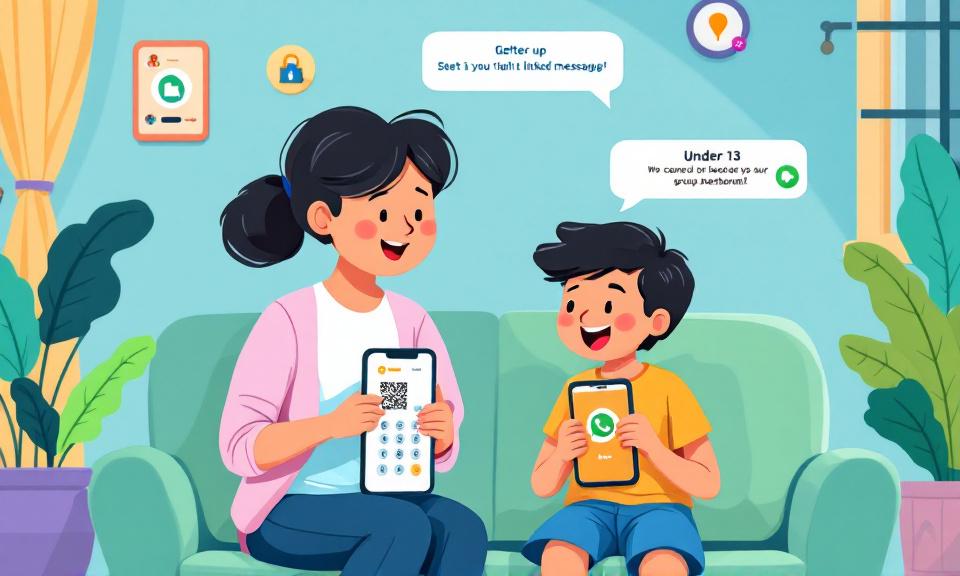
WhatsApp has begun rolling out parent‑managed accounts for pre‑teens, a new account type that gives parents and guardians control over who can contact their child and which groups the child can join. The feature is limited to messaging and calling and intentionally excludes access to Meta AI, Channels, Status, and location sharing. What the accounts do Parents control contact and
Latest Articles

Azure
Attackers Exploit SharePoint Authentication Bypass After Public PoC Release
Microsoft’s SharePoint platform is facing active exploitation following the public release of a proof-of-concept (PoC) for a critical authentication bypass vulnerability tracked as CVE-2026-55040. Patched in July’s Patch Tuesday, the flaw allows unauthenticated actors to impersonate SharePoint users by forging JSON Web Tokens (JWTs). Since the PoC surfaced, security researchers and telemetry providers have observed real-world attempts that underscore the urgency for administrators to apply updates and audit their environments. What happened Microsoft disclosed CVE-2026-55040 as a high-severity authentication feature…
Continue readingMicrosoft Active Directory Domain Services Vulnerability (CVE-2026-25177) — What Administrators Need to Know

In early March 2026, Microsoft released an important security update addressing a high-severity vulnerability in Active Directory Domain Services (AD DS) tracked as CVE-2026-25177. The flaw received a CVSS score of 8.8 and can allow an authenticated network actor with limited permissions to escalate privileges to full SYSTEM on a targeted domain controller. Microsoft and third-party researchers coordinated fixes and
Google Completes $32 Billion Acquisition of Wiz

Google has finalized its acquisition of Wiz, the Israeli cloud and AI security company, in an all-cash transaction valued at $32 billion. The deal, announced as closed in March 2026, is the largest acquisition in Google’s history and represents a major move by Google Cloud to deepen its capabilities in cloud-native and AI security. Deal overview The acquisition brings the
China’s OpenClaw Gold Rush: How a Viral AI Agent Spawned a New Service Economy

China has seen a rapid, real-world surge of interest in OpenClaw — an open-source AI agent that can run autonomously on personal devices — and that surge has produced a small but booming service economy of installers, preconfigured devices, and paid support. This post summarizes reported facts about how OpenClaw spread, who is profiting, what services are being offered, and
Zombie ZIP: How Malformed Archives Can Hide Malware from Security Scanners

A new archive-manipulation technique called “Zombie ZIP” lets attackers conceal payloads inside ZIP files in a way that can evade many antivirus and endpoint detection solutions. The method was described by security researcher Chris Aziz of Bombadil Systems and has drawn warnings from CERT/CC and the wider security community. This post explains how Zombie ZIP works, what research and evidence
Microsoft .NET Out-of-Bounds Read (CVE-2026-26127) Causes Remote Denial-of-Service Risk

Microsoft has issued an emergency security update to address a newly disclosed vulnerability in the .NET ecosystem that can be triggered remotely and results in denial-of-service (DoS) conditions. The flaw, tracked as CVE-2026-26127, affects multiple .NET runtime and package versions across Windows, macOS, and Linux. Administrators and developers should prioritize applying the available patches to prevent service disruption. What the