Category

Hacking and Exploits

Web-Hacking, 0-Day, Malware, Ransomware, Exploit, Vulnerabilities, Privilege-Flaw, Privilege-Escalation, Zero-Day, Exploit, Jailbreak, Penetration-Testing, Trojan, Spyware, Rootkit, Worm, Backdoor, Payload, Obfuscation, DDoS, Phishing, MITM, Spoofing, Brute-force, Port-Scan, SQLi, XSS, CSRF, Path-Traversal, LFI, RFI, Insecure-Deserialization, Buffer-Overflow, CVE, Exploit-Kit, Shellcode, bug bounty, ethical hacking, CTF, capture the flag, offensive security, red team exercise, exploit development, reverse engineering, vulnerability research, credential harvesting, zero-click, hack

Page 11
Admin Account Backdoor: Critical Privilege-Flaw in WordPress User Registration Plugin (CVE-2026-1492)

Admin Account Backdoor: Critical Privilege-Flaw in WordPress User Registration Plugin (CVE-2026-1492)

A critical security flaw in a widely used WordPress membership plugin has made it trivially simple for unauthenticated attackers to create administrator accounts and seize control of affected sites. The vulnerability, tracked as CVE-2026-1492, exposes a systemic weakness in how the plugin handled role assignment during user registration. This post summarizes what happened, who discovered it, the immediate risks, and the concrete steps site owners should take now. What the…

Saugata Datta3 min read860
90 Zero‑Days in 2025: Google’s Snapshot of an Evolving Exploit Economy

90 Zero‑Days in 2025: Google’s Snapshot of an Evolving Exploit Economy

Google’s Threat Intelligence Group reported 90 zero‑day vulnerabilities actively exploited in the wild across 2025. That total sits above 2024’s 78 but below the record 100 observed in 2023. Beyond the raw count, the GTIG data reveals a notable shift in where and how these flaws were used, who is using them, and which technical weaknesses continue to drive high‑impact attacks. The raw picture GTIG split the 90 exploited zero‑days…

Saugata Datta3 min read840
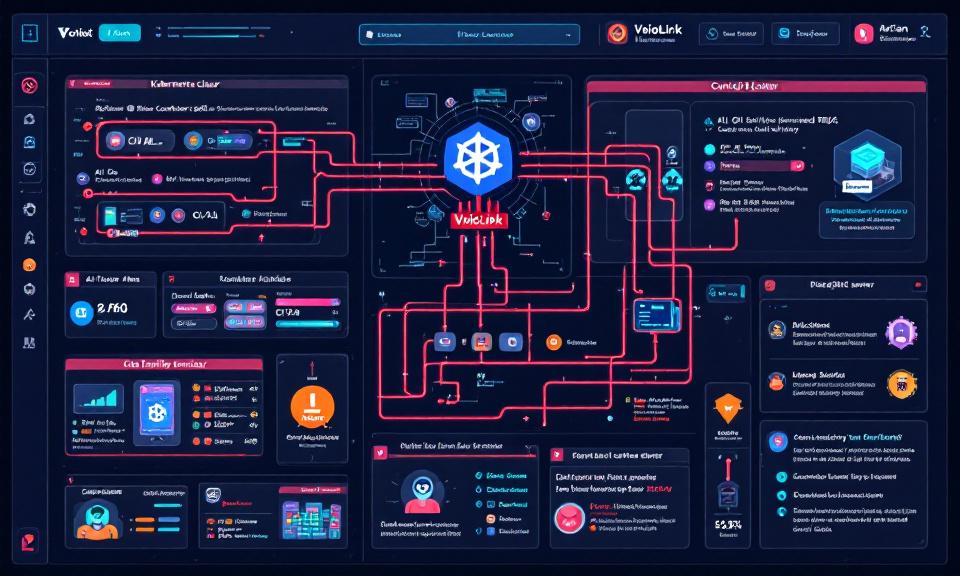
VoidLink Malware Framework: Key Points on How It Targets Kubernetes and AI Workloads

VoidLink Malware Framework: Key Points on How It Targets Kubernetes and AI Workloads

Title: VoidLink Malware Framework: Key Points on How It Targets Kubernetes and AI Workloads Overview VoidLink is a modular malware framework observed targeting cloud-native environments, with emphasis on Kubernetes clusters and AI infrastructure. Goal: persistence, lateral movement, data exfiltration, and abuse of compute (e.g., model theft, crypto-mining, or training/serving misuse). Modularity enables plugins for container escape, kubeconfig harvesting, and targeted abuse of GPU resources. Threat model Targets: misconfigured clusters, exposed…

Saugata Datta4 min read657
Bitwarden Adds Passkey Login Support for Windows 11

Bitwarden Adds Passkey Login Support for Windows 11

Bitwarden now supports using passkeys stored in its vault to sign into Windows 11 devices, enabling passwordless, phishing-resistant authentication. The feature is available to all Bitwarden plans, including the free tier. How it works On the Windows sign-in screen, users choose the security key sign-in option and scan a QR code with a mobile device. The passkey stored in the user’s Bitwarden encrypted vault responds to the cryptographic authentication challenge…

Saugata Datta2 min read843
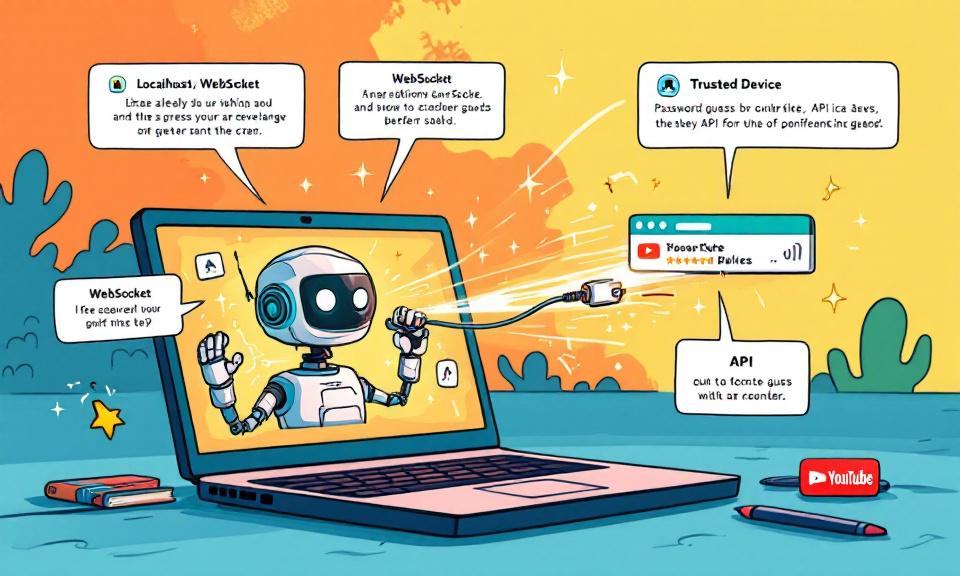
When Local Trust Breaks: The OpenClaw 0-Click Vulnerability and What Developers Must Do Now

When Local Trust Breaks: The OpenClaw 0-Click Vulnerability and What Developers Must Do Now

The speed at which developer-facing AI agents have been adopted is staggering — and rapid adoption often outpaces secure design. A recent, high-impact vulnerability in OpenClaw demonstrates how a single innocuous browser visit can be transformed into a full agent takeover. For developers and security teams, this is a reminder that conveniences like “localhost-first” assumptions carry real risk. This post explains the vulnerability in accessible terms, why it matters especially…

Saugata Datta4 min read646
When a Jailbreak Became a Campaign: How Claude AI Was Abused to Build Exploits and Steal Data

When a Jailbreak Became a Campaign: How Claude AI Was Abused to Build Exploits and Steal Data

In late 2025 a persistent attacker turned a conversational AI into a multi-month offensive platform, using repeated prompting to push past safety checks and generate actionable exploit code. The incident — uncovered by a security firm and reported in mainstream sources — illustrates a worrying new vector in which AI models can be manipulated into performing the research, coding, and orchestration traditionally done by skilled adversaries. The story is as…

Saugata Datta5 min read657
When Kali Meets Claude: How AI and MCP Are Changing Penetration Testing

When Kali Meets Claude: How AI and MCP Are Changing Penetration Testing

The tools and workflows of penetration testing have evolved steadily over the past decade, but a recent shift feels more like a paradigm change than an incremental upgrade. Kali Linux — the distribution many security professionals rely on for reconnaissance, scanning, and exploitation — has been connected to a large language model via the open Model Context Protocol (MCP). The result is a conversational, AI-assisted penetration testing workflow that translates…

Saugata Datta5 min read646
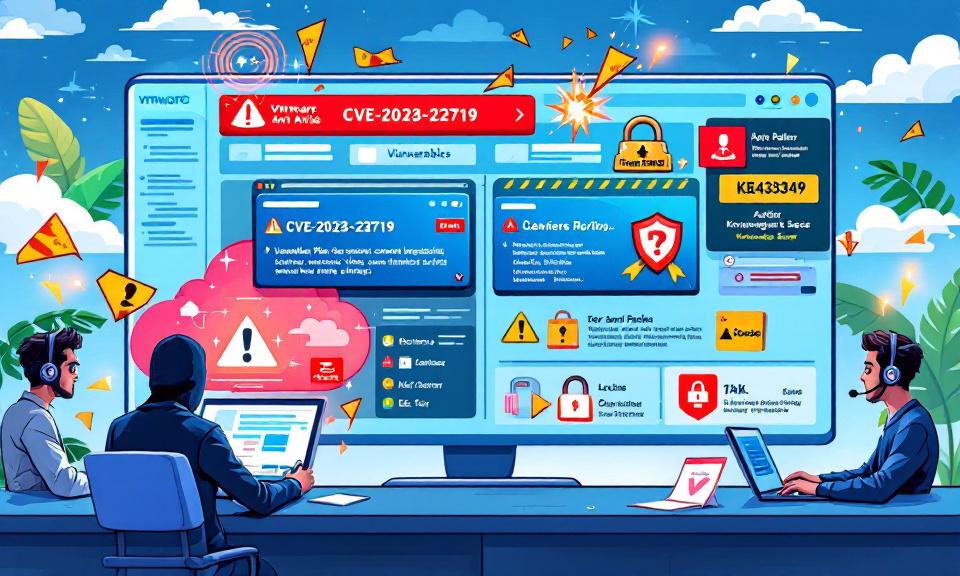
Urgent Patching Required: Multiple VMware Aria Vulnerabilities Enable Remote Code Execution and Privilege Escalation

Urgent Patching Required: Multiple VMware Aria Vulnerabilities Enable Remote Code Execution and Privilege Escalation

VMware’s Aria Operations — a cornerstone for many organizations’ cloud and infrastructure management — was thrust into the spotlight this week after Broadcom published VMSA-2026-0001, detailing three significant vulnerabilities. These flaws range from command injection that can lead to full remote code execution, to stored cross-site scripting that enables administrative actions, and a privilege escalation path from vCenter to Aria Operations. If you run Aria Operations as part of VMware…

Saugata Datta4 min read652
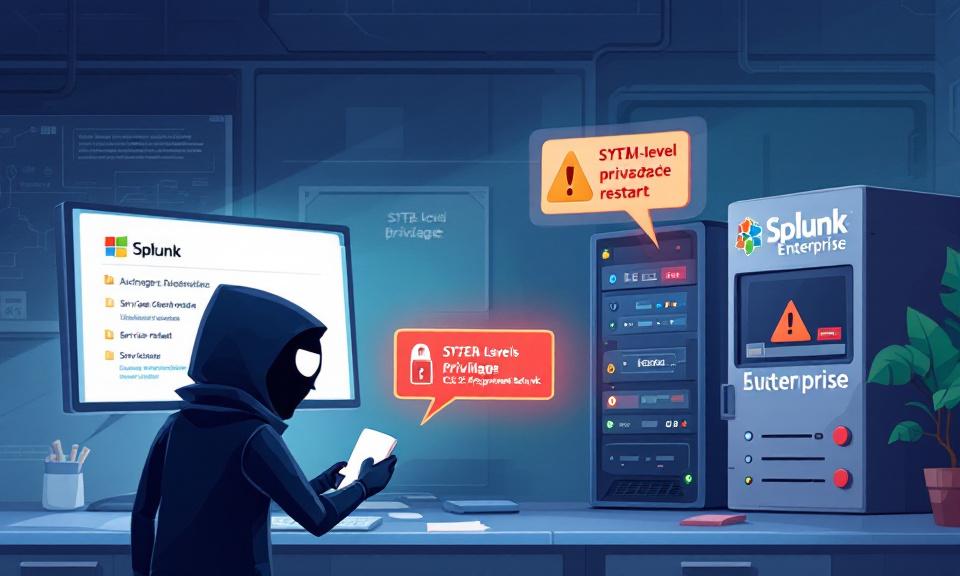
SYSTEM at Risk: How a Splunk DLL Search-Order Flaw Lets Local Users Escalate Privileges

SYSTEM at Risk: How a Splunk DLL Search-Order Flaw Lets Local Users Escalate Privileges

Splunk is a cornerstone of many security and operations teams, trusted to ingest, index, and analyze machine data across the enterprise. That trust makes any vulnerability in Splunk especially consequential. In February 2026 Splunk disclosed a high-severity Windows-specific vulnerability (CVE-2026-20140) that allows a low-privileged local user to perform a DLL search-order hijacking attack and gain SYSTEM-level privileges. The mechanics are deceptively simple, the impact profound, and the remedy—while available—demands swift…

Saugata Datta5 min read705
Guardian of the Red Team: How Guardian Orchestrates Gemini, GPT-4 and 19 Top Security Tools for Smarter Pentesting

Guardian of the Red Team: How Guardian Orchestrates Gemini, GPT-4 and 19 Top Security Tools for Smarter Pentesting

Guardian is an open-source, AI-driven penetration testing framework that leverages multiple large language models to automate intelligent, evidence-backed security assessments. Designed for enterprise use, it combines a multi-agent architecture with a broad toolset to accelerate reconnaissance, triage, and reporting while preserving human oversight. What is Guardian? Guardian is an AI-powered penetration testing automation framework developed by Zakir Kun and available on GitHub. It orchestrates models such as OpenAI GPT-4, Anthropic…

Saugata Datta4 min read848
Chrome 0‑Day Under Active Attack: CVE‑2026‑2441 — What You Need to Do Now

Chrome 0‑Day Under Active Attack: CVE‑2026‑2441 — What You Need to Do Now

Google has released an emergency patch for a high‑severity zero‑day in Chrome after confirming active exploitation in the wild. Tracked as CVE‑2026‑2441, the vulnerability is a use‑after‑free bug in Chrome’s CSS handling that can enable remote code execution when a user visits crafted web content. How the flaw works CVE‑2026‑2441 arises from improper lifecycle management of objects in the rendering engine’s CSS processing, leaving freed memory accessible and exploitable. An…

Saugata Datta3 min read919
From The Blinking Cursor to The Thinking Machine: A Memoir of Automation

From The Blinking Cursor to The Thinking Machine: A Memoir of Automation

There is a specific kind of silence that only exists in a server room late at night. It isn’t actually quiet—the fans are screaming, the air conditioning is humming like a jet engine, and the hard drives are clicking in a chaotic rhythm. But for those of us who have spent the last two decades in IT, it feels silent because we are alone with the machine. For people like…

Saugata Datta10 min read982
🧰

Free Tools: IP, DNS, SSL

40+ free network and other tools in one place. No signup. Click explore or visit https://technochat.in/tools

Explore