Category

Hacking and Exploits

Web-Hacking, 0-Day, Malware, Ransomware, Exploit, Vulnerabilities, Privilege-Flaw, Privilege-Escalation, Zero-Day, Exploit, Jailbreak, Penetration-Testing, Trojan, Spyware, Rootkit, Worm, Backdoor, Payload, Obfuscation, DDoS, Phishing, MITM, Spoofing, Brute-force, Port-Scan, SQLi, XSS, CSRF, Path-Traversal, LFI, RFI, Insecure-Deserialization, Buffer-Overflow, CVE, Exploit-Kit, Shellcode, bug bounty, ethical hacking, CTF, capture the flag, offensive security, red team exercise, exploit development, reverse engineering, vulnerability research, credential harvesting, zero-click, hack, CERT

Page 12
Hackers Used AI to Build First Known Zero-Day 2FA Bypass, Google Warns

Hackers Used AI to Build First Known Zero-Day 2FA Bypass, Google Warns

Google's threat hunters have flagged a troubling milestone: the first known instance of a zero-day exploit likely discovered and weaponized using an artificial intelligence model. What began as an obscure Python script has been linked to a coordinated effort by cybercriminals to develop a two-factor authentication (2FA) bypass that could be scaled for mass exploitation. The disclosure underscores how AI is reshaping offensive cyber operations and compressing the timeline from…


Saugata Datta4 min read420
Breaking the code: how a multi-stage “code of conduct” phishing campaign led to AiTM token compromise

Breaking the code: how a multi-stage “code of conduct” phishing campaign led to AiTM token compromise

Phishing has evolved from crude scams to carefully engineered deceptions that mimic trusted internal processes. In mid‑April 2026, Microsoft Defender Research observed a large, multi‑stage campaign that did exactly that: it masqueraded as internal “code of conduct” notifications, used polished templates and legitimate delivery services, and funneled victims through a sequence of CAPTCHA and staging pages that ultimately proxied real authentication flows. The result was an adversary‑in‑the‑middle (AiTM) compromise capable…

Saugata Datta6 min read470
Critical Microsoft 365 Copilot Flaws: What Organizations Need to Know

Critical Microsoft 365 Copilot Flaws: What Organizations Need to Know

Microsoft has disclosed and silently remediated three critical information-disclosure vulnerabilities in Microsoft 365 Copilot and Copilot Chat in Microsoft Edge. The flaws—CVE-2026-26129, CVE-2026-26164, and CVE-2026-33111—were published on May 7, 2026, and Microsoft reports that mitigations were deployed on the cloud side so that no customer action or patch installation is required. While that immediate remediation reduces near-term risk, the underlying issues expose a broader tension: AI-powered productivity tools often surface…

Saugata Datta4 min read460
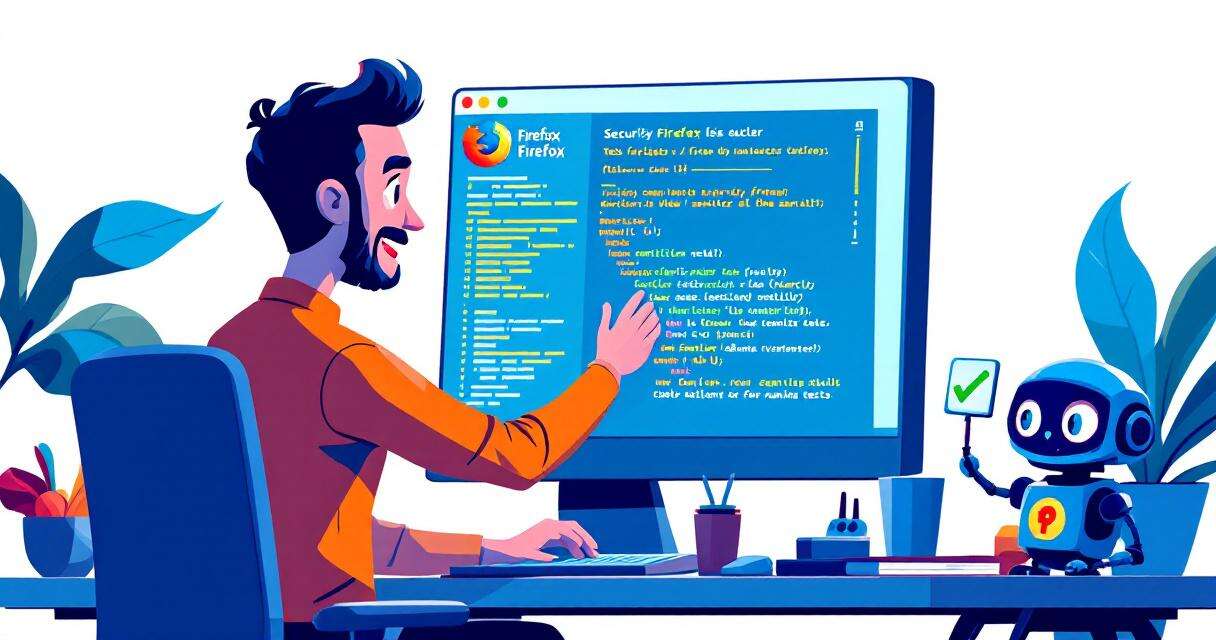
How Mozilla Used Mythos to Find 271 Firefox Vulnerabilities — and What It Means

How Mozilla Used Mythos to Find 271 Firefox Vulnerabilities — and What It Means

Mozilla says it used Anthropic’s Mythos model, together with a custom agent harness, to uncover 271 security issues in Firefox over roughly two months. The disclosure, supported by a small set of public Bugzilla reports, highlights a workflow that pairs large language models with deterministic tooling and verification to reduce hallucinations and produce actionable test cases — but it has also reignited debates about hype, disclosure practices, and the shifting…

Saugata Datta4 min read436
Critical Palo Alto Firewall Flaw: CVE-2026-0300 Exploited to Gain Root Access

Critical Palo Alto Firewall Flaw: CVE-2026-0300 Exploited to Gain Root Access

Palo Alto Networks has disclosed a critical buffer overflow vulnerability in PAN-OS that is already being exploited in the wild. The flaw, tracked as CVE-2026-0300, can allow unauthenticated attackers to run arbitrary code with full root privileges on affected PA-Series and VM-Series firewalls when the User-ID™ Authentication Portal (captive portal) is exposed to untrusted networks. Given the ease of exploitation and the strategic value of perimeter firewalls, organizations should treat…

Saugata Datta3 min read497
Copy Fail (CVE-2026-31431): A 4‑Byte Kernel Bug That Lets Attackers Gain Root on Major Linux Distros

Copy Fail (CVE-2026-31431): A 4‑Byte Kernel Bug That Lets Attackers Gain Root on Major Linux Distros

Microsoft Defender Security Research recently disclosed CVE-2026-31431—nicknamed “Copy Fail”—a high‑severity local privilege escalation in the Linux kernel’s crypto subsystem that enables an unprivileged user to escalate to root. The vulnerability affects kernels released since 2017 and has broad implications for cloud and container environments because the exploit can corrupt in-memory representations of readable files (including setuid binaries) without changing the on-disk file. Although public proof-of-concept code exists and detected exploitation…

Saugata Datta5 min read530
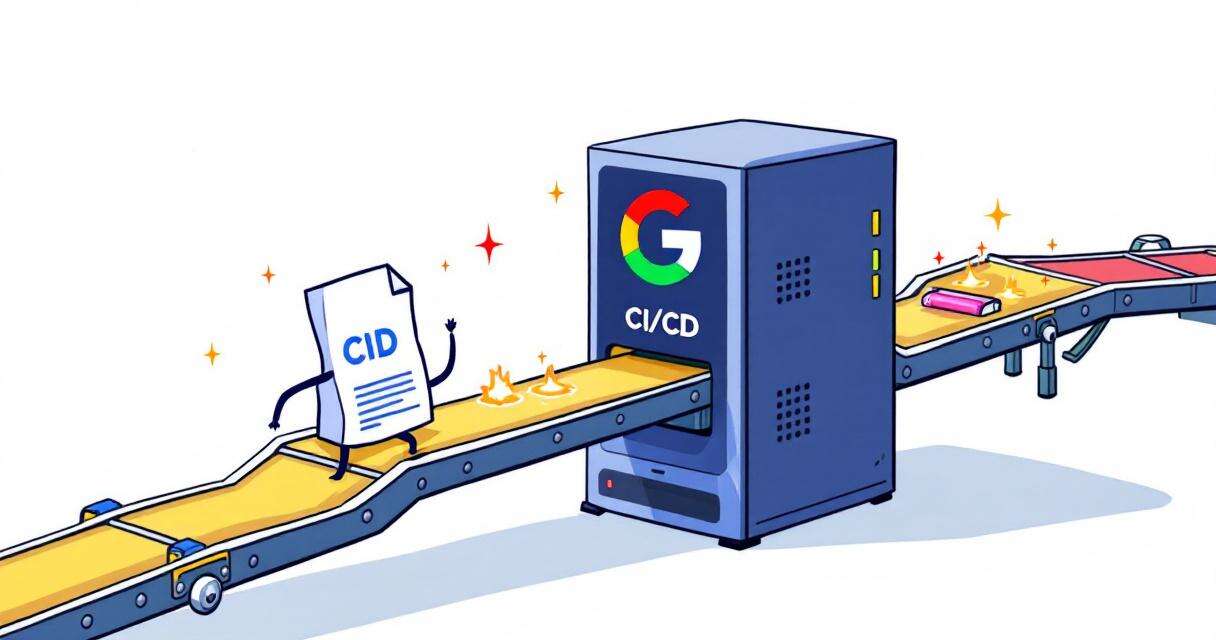
How the Google Gemini CLI Flaw Turned CI/CD Pipelines into Remote Code Execution Risk

How the Google Gemini CLI Flaw Turned CI/CD Pipelines into Remote Code Execution Risk

A critical remote code execution (RCE) vulnerability in the Google Gemini CLI and its associated GitHub Action exposed a startling weakness in how AI tooling can interact with developer infrastructure. Rated with the maximum CVSS score of 10.0, the bug allowed unprivileged external actors to execute commands on the machines running CI/CD workflows. This wasn’t a prompt-injection trick against a model; it was an infrastructure-level failure that allowed malicious configuration…

Saugata Datta4 min read522
Email threat landscape: Q1 2026 trends and insights

Email threat landscape: Q1 2026 trends and insights

During the first quarter of 2026, email-based threats remained pervasive and dynamic. Microsoft Threat Intelligence recorded roughly 8.3 billion phishing messages across January–March, with monthly volumes edging down from about 2.9 billion in January to 2.6 billion in March. While total volume showed only slight decline, the quarter revealed important shifts in delivery mechanisms and attacker behavior: link-based attacks dominated, QR code phishing accelerated rapidly, CAPTCHA-gated campaigns resurged with new…

Saugata Datta6 min read491
CISA orders federal agencies to patch CVE-2026-32202 after zero-click NTLM hash leak is reported

CISA orders federal agencies to patch CVE-2026-32202 after zero-click NTLM hash leak is reported

The U.S. Cybersecurity and Infrastructure Security Agency (CISA) has ordered federal agencies to secure Windows systems against a vulnerability tracked as CVE-2026-32202 after cybersecurity firm Akamai reported it as a zero-click NTLM hash leak left behind when Microsoft incompletely patched a February remote code execution flaw (CVE-2026-21510). CISA added CVE-2026-32202 to its Known Exploited Vulnerabilities (KEV) Catalog and mandated that Federal Civilian Executive Branch agencies patch affected endpoints and servers…

Saugata Datta2 min read550
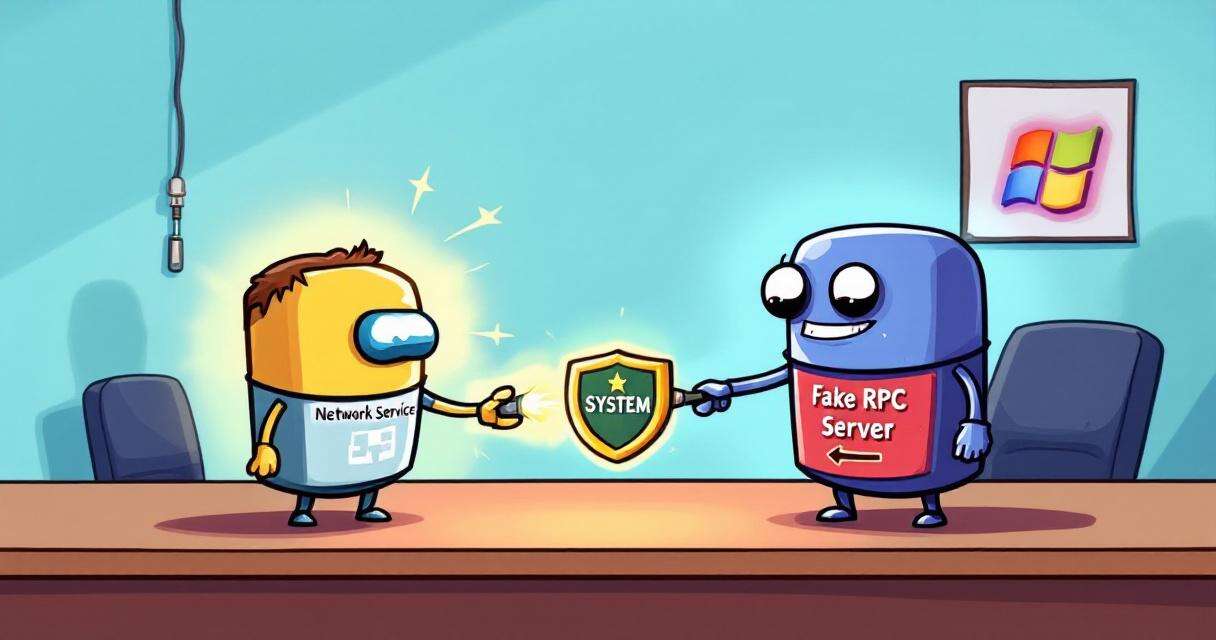
PhantomRPC: New Windows RPC Vulnerability Lets Attackers Escalate Privileges Across All Windows Versions

PhantomRPC: New Windows RPC Vulnerability Lets Attackers Escalate Privileges Across All Windows Versions

PhantomRPC is an architectural weakness in the Windows Remote Procedure Call (RPC) runtime that allows low-privileged processes to escalate to SYSTEM or Administrator by impersonating privileged clients. Disclosed by Kaspersky’s Haidar Kabibo at Black Hat Asia 2026, the flaw stems from how rpcrt4.dll handles connections to unavailable RPC servers: when a privileged process attempts an RPC call to a server that is offline or disabled, the RPC runtime can be…

Saugata Datta4 min read509
CISA: Zimbra XSS (CVE-2025-48700) Now Exploited — 10,500+ Servers Vulnerable

CISA: Zimbra XSS (CVE-2025-48700) Now Exploited — 10,500+ Servers Vulnerable

Over 10,000 instances of the Zimbra Collaboration Suite are exposed online and remain vulnerable to an actively exploited cross-site scripting flaw, raising fresh alarms about email server security for governments and businesses alike. The vulnerability, tracked as CVE-2025-48700, is serious because it can be triggered without user interaction and has been confirmed as abused in the wild, prompting action from both vendors and national cybersecurity authorities. What happened Shadowserver, an…

Saugata Datta4 min read621
Hackers Leverage Microsoft Teams to Breach Organizations: Inside UNC6692’s SNOW Campaign

Hackers Leverage Microsoft Teams to Breach Organizations: Inside UNC6692’s SNOW Campaign

In late 2025 and into early 2026, a sophisticated intrusion campaign used the everyday familiarity of Microsoft Teams to turn routine collaboration into a direct route for enterprise compromise. By posing as IT helpdesk staff and exploiting users’ trust in external Teams invitations, the threat group tracked as UNC6692 moved from a simple chat message to full domain-level access—without exploiting a software vulnerability. The result was a carefully staged, cloud-hosted…

Saugata Datta5 min read591
🧰

Free Tools: IP, DNS, SSL

40+ free network and other tools in one place. No signup. Click explore or visit https://technochat.in/tools

Explore