Category

Hacking and Exploits

Web-Hacking, 0-Day, Malware, Ransomware, Exploit, Vulnerabilities, Privilege-Flaw, Privilege-Escalation, Zero-Day, Exploit, Jailbreak, Penetration-Testing, Trojan, Spyware, Rootkit, Worm, Backdoor, Payload, Obfuscation, DDoS, Phishing, MITM, Spoofing, Brute-force, Port-Scan, SQLi, XSS, CSRF, Path-Traversal, LFI, RFI, Insecure-Deserialization, Buffer-Overflow, CVE, Exploit-Kit, Shellcode, bug bounty, ethical hacking, CTF, capture the flag, offensive security, red team exercise, exploit development, reverse engineering, vulnerability research, credential harvesting, zero-click, hack, CERT

Page 15
Oracle Issues Urgent Security Update for Critical RCE in Identity Manager and Web Services Manager

Oracle Issues Urgent Security Update for Critical RCE in Identity Manager and Web Services Manager

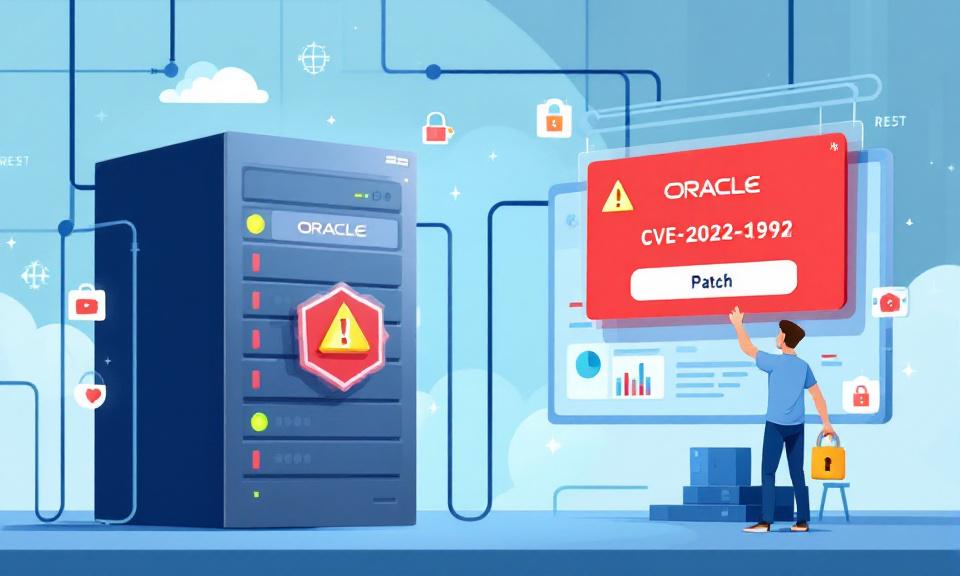
Oracle has released an out-of-band security alert to address a critical remote code execution vulnerability, tracked as CVE-2026-21992, affecting Oracle Identity Manager and Oracle Web Services Manager. With a CVSS 3.1 base score of 9.8 and no authentication required, this is a high-risk flaw that can be exploited remotely over HTTP with minimal complexity. Organizations running internet-facing Fusion Middleware components should treat this as an emergency. What was disclosed Vulnerability:…


Saugata Datta2 min read698
Chrome Security Update Fixes 26 Vulnerabilities That Could Allow Remote Code Execution

Chrome Security Update Fixes 26 Vulnerabilities That Could Allow Remote Code Execution

Google’s latest Chrome security update is a reminder that even the world’s most scrutinized software still harbors dangerous flaws. In a single release, Chrome developers patched 26 vulnerabilities—three marked critical—that could let unauthenticated attackers run malicious code simply by getting a user to visit a crafted webpage. For anyone who uses Chrome, from casual browsers to enterprise fleets, this is not a routine maintenance note: it’s a prompt to update…

Saugata Datta4 min read837
AI as Tradecraft: How Threat Actors Operationalize Artificial Intelligence

AI as Tradecraft: How Threat Actors Operationalize Artificial Intelligence

Organizations are facing a subtle but powerful shift: adversaries are not inventing wholly new attacks so much as adopting artificial intelligence to make existing tradecraft faster, cheaper, and more resilient. Microsoft’s threat intelligence and other industry observers show that generative AI is being embedded across the attack lifecycle to accelerate reconnaissance, scale social engineering, and shorten the time between detection and re‑deployment. The result is a landscape where familiar threats…

Saugata Datta4 min read913
When a Path Traversal Flaw Hits Home: Inside the Ubiquiti UniFi Critical Vulnerabilities

When a Path Traversal Flaw Hits Home: Inside the Ubiquiti UniFi Critical Vulnerabilities

Ubiquiti has quietly become a household name for network hardware in small-to-midsize enterprises, campuses, and savvy home setups. That trust makes the recent disclosure of two serious flaws in the UniFi Network Application especially alarming: one is a maximum-severity path traversal that can enable a full system takeover, and the other is an authenticated NoSQL injection that can escalate privileges. Both merit immediate attention from operators, because the technical details…

Saugata Datta4 min read665
What the Marquis Breach Teaches Us About Vendor Risk and Ransomware Preparedness

What the Marquis Breach Teaches Us About Vendor Risk and Ransomware Preparedness

Marquis, a Texas-based provider of digital marketing, CRM and analytics services for hundreds of financial institutions, disclosed a major security incident tied to a mid‑2025 ransomware attack that ultimately exposed the personal information of more than 672,000 people. The story is less about a single failure and more about how a cascade of weaknesses—an exploited firewall, third‑party exposure, and slow discovery—can amplify harm across an industry that relies heavily on…

Saugata Datta3 min read664
Windows Users Beware: SnappyClient — The Compact Implant That Hijacks Crypto and Disables Defenses

Windows Users Beware: SnappyClient — The Compact Implant That Hijacks Crypto and Disables Defenses

A compact but capable Windows implant called SnappyClient has emerged as a notable threat, especially for people who use browser-based cryptocurrency wallets on Windows machines. First observed in late 2025 by Zscaler ThreatLabz, SnappyClient blends remote access, targeted data theft, and multiple anti-detection techniques into a small C++ payload that’s typically delivered via in-memory loaders. Its combination of stealth, focused financial targeting, and flexible configuration makes it a practical risk…

Saugata Datta4 min read663
Cisco Under Fire: Zero-Day in Secure Firewall Management Center Powers Interlock Ransomware

Cisco Under Fire: Zero-Day in Secure Firewall Management Center Powers Interlock Ransomware

A critical zero-day vulnerability in Cisco Secure Firewall Management Center (FMC) — tracked as CVE-2026-20131 — has been exploited in the wild to deploy Interlock ransomware. The timeline and technical details reported by independent researchers make this a clear, urgent warning for organizations running Cisco FMC: an unauthenticated remote exploit can lead to arbitrary Java code execution with root privileges, and threat actors used it to build a sophisticated, multi-stage…

Saugata Datta4 min read874
Aura Exposed: When 900,000 Marketing Contacts Turned Into a Security Crisis

Aura Exposed: When 900,000 Marketing Contacts Turned Into a Security Crisis

Aura, the consumer digital safety company known for identity protection and fraud monitoring, recently confirmed a data breach that exposed nearly 900,000 marketing contacts. What seems like a single shocking number actually reveals deeper problems: legacy data inherited through acquisitions, the continued effectiveness of social-engineering attacks, and the tricky line between marketing lists and active customer records. This incident is a useful case study in why even security-focused companies must…

Saugata Datta4 min read939
Stryker Confirms Massive Wiper Strike — Thousands of Devices Erased in Alleged Iran-Linked Operation

Stryker Confirms Massive Wiper Strike — Thousands of Devices Erased in Alleged Iran-Linked Operation

Stryker, the global medical technology company, confirmed on March 11, 2026, that it suffered a significant, destructive cyberattack that disabled large parts of its corporate Microsoft environment and resulted in the wiping of thousands of devices. The company characterized the incident as a deliberate data-destruction operation rather than a ransomware extortion scheme, and investigators and security firms have pointed to an Iran-linked threat actor claiming responsibility. What happened Stryker reported…

Saugata Datta4 min read732
Hotpatch Alert: Microsoft Fixes Critical RRAS Remote-Execution Flaws in Windows 11

Hotpatch Alert: Microsoft Fixes Critical RRAS Remote-Execution Flaws in Windows 11

Microsoft issued an out-of-band hotpatch on March 13, 2026, to address a set of serious vulnerabilities in the Windows Routing and Remote Access Service (RRAS) management tool that affect Windows 11. The update, tracked as KB5084597 and aimed at OS builds 26200.7982 (25H2) and 26100.7982 (24H2), patches three CVEs that can allow a remote attacker to disrupt RRAS or execute code on a connected device. The fix is delivered as…

Saugata Datta4 min read856
CrackArmor: Nine AppArmor Flaws Let Local Users Escalate to Root — What Organizations Need to Know

CrackArmor: Nine AppArmor Flaws Let Local Users Escalate to Root — What Organizations Need to Know

AppArmor, a widely deployed Linux Mandatory Access Control (MAC) framework, is at the center of a set of serious vulnerabilities that researchers have dubbed “CrackArmor.” Disclosed on March 12, 2026 by the Qualys Threat Research Unit (TRU), the collection of flaws affects AppArmor’s implementation as a Linux Security Module (LSM) and has been present in the upstream kernel since around version 4.11 (2017). Because AppArmor ships enabled by default on…

Saugata Datta4 min read936
Microsoft Active Directory Domain Services Vulnerability (CVE-2026-25177) — What Administrators Need to Know

Microsoft Active Directory Domain Services Vulnerability (CVE-2026-25177) — What Administrators Need to Know

In early March 2026, Microsoft released an important security update addressing a high-severity vulnerability in Active Directory Domain Services (AD DS) tracked as CVE-2026-25177. The flaw received a CVSS score of 8.8 and can allow an authenticated network actor with limited permissions to escalate privileges to full SYSTEM on a targeted domain controller. Microsoft and third-party researchers coordinated fixes and guidance; administrators should prioritize applying the supplied updates and monitoring…

Saugata Datta4 min read835
🧰

Free Tools: IP, DNS, SSL

40+ free network and other tools in one place. No signup. Click explore or visit https://technochat.in/tools

Explore