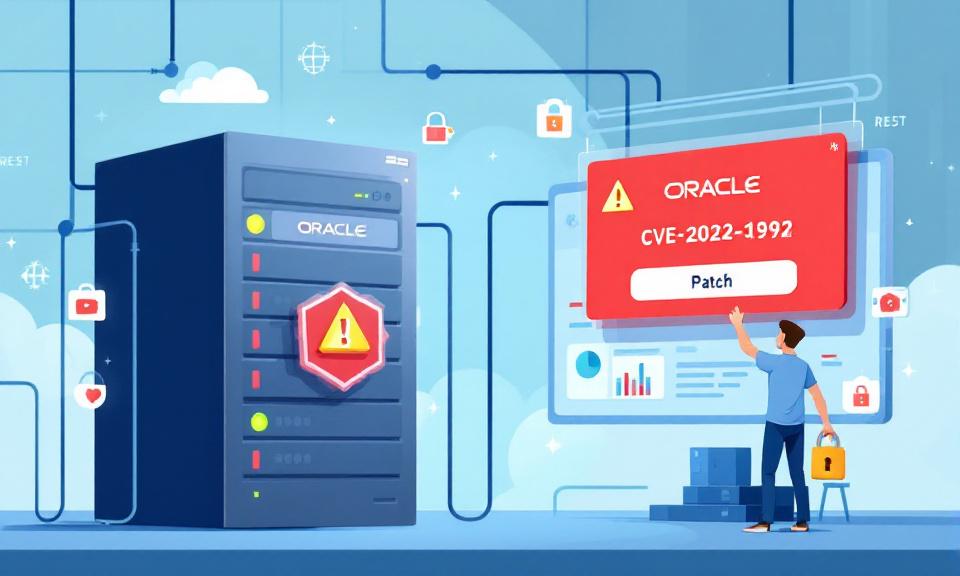
Oracle has released an out-of-band security alert to address a critical remote code execution vulnerability, tracked as CVE-2026-21992, affecting Oracle Identity Manager and Oracle Web Services Manager. With a CVSS 3.1 base score of 9.8 and no authentication required, this is a high-risk flaw that can be exploited remotely over HTTP with minimal complexity. Organizations running internet-facing Fusion Middleware components should treat this as an emergency.
What was disclosed
- Vulnerability: CVE-2026-21992 — an unauthenticated, remotely exploitable RCE.
- Affected components: Oracle Identity Manager (REST Web Services) and Oracle Web Services Manager (Web Services Security).
- Severity: CVSS 3.1 base score 9.8 — high impact to Confidentiality, Integrity, and Availability.
- Exploitability: Network-based, low complexity, no user interaction or special privileges required.
Affected versions (preserved from vendor advisory)
| Product | Affected Versions |
|---|---|
| Oracle Identity Manager | 12.2.1.4.0, 14.1.2.1.0 |
| Oracle Web Services Manager | 12.2.1.4.0, 14.1.2.1.0 |
Why this matters
Both products are commonly deployed across large enterprises and government environments. Oracle Identity Manager handles identity governance, and Web Services Manager enforces security policies for web services — compromise of either can lead to full system takeover, credential theft, and lateral movement across networks. Because the flaw requires only HTTP access to an exposed endpoint, internet-accessible instances are particularly at risk.
Immediate actions for administrators
- Patch immediately: Apply Oracle’s provided patches from the Security Alert and My Oracle Support (Document ID KB878741). Oracle has issued updated guidance; follow it closely.
- Prioritize exposure: Identify and remediate any externally reachable REST Web Services or Web Services Security endpoints first.
- Upgrade unsupported versions: If you run releases outside Premier/Extended Support, plan upgrades—patches may not be available for unsupported versions.
- Monitor and harden: Review logs and alerts for suspicious activity, restrict access with network controls where possible, and consider temporary mitigations (e.g., deny external HTTP access) until patches are applied.
Short-term mitigation checklist
- Inventory Fusion Middleware instances and note which are internet-facing.
- Block or restrict HTTP/HTTPS access to affected endpoints via firewall rules or web gateways.
- Schedule immediate patch deployment and verify successful installation.
- Communicate urgency to stakeholders and incident response teams.
Final note
This vulnerability is severe and easily exploitable. Quick, prioritized patching combined with network-level protections will significantly reduce the risk of exploitation. Stay tuned to Oracle’s Security Alerts portal for any follow-up advisories or mitigations.
 Licensed under CC BY-ND 4.0 International

Vercel Confirms KVM Zero-Day VM Escape, Awards Researcher $50,000
Vercel has publicly acknowledged a reported KVM zero-day that a security researcher…

Critical Dell Container Storage Flaws Expose Admin Controls — Immediate Upgrades Required
Dell’s Container Storage Modules (CSM) were found to contain multiple critical vulnerabilities…

Attackers Exploit VMware vCenter Vulnerability to Gain Persistent Remote Access
A newly disclosed critical flaw in VMware vCenter (CVE-2026-59310) has moved quickly…

Critical GitLab AI Gateway Flaw: What Administrators Need to Do Now
GitLab has pushed an urgent set of security updates after disclosing a…

Atlassian Urges Immediate Patching After Critical Arbitrary File-Access Flaw
Atlassian has released emergency fixes for a critical arbitrary file access vulnerability…
Citrix NetScaler Reboots After Emergency 0-Day Patch: What Teams Need to Know
Citrix released emergency builds to address two actively exploited zero-day vulnerabilities in…

Debian Patches 1,313 Kernel Flaws: What Administrators Need to Know
Debian has just released a major kernel security update that aggregates fixes…

Antino: A Stealthy Backdoor That Hides in Outlook and OneDrive
A new espionage campaign tracked by Cisco Talos has exposed a sophisticated…