
A large-scale campaign recently uncovered shows how attackers abused the trust developers place in open-source hosting to distribute two dangerous malware families, SmartLoader and StealC. By cloning legitimate projects and burying malicious ZIP archives deep inside repository structures, the threat actor made harmful downloads look like routine releases. For many victims the repository looked authentic at a glance: real source
Author: Saugata Datta
I’m an IT/DevOps professional with many years of hands-on experience across Windows, Linux, Automation, Backup and Cloud. I love building real-world automations to make infrastructure reliable, secure, and self-healing. Through this blog, I share practical learnings from enterprise projects and my home-lab experiments on Cloudflare, Self-Hosting and everything in between. Always tinkering, always improving.
Google Makes AI Your New Office Intern with Workspace Intelligence and Gemini

At its Cloud Next event, Google unveiled a suite of AI upgrades to Workspace designed to turn routine office tasks into something closer to automated muscle memory. Rather than a single flashy feature, the update stitches together a set of capabilities — Workspace Intelligence plus deeper Gemini integrations across Docs, Sheets, and other apps — that aim to reduce busywork
Accenture and WaveMaker’s bet on mid-market AI modernization
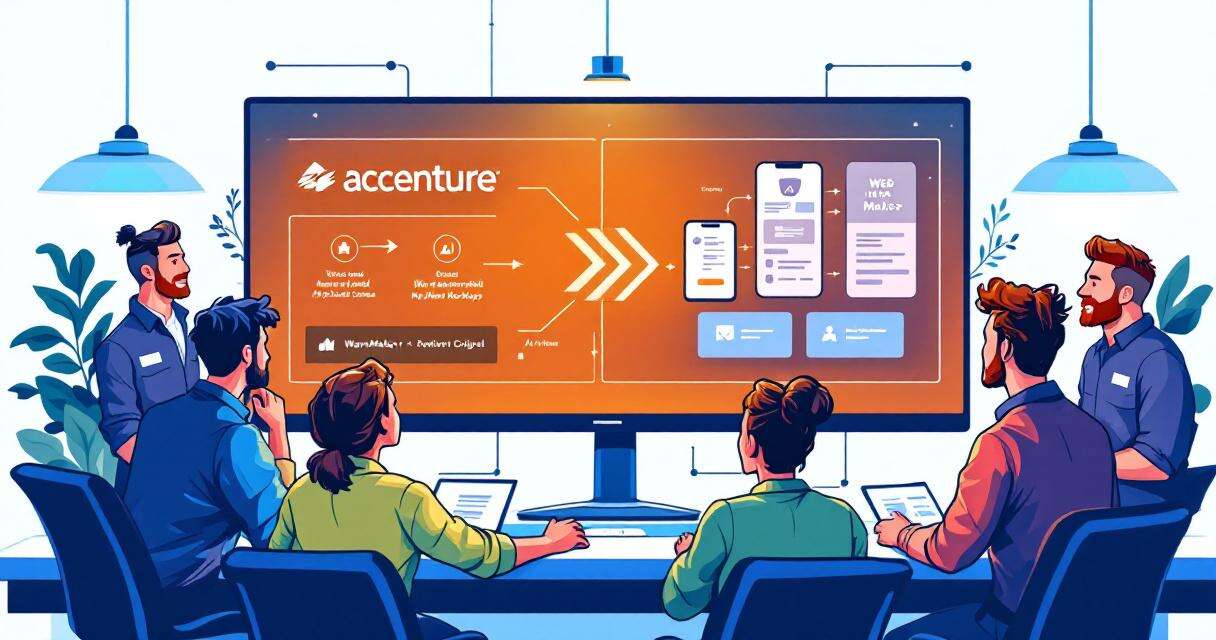
Accenture and WaveMaker have forged a strategic collaboration aimed at helping mid-market organizations modernize their applications using WaveMaker’s agentic AI platform. Rather than positioning this as a large enterprise play, the partnership focuses on companies with revenues up to about $3 billion that often lack the budgets or in-house engineering scale for full-scale digital transformation. The goal is practical: accelerate
OpenAI and Infosys: Scaling Codex into the Enterprise via Topaz
OpenAI has struck a strategic partnership with Infosys to integrate its AI tools — notably the coding assistant Codex — into Infosys’s Topaz AI platform, aiming to help large enterprises move from pilot projects to wide-scale AI deployments. The collaboration is positioned to accelerate software modernization, automate development workflows and support DevOps, with an initial focus on software engineering and
Google Maps Gets a Big Dose of Generative AI — What It Means for Enterprises

Google’s mapping products are getting a clear enterprise tilt with a suite of new generative AI features announced at Cloud Next. Rather than small consumer-facing tweaks, these updates add capabilities for visualizing hypothetical scenes, accelerating satellite and aerial imagery analysis, and delivering pre-trained geospatial models that can identify infrastructure elements. For organizations that rely on maps and imagery—urban planners, construction
Microsoft Teams’ Efficiency Mode Arrives for Low‑End Devices

Microsoft is rolling out an Efficiency Mode for Microsoft Teams designed to help devices with limited CPU and memory run the app more smoothly. Announced in a Microsoft message center update, the feature will be enabled by default on eligible hardware and aims to improve responsiveness and meeting quality by dynamically adjusting how Teams uses system resources. What Efficiency Mode