
Category

Cybersecurity

Zero-Day, APT, Exfiltration, Lateral-Movement, Privilege-Escalation, Botnet, Rootkit, Backdoor, Keylogger, Smishing, Vishing, Spear-Phishing, Social-Engineering, MITM, SQL-Injection, XSS, CSRF, Path-Traversal, Buffer-Overflow, Honeypot, CVE, CVSS, Red-Team, Blue-Team, Threat-Hunting, Malware-Analysis, MITRE-ATT&CK, Insider-Threat, Jailbreak, Shellcode, Exploit-Kit, LFI, RFI, Obfuscation, Payload, security advisory, vulnerability disclosure, CWE, OWASP, cybersecurity news, threat intelligence, SOC, SIEM, crypto theft, evasion, CVE Security, breach notification, BlackLotus, bootkit, Protection

Page 6
Hackers Drain Bitcoin Hot Wallets on BTCPay Servers as Project Urges Immediate Shutdown

Hackers Drain Bitcoin Hot Wallets on BTCPay Servers as Project Urges Immediate Shutdown

BTCPay Server has issued an urgent warning after reports that attackers were draining Bitcoin hot wallets on its servers. The open-source payment processor told operators to shut down affected installations immediately and keep them offline while the team investigates. For merchants using wallet management through these servers, the warning is about more than software hygiene. It is about funds that may already be exposed. Shutdown order and early signals In…

Saugata Datta3 min read171
TightVNC Viewer Pre-Auth RCE: PoC Shows Remote Code Execution Risk

TightVNC Viewer Pre-Auth RCE: PoC Shows Remote Code Execution Risk

A newly disclosed vulnerability in the TightVNC Viewer allows attackers to execute code on Windows machines before a password prompt appears. Research credited to SeongJoon Cho of SSD Labs Korea includes proof-of-concept exploit code targeting TightVNC 2.8.88 x64. The flaw affects the viewer component and can be triggered when a viewer connects to a malicious server or when the viewer is reachable in Listening Mode. How the bug works The…

Saugata Datta3 min read176
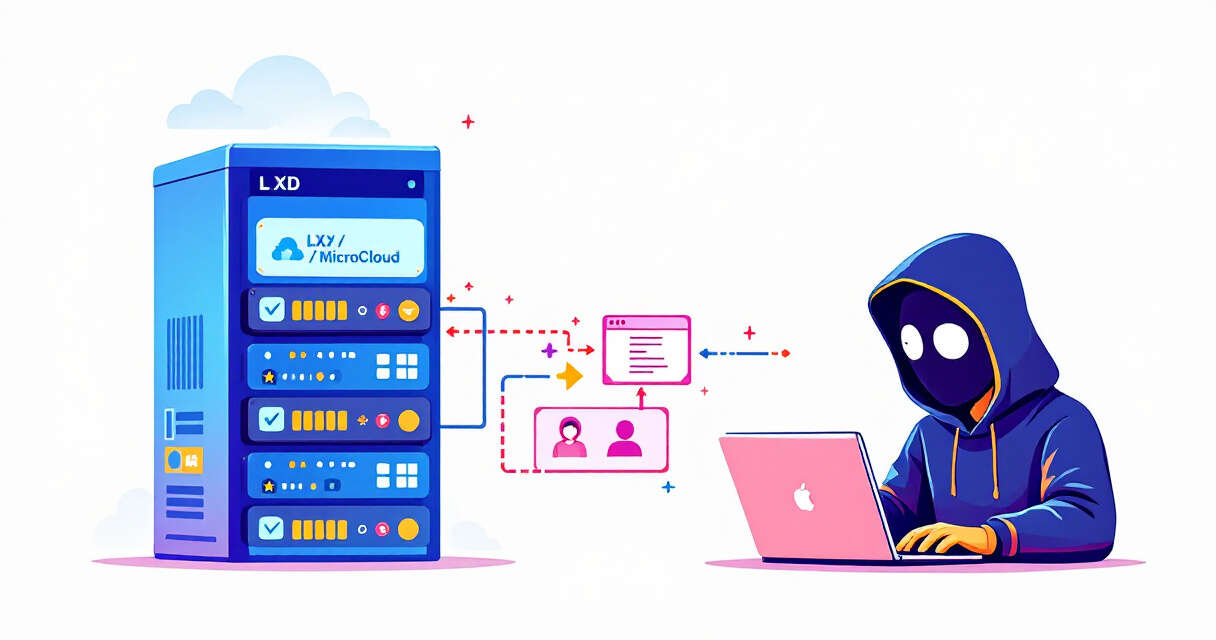
Critical CVE-2026-112816: LXD and MicroCloud Permit Trusted Client Impersonation (CVSS 10.0)

Critical CVE-2026-112816: LXD and MicroCloud Permit Trusted Client Impersonation (CVSS 10.0)

A newly disclosed critical vulnerability affecting Canonical's LXD and MicroCloud allows an attacker to authenticate as a trusted client without possessing that client's private key. Because the flaw undermines the server's certificate checks during mutual TLS authentication, an attacker with network access to the HTTPS API and a trusted client's public certificate can present a crafted certificate chain and be accepted as the trusted identity. Canonical has released patched snap…

Saugata Datta3 min read165
Supply-chain Compromise Drains $2.7M from Polymarket After DebugBear Script Hijack

Supply-chain Compromise Drains $2.7M from Polymarket After DebugBear Script Hijack

A malicious change to a third-party page-speed script on Polymarket’s site allowed attackers to use signed-in traders’ browser sessions to sell positions and siphon funds on October 29. The injected code targeted only Polymarket’s copy of a DebugBear real user monitoring (RUM) script and moved crypto to an attacker-controlled wallet in under an hour. Polymarket says it will refund roughly $2.7 million to affected wallets and is returning a total…

Saugata Datta4 min read178
Ivanti Connect Secure Exploit Chain Achieves Unauthenticated Root Access

Ivanti Connect Secure Exploit Chain Achieves Unauthenticated Root Access

The U.S. Cybersecurity and Infrastructure Security Agency (CISA) has added two Ivanti Connect Secure (ICS) vulnerabilities to its Known Exploited Vulnerabilities (KEV) catalog after evidence of active exploitation. Security researchers documented an exploit chain that combined multiple flaws to yield unauthenticated root-level code execution, and Ivanti has released updates to address the issues across affected releases. The flaws involved CVE-2026-111357 — A high-severity (CVSS 8.8) missing-authentication-for-a-critical-function vulnerability that could allow…

Saugata Datta2 min read182
Cursor: Malicious Claude Code Extension in VS Code Marketplace Carried SSH Backdoor for 11 Hours

Cursor: Malicious Claude Code Extension in VS Code Marketplace Carried SSH Backdoor for 11 Hours

Cursor confirmed that weaponized builds of the Claude Code extension briefly appeared in its Visual Studio Code extension marketplace on October 29, 2026. For roughly eleven hours those tampered packages attempted to harvest host details and install an SSH backdoor intended to provide persistent remote access. Cursor says the compromised builds were not produced by Anthropic and that distribution was limited to specific versions of the extension. Timeline and affected…

Saugata Datta3 min read188
TeamViewer Bug Lets Remote Hosts Crash or Run Code Against Technicians

TeamViewer Bug Lets Remote Hosts Crash or Run Code Against Technicians

A recently disclosed vulnerability in TeamViewer can turn an ordinary remote support session into a serious risk for the technician on the other end. Tracked as CVE-2026-111585 and rated High with a CVSS score of 8.8, the flaw lets a malicious host crash the viewer application and, in some cases, execute code on the technician’s machine after a connection has been established. How the flaw works TeamViewer separates sessions into…

Saugata Datta3 min read192
Inside the 60,471 Attempts: What the WordPress 7.1.4 Patch Actually Stopped

Inside the 60,471 Attempts: What the WordPress 7.1.4 Patch Actually Stopped

Hackers flooded WordPress sites with tens of thousands of requests targeting a Core remote code execution (RCE) weakness in the hours after a security patch was released. Wordfence’s threat intelligence recorded 60,471 blocked attempts in a 24‑hour window — a clear signal that attackers were actively probing the update process, even though the majority of those requests were firewall‑blocked and not confirmed compromises. What attackers were trying to exploit The…

Saugata Datta3 min read183
Cloudflare’s Q3 Surge: 18.2 Million Network-Layer DDoS Attacks and Changing Threat Patterns

Cloudflare’s Q3 Surge: 18.2 Million Network-Layer DDoS Attacks and Changing Threat Patterns

Threat actors ramped up automated disruption in the third quarter of 2026, with Cloudflare reporting a dramatic rise in the frequency and variety of distributed denial-of-service (DDoS) attacks. The company mitigated 18.2 million network-layer (L3) DDoS attacks and handled 14.4 trillion HTTP DDoS requests during the quarter — a scale that underscores how persistent and rapidly evolving DDoS activity has become. Quarterly volume and pace Cloudflare’s numbers translate to roughly…

Saugata Datta2 min read202
Apple’s New Wave of Spyware Warnings: What iPhone Users Need to Know

Apple’s New Wave of Spyware Warnings: What iPhone Users Need to Know

Apple has sent a new round of targeted threat notifications to selected iPhone users, warning they may have been the focus of sophisticated mercenary spyware campaigns. Announced in a notice shared by security researcher Costin Raiu on October 30, 2026, this latest wave is separate from the alerts Apple sent in August and is being delivered to users in 99 countries. Apple says it has now notified users in over…

Saugata Datta4 min read205
Anthropic Exploit Reveals Critical Linux Kernel Flaw (CVE-2026-98432) That Grants Remote Root on MPTCP Servers

Anthropic Exploit Reveals Critical Linux Kernel Flaw (CVE-2026-98432) That Grants Remote Root on MPTCP Servers

Security researchers at Anthropic have developed an exploit for a critical Linux kernel vulnerability—tracked as CVE-2026-98432—that can allow unauthenticated attackers to execute commands as root on servers running Multipath TCP (MPTCP) listeners. The flaw is a use-after-free in the kernel's IPv4 TCP networking code and has been scored 9.8/10 by the Linux kernel CVE team, although some vendors assess exploitation complexity differently. What the flaw is CVE-2026-98432 stems from a…

Saugata Datta3 min read202
Hardcoded Database Password in Applebee’s App Exposed Customer Records

Hardcoded Database Password in Applebee’s App Exposed Customer Records

Applebee’s patched a security flaw after a researcher found a database password embedded inside the chain’s Android app, a lapse that allowed access to customers’ personal information. TechCrunch held the story until the issue was confirmed fixed. The exposed credential, discovered in the app’s source code, could be extracted by anyone with the app and used to access the company’s customer database. Discovery and verification Robert Wiggins, a U.K.-based cybersecurity…

Saugata Datta3 min read203
🧰

Free Tools: IP, DNS, SSL

40+ free network and other tools in one place. No signup. Click explore or visit https://technochat.in/tools

Explore