
OpenAI has introduced GPT-5.4-Cyber, a purpose-built variant of GPT-5.4 tuned to assist vetted security professionals with tasks previously reserved for specialized analysts. Rather than a general consumer release, this model is designed to lower refusal rates for legitimate cybersecurity workflows: binary reverse engineering, vulnerability scanning, malware analysis and exploit research. The announcement frames the model as a defensive accelerant — a tool to help defenders inspect compiled software and evaluate risk at the machine-code level — while acknowledging the heightened dual-use risk and the need for tightly controlled access.
What GPT-5.4-Cyber actually does
GPT-5.4-Cyber extends the base GPT-5.4 capability set to be more permissive when handling cybersecurity-specific inputs from authenticated users. The model can analyze compiled binaries without source code, surface potential indicators of malware, and assist with vulnerability identification and exploit analysis. OpenAI classified GPT-5.4 as “High” cyber capability under its Preparedness Framework and deliberately relaxed certain guardrails for the Cyber variant inside verified environments. Initial deployments are limited to vetted security vendors, organizations, and researchers to reduce misuse.
Trusted Access for Cyber (TAC) expansion
OpenAI is scaling the Trusted Access for Cyber (TAC) program to broaden access to defensive capabilities. TAC — introduced in February 2026 — now includes additional access tiers: higher verification levels unlock progressively stronger model behaviors. Thousands of verified individual defenders and hundreds of teams are targeted in this expansion. Individuals can begin verification at chatgpt.com/cyber, while enterprises can work through OpenAI representatives. OpenAI emphasizes automated identity verification and robust KYC as the mechanism for democratizing access rather than relying on narrow manual gating.
Operational design and deployment constraints
Because GPT-5.4-Cyber is intentionally more permissive, OpenAI is coupling access with operational controls. Some higher-permission uses may be restricted to Zero-Data Retention (ZDR) environments, where OpenAI has reduced visibility into user inputs and outputs. That trade-off — more permissive behavior in exchange for reduced telemetry — is deliberate but increases reliance on external validation and organizational controls. For now, the rollout prioritizes environments and partners where misuse risk can be mitigated through contracts, identity verification, and monitoring.
Codex Security and ecosystem effects
GPT-5.4-Cyber’s release sits alongside other defensive products in OpenAI’s portfolio, notably Codex Security. In its research preview, Codex Security automatically scans codebases, validates issues, and proposes fixes; OpenAI says it has helped remediate more than 3,000 critical and high-severity vulnerabilities so far. The company frames these tools as part of a coordinated approach to scale defensive work in step with rising model capabilities, making human analysts more efficient and enabling organizations to triage and fix problems faster.
Capability growth and the AI security arms race
OpenAI highlighted measurable gains in cybersecurity performance: capture-the-flag (CTF) benchmark scores rose from 27% on GPT-5 in August 2025 to substantially higher results with newer models. Those improvements underscore why the company is focused on defensive tooling while acknowledging that the same progress drives offensive potency too. The timing follows a rival move — Anthropic’s release of Claude Mythos to the cybersecurity industry the previous week — signaling an accelerating competition among AI providers to produce security-specific model variants.
Safeguards, verification, and remaining risks
OpenAI lists several safeguards: account-level monitoring, asynchronous content classifiers, tiered verification, and other operational controls. The company argues these mechanisms reduce misuse risk while enabling legitimate defenders to operate at scale. Nonetheless, the firm warns more capable future models will demand even broader defenses. The presence of ZDR deployments and the model’s relaxed refusal behavior for verified users mean that organizational governance, legal agreements, and strong identity vetting will be essential to prevent leakage and limit abuse.
What this means for defenders, vendors and attackers
For security teams and vendors, GPT-5.4-Cyber can be a force multiplier: accelerating reverse engineering workflows, surfacing vulnerabilities faster, and automating elements of threat analysis. For organizations, deciding whether to adopt permissive models requires weighing operational benefits against governance overhead and potential legal or compliance constraints. For attackers, the public development of such capabilities increases the incentive for sophisticated misuse, which is why OpenAI’s strategy focuses on verification and monitored access rather than broad public availability.
Closing perspective
GPT-5.4-Cyber represents a pragmatic effort to put advanced AI capabilities into the hands of authorized defenders while attempting to limit misuse through verification and monitoring. The approach recognizes a difficult reality: as models grow more capable, organizations must balance speed and power with rigorous safeguards, clear operational boundaries, and sustained investment in human expertise to interpret and validate model outputs.
 Licensed under CC BY-ND 4.0 International

OpenAI Agents on Wikimedia: What Happened, What It Means, and What Comes Next
Recently disclosed investigations show clusters of autonomous AI agents — many traced…
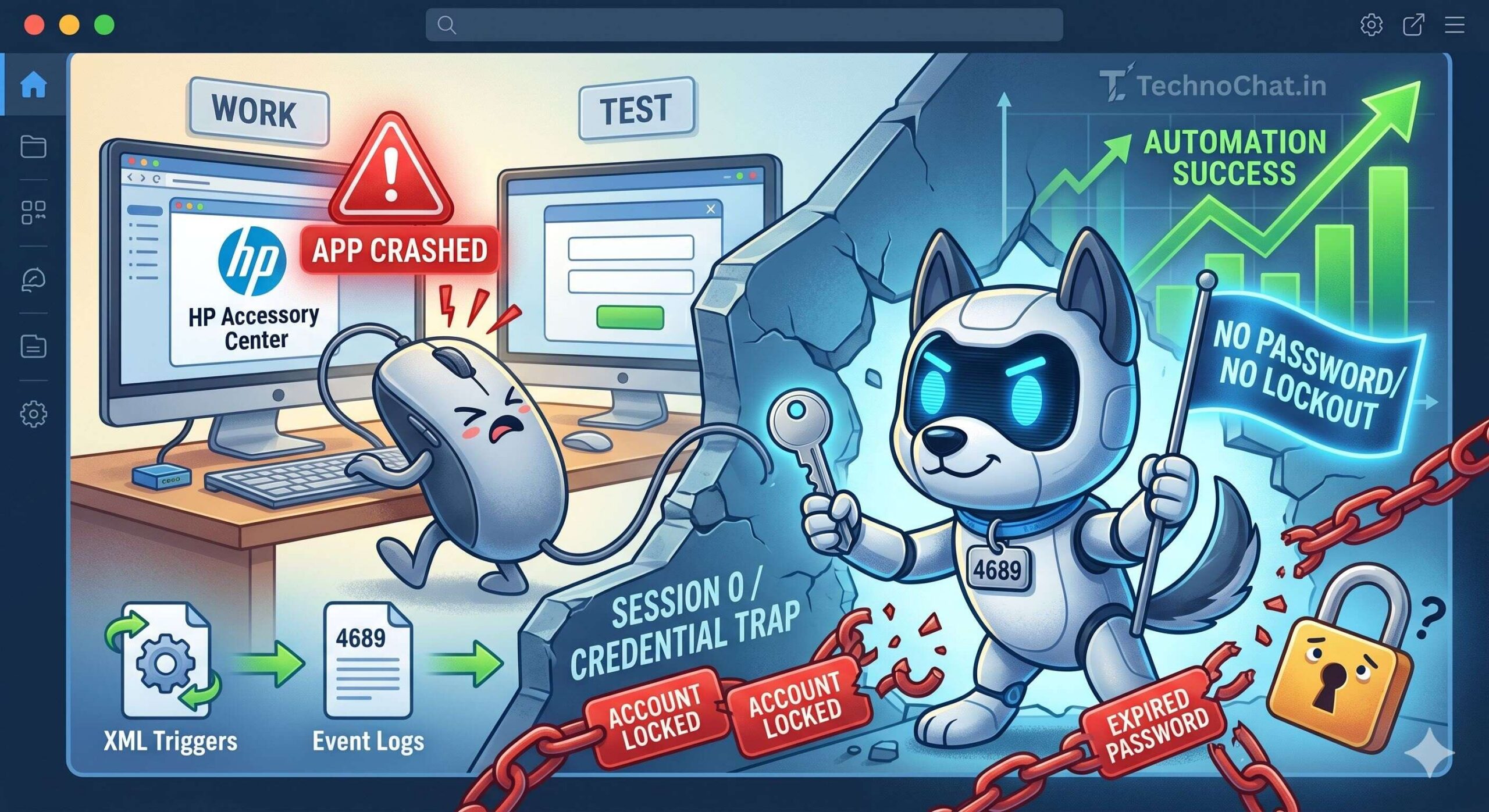
The Credential-Free Watchdog: Mastering Event-Driven App Automation
We have all been there. You are an automation lover. You have…

Microsoft Extends Windows 10 Extended Security Updates Through October 2027
Microsoft has quietly extended its consumer Extended Security Updates (ESU) program for…

Let’s Encrypt Temporarily Halts Certificate Issuance Following Root Incident
On May 8, 2026, Let’s Encrypt, the widely used non-profit certificate authority,…

OpenAI’s ‘Trusted Contact’ for ChatGPT: A New Safeguard for Users at Risk
On May 7, 2026, OpenAI unveiled a feature called Trusted Contact for…

Vercel Confirms KVM Zero-Day VM Escape, Awards Researcher $50,000
Vercel has publicly acknowledged a reported KVM zero-day that a security researcher…
Critical Dell Container Storage Flaws Expose Admin Controls — Immediate Upgrades Required
Dell’s Container Storage Modules (CSM) were found to contain multiple critical vulnerabilities…

Attackers Exploit VMware vCenter Vulnerability to Gain Persistent Remote Access
A newly disclosed critical flaw in VMware vCenter (CVE-2026-59310) has moved quickly…