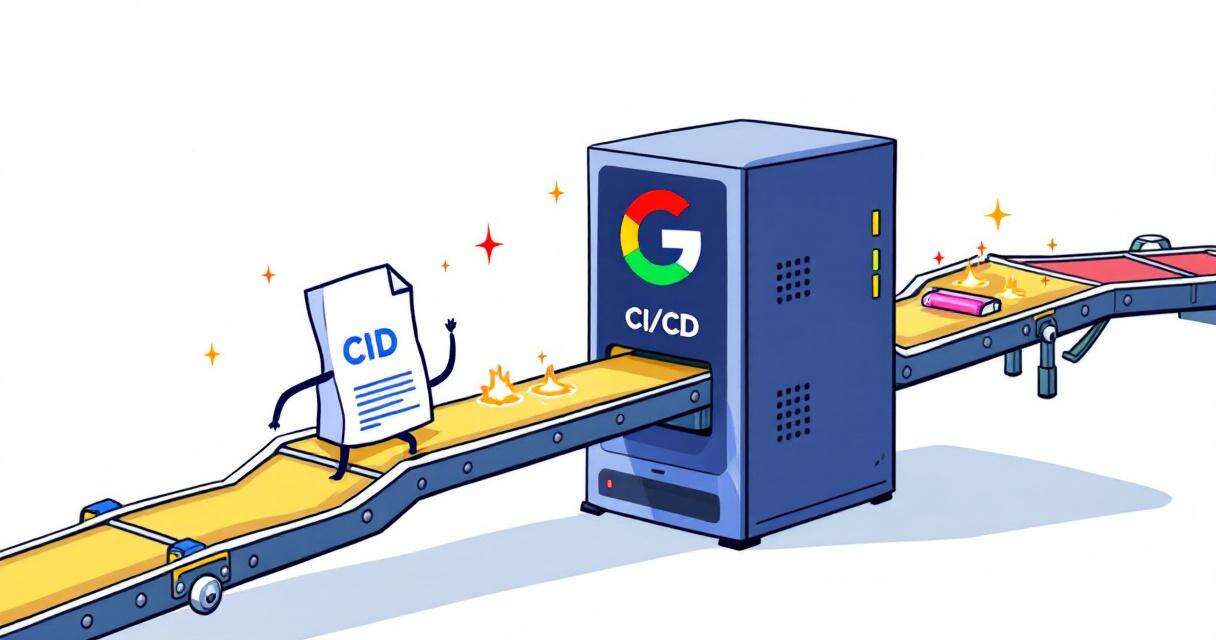
A critical remote code execution (RCE) vulnerability in the Google Gemini CLI and its associated GitHub Action exposed a startling weakness in how AI tooling can interact with developer infrastructure. Rated with the maximum CVSS score of 10.0, the bug allowed unprivileged external actors to execute commands on the machines running CI/CD workflows. This wasn’t a prompt-injection trick against a model; it was an infrastructure-level failure that allowed malicious configuration files to run before any AI sandboxing took effect, effectively turning automated pipelines into a direct supply-chain attack surface.
What happened
The Gemini CLI ran in a “headless” or non-interactive mode inside CI jobs and automatically considered the current workspace folder “trusted.” When it found agent configuration files in that directory, it loaded and executed them without requiring human approval, security review, or sandboxing. An attacker who could plant a malicious configuration—such as through an ordinary pull request—could cause the Gemini agent to execute arbitrary commands on the host running the workflow. That host-level execution could expose secrets, cloud credentials, and source code accessible to the workflow, enabling token theft, lateral movement, and downstream supply-chain compromises.
Why this matters for CI/CD and supply chain security
Modern development pipelines often grant actions and tools broad privileges: access to repositories, deployment credentials, and cloud APIs. AI coding agents integrated into those pipelines inherit those privileges. When an agent implicitly trusts files in a repository, it creates an opportunity for attackers to weaponize the development process itself. The Gemini issue is a clear example of how a flaw in tooling — not the model — can have catastrophic consequences across a software supply chain, amplifying the impact of a single malicious commit or package compromise.
Patched versions and immediate technical fixes
Google has released patches to close the unauthenticated execution hole. Administrators should upgrade without delay to the patched releases:
- Update @google/gemini-cli to version 0.39.1 or 0.40.0-preview.3.
- Update google-github-actions/run-gemini-cli to version 0.1.22.
Mitigations and hardening steps for teams
- Patch immediately: Apply the vendor fixes above across all CI runners and any local developer environments that use the Gemini CLI.
- Enforce least privilege: Restrict workflow permissions so CI jobs run with minimal token scopes and do not expose production credentials unnecessarily.
- Use isolated runners: Execute untrusted or community-contributed workflows on ephemeral, isolated runners that have no access to sensitive credentials or long-lived secrets.
- Require code review and branch protections: Prevent direct runs of unreviewed PRs in privileged contexts; require maintainers to approve actions that add or modify agent/configuration files.
- Pin and verify action versions: Depend on explicit, vetted versions of actions rather than floating tags; use checksums or provenance where available.
- Rotate and scope credentials: Treat exposed tokens as compromised, rotate them, and move to short-lived or OIDC-based credentials where possible.
- Scan for suspicious files: Add CI checks that detect unexpected agent configs or executable directives in pull requests and flag or block them.
- Apply runtime sandboxing: Where feasible, run agents in strong process-level sandboxes or containers that limit filesystem and network access.
Detection and incident response
- Inspect CI logs: Search workflow logs for unexpected agent execution, startup messages from the Gemini CLI, or commands run by the agent that weren’t part of the intended job.
- Hunt for malicious configs: Scan repositories and recent pull requests for unexpected agent configuration files or newly added init scripts.
- Check credential access: Review recent secrets usage, token activity, and cloud audit logs for signs of exfiltration or anomalous API calls.
- Forensic containment: If compromise is suspected, isolate affected runners, rotate credentials, and snapshot logs and runner state for investigation.
- Communicate and coordinate: Notify downstream teams and suppliers if there’s any chance of propagated compromise, and consider coordinated rotation of shared secrets.
Broader lessons and context
This incident underscores a shifting attacker focus: targeting development pipelines and tooling to scale impact. Recent supply-chain incidents—compromised npm packages, worms embedded in libraries, CDN hijacks and backdoors in widely used tools—show that adversaries increasingly weaponize trusted infrastructure. The Gemini CLI flaw is a reminder that securing AI systems means protecting the full path from repository files and CI tooling to deployed applications and not just the models themselves.
Conclusion
Patch the Gemini CLI and the GitHub Action immediately, minimize CI privileges, and treat any tooling that auto-loads repository files with extreme caution. As AI agents become more embedded in developer workflows, organizations must extend supply-chain and runtime security controls to cover these new components. Doing so will reduce the risk that a single malicious pull request or compromised package becomes a full-scale production breach.
 Licensed under CC BY-ND 4.0 International

WordPress Imagick RCE (CVE-2026-65640): What Site Owners Need to Know
WordPress has just released a security-focused update — version 7.0.4 — to…
Critical GitLab AI Gateway Flaw: What Administrators Need to Do Now
GitLab has pushed an urgent set of security updates after disclosing a…
70% of WordPress Sites Running Outdated PHP Versions, Leaving Millions Exposed
A recent analysis of publicly accessible WordPress installations has revealed a startling…

Photo ZIP Campaign Targets Hospitality Industry with Node.js Implant for Persistent Access
Microsoft Threat Intelligence has identified an active, multi-stage intrusion campaign that has…
Bitwarden CLI Compromised in Supply Chain Attack via GitHub Actions
Socket and other researchers have confirmed that the Bitwarden CLI package published…

When a Private Diary Becomes Evidence: How a Claude Entry Led to Real-World Charges
A single chat entry that a user treated like a private diary…

OpenAI Agents on Wikimedia: What Happened, What It Means, and What Comes Next
Recently disclosed investigations show clusters of autonomous AI agents — many traced…

Smuggling Code: How ClickFix Uses Browser Cache to Beat Windows Run Limits
ClickFix attacks have evolved from simple social-engineering lures into highly creative delivery…