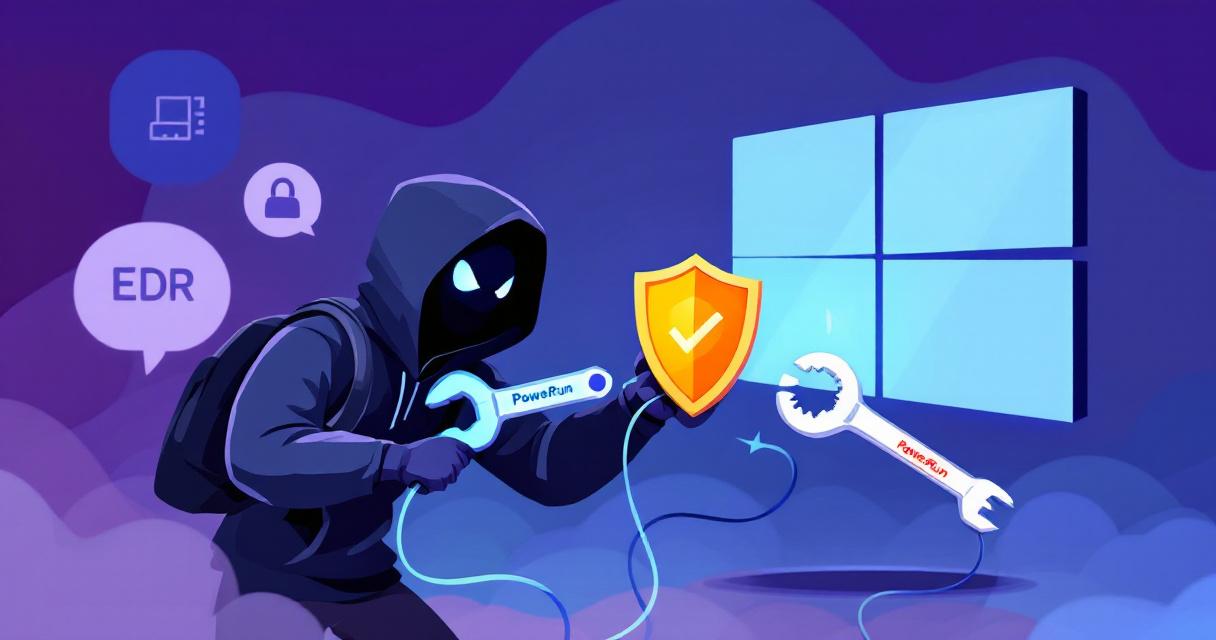
Microsoft released fixes earlier this year for CVE-2026-21510, a security feature bypass in Windows Explorer that let specially crafted shortcut (LNK) files execute a remotely hosted DLL without the usual security warning. Researchers observed exploitation in the wild and uploaded a sample to malware repositories, enabling vendors and defenders to reproduce the issue and protect legacy systems that no longer
Latest Articles

Microsoft Extends Windows 10 Extended Security Updates Through October 2027
Microsoft has quietly extended its consumer Extended Security Updates (ESU) program for Windows 10, pushing the cutoff for critical security patches out another year to October 12, 2027. The move gives millions of users who have not yet migrated to Windows 11 additional time to receive important and critical security fixes, while Microsoft continues to encourage upgrades to the newer OS. For those already enrolled in the consumer ESU program, coverage continues automatically under the new end date. What the…
Continue readingOpenAI Acquires Hiro Finance to Bolster AI Financial Planning
OpenAI has officially confirmed the acquisition of Hiro Finance, an AI-powered personal finance startup founded by serial entrepreneur Ethan Bloch. The deal, which follows Hiro’s recent launch of a specialized financial modeling tool, marks a strategic move by OpenAI to deepen its expertise in high-stakes mathematical accuracy and consumer fintech. Backed by heavyweights like Ribbit Capital and General Catalyst, Hiro
How a Flippa Purchase Turned 30+ “Essential Plugin” WordPress Plugins into Backdoor Bait
Last week I encountered a supply-chain incident that felt eerily familiar but much larger in scale. A client’s dashboard had started showing a warning from the WordPress.org Plugins Team about a plugin serving code that could permit unauthorized access. A deeper dive revealed an attacker had quietly weaponized an entire portfolio of plugins—planting a backdoor that lay dormant for months
Rockstar’s GTA Data Leak: ShinyHunters Expose 78.6M Records via Anodot–Snowflake Pivot
Rockstar Games confirmed in April 2026 that a third-party compromise led to a substantial exposure of analytics records tied to GTA Online and Red Dead Online. Although player accounts and payment systems were reportedly unaffected, the incident highlights how attackers are increasingly leveraging trusted SaaS integrations and stolen service tokens to pivot into high-value environments. This post unpacks the timeline,
Building an AI Coding Tool Stack for Modern Development
The past few years have quietly transformed how software is written. AI-assisted tools are no longer experimental add-ons; they’re becoming integral parts of developer workflows. But picking the right combination of models, integrations, and guardrails is more art than science. This article walks through a pragmatic approach to assembling an AI coding tool stack that improves productivity without sacrificing code
OpenAI Revokes macOS App Certificate After Axios Supply-Chain Compromise
OpenAI has publicly disclosed a supply‑chain incident that affected the signing workflow for its macOS applications and, out of caution, is revoking and rotating the certificate used to notarize those apps. The company’s investigation found that a GitHub Actions workflow used in the macOS signing process pulled a compromised release of the widely used npm library Axios (version 1.14.1). Although